
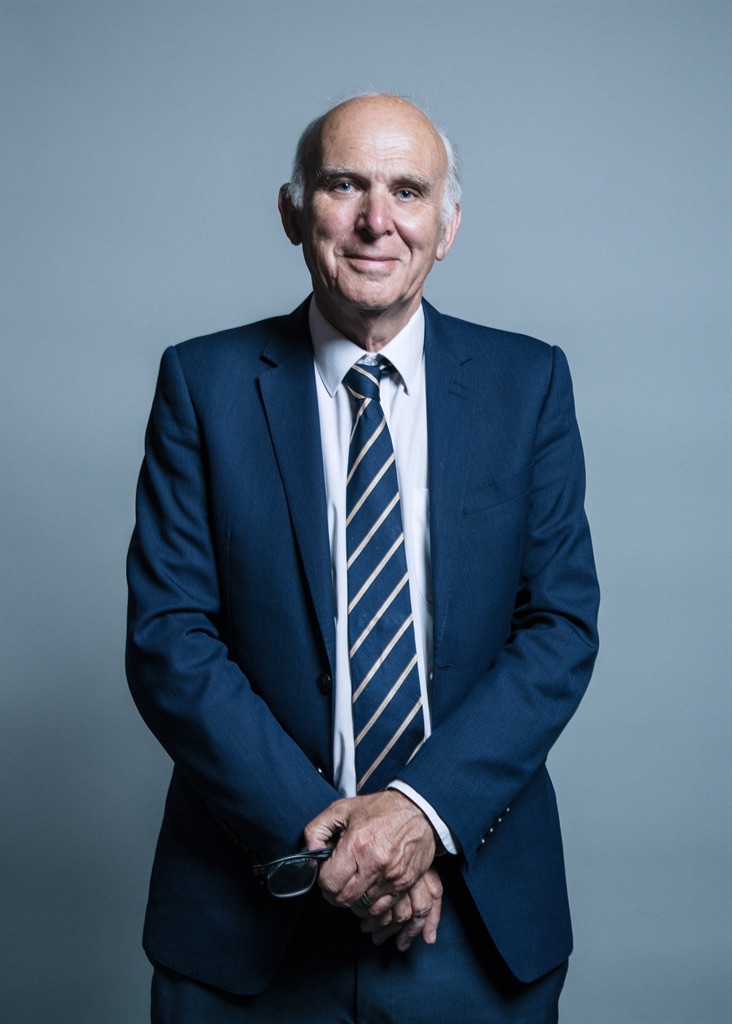
Sir Vince Cable
The Politics of a Changing World
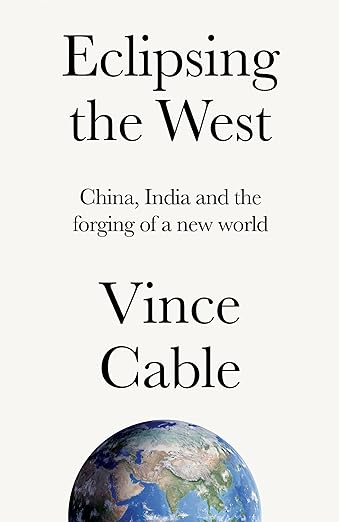
Ahead of his appearance at the Bradford Literature Festival this July, Sir Vince Cable discusses Eclipsing the West, China’s rise, Britain’s future and why the greatest challenge may be accepting that the world has already changed.
You’ll be appearing at the Bradford Literature Festival to discuss Eclipsing the West: China, India, and the Forging of a New World. What first convinced you that the world was changing in ways many people in the West hadn’t yet recognised?
Well, I guess it was about 30 years ago. At the time, I was at Shell, the oil company, as chief economist, and they sent me to China and India to do some scoping before making very large investments. We engaged in something called scenario planning, looking at different options, and part of my job was crunching the numbers. It became very clear that if you looked forward 30 years – which takes us to where we are now – China would probably become the biggest economy in the world, or something close to it, and India would be catching up fast. Both of those things have happened.
The people I was dealing with in the business world laughed. They said it wasn’t serious. China and India had a lot of people, but they were desperately poor and weren’t going anywhere. We now know that simply isn’t true. China is now economically on a par with, if not ahead of, the US, technologically almost on a par, and already leading in important sectors like telecommunications and green technology. India is the fastest-growing major economy by a long way. We’re struggling along at about one per cent growth in the UK, while India is growing at around seven per cent. Compound interest is a very powerful thing. Over 20 years, that makes a very big difference.
“Compound interest is a very powerful thing.”
Would you say the book is ultimately about economics, or is it really a book about humility?
It’s partly about economics, but it’s really about the global impact of economics. People now use fashionable terms like geoeconomics, but essentially it’s about where politics and economics intersect globally. I think that’s really what I’m talking about.
Would you say the West’s biggest problem is that it’s become weaker, or that it still thinks it’s stronger than it is?
I think we probably overestimate the strength of the Western world if by that we mean Europe, North America, and Japan. Thirty years ago, the Western world accounted for about 60 per cent of the global economy. It’s now just under 40 per cent. The big emerging markets, led by China and increasingly India, have gone from about 40 to 60 per cent, so there’s been a massive shift, and we haven’t really recognised it.
That doesn’t mean we’re a failure. We’re still rich countries, and people probably complain more than is justified about the problems we have, many of which are shared by other developed countries. But we’re growing slowly while the emerging powers are growing much more rapidly, and that has consequences. It shouldn’t be seen as a great disaster because, when you think about it, China and India each have around 1.4 billion people. If they move towards even half or a third of our living standards, they’re naturally going to have bigger economies. It’s simply arithmetic. We shouldn’t agonise about it; we should learn to live with it.
Looking back over your career, do you trust certainty more, or doubt more?
I was initially trained as a scientist. You’re trained first of all to operate based on facts and evidence, but almost always to question it. So yes, I suppose I’m a doubter. I always question things, and I like to think I question my own logic and arguments.
“You’re trained first of all to operate based on facts and evidence, but almost always to question it.”
Politics often rewards confidence. Do you think wisdom comes from discovering how much you don’t know?
Well, there’s arguably too much confidence around. We’ve had several prime ministers, Boris Johnson being an obvious one, and Liz Truss being another, who had phenomenal confidence which wasn’t backed by any competence. So, confidence is a dangerous thing. One of Mr Starmer’s problems is that he radiated not weakness but a lack of confidence. He didn’t inspire people. But when you look behind that, it may simply be that he’s been honest with himself and with us about what can actually be done.
Just off the cuff, what do you make of Andy Burnham? Do you think he’s better prepared than some people imagine, or is there still a long way to go?
He’s in a different league when it comes to communication skills, and he obviously seems comfortable dealing with other people. He appears to like the voters, which is a good start if you’re a politician.
He hasn’t had a great depth of involvement in difficult decision-making and, having been a Cabinet minister in a very big government department, I know just how difficult it is. He was briefly a Cabinet minister during the Gordon Brown era. I don’t think he was regarded as particularly distinguished, but nor was he particularly awful. His one real claim to fame is what he’s done as Mayor of Greater Manchester. He seems to have done well by becoming a symbol of standing up for the North of England, standing up to London and showing pride of place. Those things matter.
Much of the good work around Manchester was actually done by civil servants and predecessors, but he’s built on it. He carried through bus franchising, which was a sensible policy and well executed. So yes, he’s got something behind him, but I’m not sure he’s remotely ready for what’s going to be thrown at him as Prime Minister.
I wouldn’t like to be in his shoes. You’ve spent your life close to power. What has that taught you about human nature?
Well, power doesn’t necessarily bring you closer to human nature. You learn more about human nature through your personal relationships, and I’ve always attached more importance to my personal relationships, my family and so on than I ever have to politics.
Having spent five years as a Cabinet minister, I did learn a lot. I had two positions of power. One was serving as a Cabinet minister for five years, and the other was leading the Liberal Democrats for a couple of years. I have to say I hated the latter. Leading an opposition party is a nightmare. You’re constantly dealing with office politics, bruised egos and all the things that go back to your question about human nature. Honestly, it was among the most miserable years of my life.
As a minister, though, I was working with people I often disagreed with. I wasn’t a natural member of the Coalition. My instincts were probably further to the left than the Coalition, but I worked with people I came to respect and developed good working relationships with. At the end of the day, that’s what counts because you can actually deliver things.
“Honestly, it was among the most miserable years of my life.”
Do you regret becoming the leader of the Liberal Democrats?
No, it was inevitable, really. I’d been re-elected after losing my seat, and two years later I was the most senior person around. The party was in a pretty terrible position. One leader had just stepped down over what was, unfortunately, a religious issue, and I was simply asked to stabilise the ship and begin rebuilding it.
I was reasonably successful in doing that, but the personal side of the job – dealing with people in head office and the constant sniping – was very hard. I have a lot of sympathy for the leader of the Conservatives, or indeed the Liberal Democrats today. They put up with a lot.
What’s the biggest thing you’ve been wrong about in your career? If you could only name one.
Well, there are lots of things in government that turned out badly. I was the minister with overall responsibility for universities, and we all know what happened there. What we did was right in policy terms, but it was absolutely terrible in political and presentation terms. I’m probably justifiably criticised for not presenting it properly, not arguing the case well enough, and not recognising the political sensitivities involved.
I’m proud that we took difficult decisions which, in my view, helped secure the university sector for the next decade, but the presentation was a terrible mess. It did my party a great deal of harm, so I obviously bear a lot of responsibility for that.
Is there a belief you once held strongly that you’ve completely changed your mind about?
I think I’ve become a bit tougher on financial issues. One of the fundamental problems with British politics at the moment is the belief that two and two equals five – that you can have more spending on lots of worthwhile things while also cutting taxes. You simply can’t.
The so-called austerity of the government I served in was partly based on recognising that two and two actually equals four. When I was in government, I was pushing to spend much more on major capital projects. Still, experience has persuaded me that a certain amount of financial rigour, or austerity, is actually necessary, and I should defend that in public.
“The presentation was a terrible mess.”
When people talk about success in politics, do they overestimate the importance of winning and underestimate the importance of influence?
Well, the whole British political system is based on winning elections. Winning elections in Britain is often about being Father Christmas and handing out lots of promises at election time. That’s what wins votes.
The problem is that it’s producing disastrously bad government because we face long-term challenges around slow economic growth, inequality, and much else besides, all of which require difficult decisions. Politicians really ought to be going into elections saying, “It’s going to be tough, guys,” but they don’t. Winning elections requires telling people what they want to hear. It gets you votes, but it doesn’t improve the country’s governance.
I’ve always wanted to ask a politician this. Looking back now, what did power actually feel like from the inside compared with how it appears from the outside?
Tony Blair once made a very wise observation. He said that when you go into government, you’re at your most popular and know the least, and when you leave, you’re at your least popular and know the most. I was very conscious of that during my years in government.
By the end of my five years as a Cabinet minister, I knew more about my department than most of my civil servants. I knew how the system worked, I could get things done, and I think I left behind a good legacy. By then, though, you’re terribly unpopular. At the beginning, you have to pretend you know what’s going on when, in reality, you haven’t a clue.
I don’t think people outside politics appreciate just how much there is to learn. Whether you’re taking over a major government department or becoming Prime Minister, simply understanding what the hell is going on is a major undertaking. It takes months, sometimes years, to understand the machinery of government and make things work properly. People imagine you step into power, pull a few levers and make things happen. It simply isn’t like that.
What do you think politics misunderstands most about ordinary people’s lives?
I think one of the biggest misunderstandings is believing that politics is all that important to most people. For the vast majority, it only really intrudes at election time or during a crisis. The Westminster bubble is obsessed with itself – political plots, conspiracies, who said what, who’s getting which job – but most people are simply bored to tears with that stuff. They’re not remotely interested.
The job of politicians is to understand what really matters to people at any given moment. That will change over time, but they need to get their heads around the things people genuinely care about and spend less time obsessing over the minutiae of Westminster life.
“Winning elections requires telling people what they want to hear.”
Do you think that disconnect could improve under Andy Burnham, given his experience as Mayor of Greater Manchester?
I think that’s a big plus in his favour. The downside is that he doesn’t know his own MPs particularly well, and he’ll need their support, especially if they’re being asked to take difficult decisions on things like the welfare budget.
On the other hand, you’re right. Having spent seven years outside Westminster actually doing something worthwhile is an advantage. I may not sound it, but I come from Yorkshire too, so I understand a bit of that northern bloody-mindedness. I think that’s a helpful addition to what we’ve become used to.
There must have been moments in government when compromise felt like maturity, and others when it felt like surrender.
Well, we had to compromise a lot. There were certainly things I didn’t like at all, but we accepted them as part of a package. That’s the reality of a coalition government. You get some of what you want, and you don’t get a lot of other things.
Many supporters saw that as a surrender because they wanted us to achieve 100 per cent of our aims. But being in government is a very good education in itself, and you realise that if you want to make any progress, you do have to compromise, even though a lot of your own friends and supporters think you’re selling them out. That’s part of the uncomfortable reality of being in government.
You’ve written extensively about economics and global change, not least in your new book. But are people ultimately driven more by money, identity, or simply belonging?
Of those three, I’d say belonging is the most important. Money matters, of course, but it’s not everything once you’ve reached a reasonable standard of living. People are living in poverty, and for them, simply getting by is understandably a major concern.
I’ve always been worried by identity politics because I’ve got a very mixed-up identity. I married into an Indian family; I’ve lived in Scotland; I consider myself Yorkshire, British, Londoner, and European; and I’ve got an Indian family. I’ve got multiple identities.
Where it becomes dangerous is when people insist you can only have one – that you’ve got to be English, or white, or Christian, or whatever. That’s when it becomes a problem.
As we get older, do we become more tolerant of uncertainty, or simply more desperate for answers?
I’d like to think we become more mature. I’ll answer that through an anecdote. When I was younger, I had a very difficult relationship with my father. He held very hard-line right-wing views – these days he’d probably have been a member of Reform or something similar – and he was deeply unhappy when I married my Indian wife.
We fell out and didn’t speak for five years. But eventually, as he got older, he saw the value of making up. He became very fond of my wife and our children, and he changed. He matured over time. In many ways, it’s a rather warming story, and I’d like to think that as we get older we store up experiences that help us behave better.
“Being in government is a very good education in itself.”
What have the last 10 years taught you that the previous 30 didn’t?
Well, I was terribly ambitious to get into politics and into Parliament. It became a bit of an obsession. I finally got in on the fifth attempt, and for a long time it was my life.
I’ve now walked away from it. I left politics six years ago and now do completely different things, and I’m very happy. I’ve got a loving marriage, which is my top priority. I’ve found a new interest in writing books and helping small businesses. I still read the newspapers and keep an eye on British politics, but it no longer consumes me in any way. It’s simply an interest now, in much the same way it is for you. That’s probably the biggest change.
And, what worries you the most about the next 10 years?
Personally, I’m over 80, so I’m probably not going to be here in 10 years. Gradually getting used to that idea is probably one of the challenges I have to face.
What really worries me is the country. I saw a survey a few days ago suggesting that around 40 per cent of people believe Britain needs to reform and adapt, but another 40 per cent think things are now so bad that we need to burn the place down. That’s a very large, alienated and angry group of people. They may be angry for different reasons, but many feel excluded, frustrated and disconnected.
We’ve seen in the United States what happens when people who want to burn the place down get into power, and unless we’re very careful, we could drift in the same direction.
Do you think modern politics still attracts the right people?
Yes and no.
The problem is that politics increasingly rewards people who know the ropes – those who go from university into research jobs, learn their way around a political party, and eventually become professional politicians. We’ve seen that route with David Cameron, George Osborne, Nick Clegg and Andy Burnham.
Keir Starmer came into Parliament much later, having built an entirely different career beforehand. In principle, we need more people with experience in business, as trade unionists, in the military, or elsewhere before entering politics. The current Liberal Democrat parliamentary party, for example, has several MPs with military backgrounds, some in very senior roles, and that’s a valuable perspective at a time when defence matters more than ever.
What worries me is that there are very few people in Parliament today who really have much grasp of economic issues. I think that’s a serious weakness.
Do you think the public notices the lack of real-world experience amongst MP’s?
Yes, although I don’t think it’s simply a question of money. Some people argue that if you paid MPs more, you’d attract higher-quality candidates, but I don’t think that’s necessarily true.
I took a substantial pay cut when I entered Parliament. I think most people who go into politics do so because they genuinely want to make a contribution to public life. Money isn’t everything.
“We’ve seen in the United States what happens when people who want to burn the place down get into power.”
Just one final question. What matters more in the end: being right, being useful, or being remembered?
Being useful.
Of course, it’s nice to be remembered. One of the people I most admired was John Smith. I worked for him briefly, and I remember visiting his grave on the island of Iona. It carries an inscription from Alexander Pope which says, “The noblest work of God is an honest man.” I always thought that was a wonderful epitaph.
If you can be remembered, and remembered well, that’s wonderful. But the important thing is to be useful – to have done something worthwhile for your family, for your country and, ideally, for other people.
Sir Vince Cable appears at this year’s Bradford Literature Festival to discuss Eclipsing the West: China, India, and the Forging of a New World, available now.
Interview by Carl Marsh


LATEST INTERVIEWS
David Morrissey

Alicia Coppola

Sorabh Pant

Simon Reeve
James Norton

Heida Reed
INTERVIEW DIRECTORY