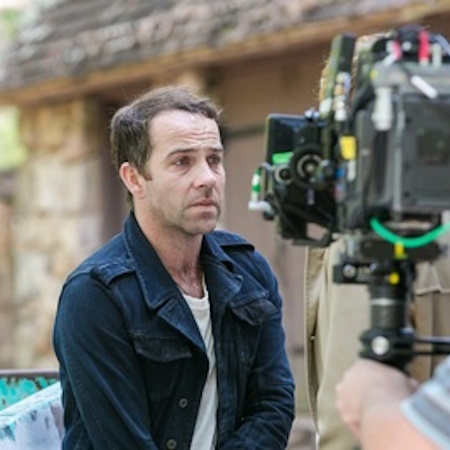

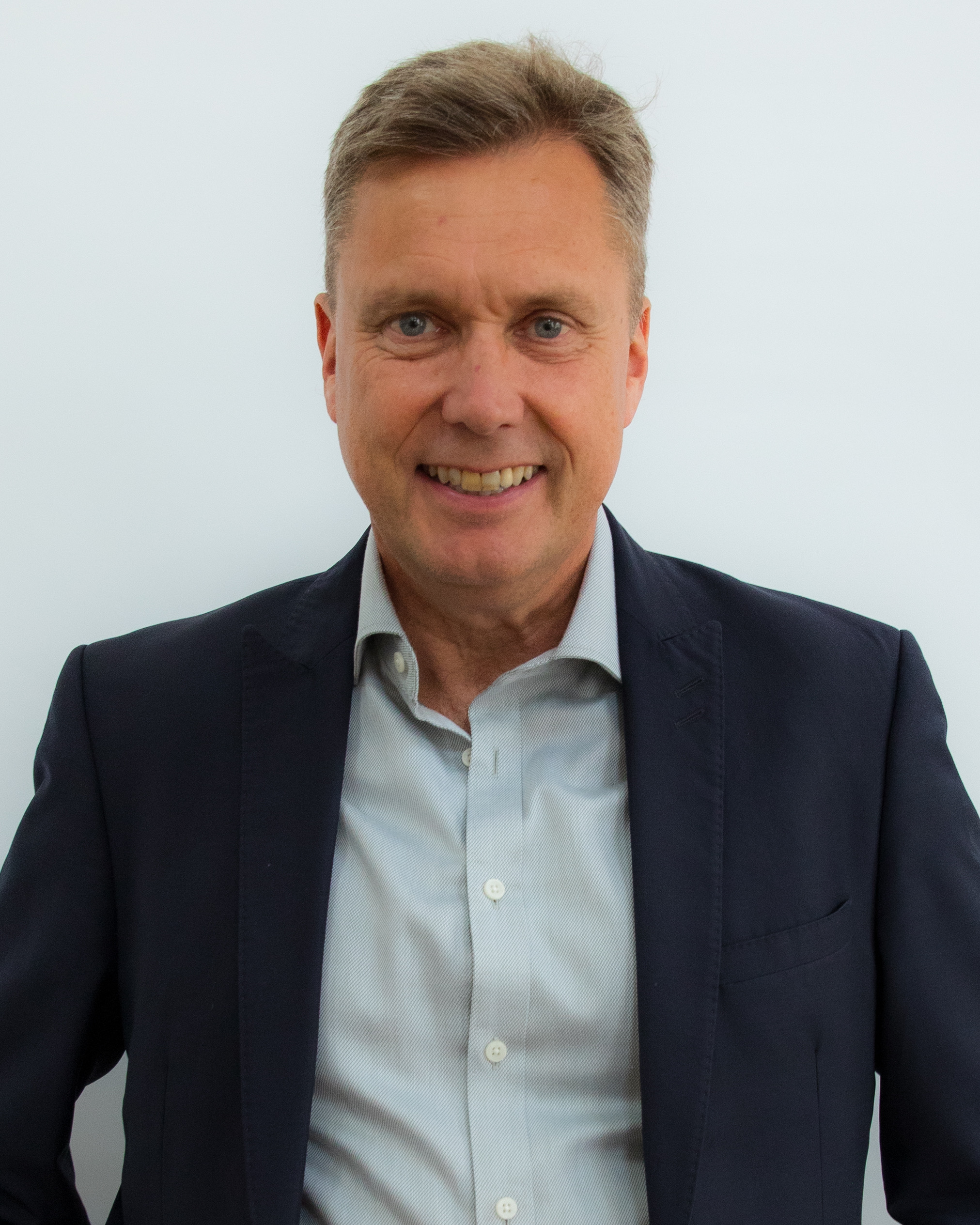
Andy Milligan
We Have to Be in Charge of It
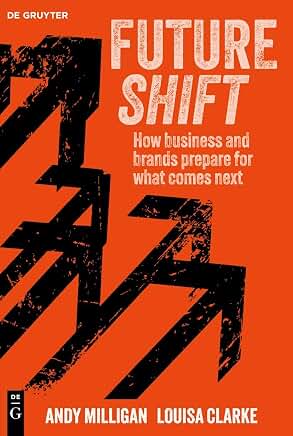
Future Shift co-author Andy Milligan talks AI, climate, leadership, forgotten communities and why our most human qualities may matter more than ever.
There’s a quote from Rita Clifton on the back of Future Shift: “If you don’t plan for the future, you get the one that shows up.” What future are you personally trying hardest to help build?
A lot of people think about the future, but they don’t plan for it. We’re very privileged in the work we do because we work with senior leaders of all kinds of companies around the world, and they’re always showing us their five-year plans, their assumptions and the forces they’re dealing with. The really good ones proactively prepare for a future you can never completely predict.
What I’m personally trying to prepare for is a human future. It sounds quite old-fashioned, Carl, but it’s almost a return to appreciating core human attributes that you can train a computer to do, but never fully replicate: empathy, collaboration, critical thinking, and creativity. I’m a great advocate of maths, science and STEM, but for me it was always STEAM, not STEM. The arts were part of it too. Those human skills will become incredibly important as large language models and other forms of AI do more.
I’m positive about AI, by the way. My fear is the rush to adopt it without really understanding what it means, particularly when the focus becomes replacing white-collar jobs, cutting costs and driving efficiency without thinking about the human experience. I think human connection will be one of the biggest differentiators between successful companies — and, quite frankly, successful societies.
“Failure isn’t an F-word. It’s a way of learning.”
I used AI travelling around Japan recently and found it brilliant for planning, but it also confidently sent me onto the wrong train a few times. I learnt pretty quickly that if I doubted it, there was probably a reason. Will retaining enough human judgement to challenge AI become increasingly important?
Absolutely. We know large language models hallucinate. They make things up and rely on you to double-check, and that’s where critical thinking becomes so important. Companies have also become captivated by the potential efficiencies and cost savings, but they forget that these systems still require human expertise. If you remove the people with the knowledge and replace them with technology, eventually, who will know whether what it produces is right?
Customer service is a good example. You talk to a chatbot and eventually realise it has a limited number of responses. It doesn’t have the experience of somebody who has worked in a contact centre for 20 years and intuitively understands what is really upsetting somebody. That person can bring experience and empathy to the problem. AI is exciting, and it will replace plenty of repetitive tasks, but fundamentally the technology is there to enable us. We have to be in charge of it.
You interviewed around 30 leaders across very different industries for Future Shift. What united their thinking about the future?
The final chapter asks each of them for their biggest hope and their biggest fear, and that’s probably where you see the greatest unity. The fear is that we allow the worst of us to take over: greed, competition for resources, division, complacency, even outsourcing our thinking to AI. On the positive side, we create a world where people and the planet thrive, and we solve problems together.
There was also a fairly unified view of what people will need in the future—this thing called a “growth mindset”. If I had a pasty for every mention of growth mindset, I’d never have to eat again.. But when you strip away the jargon, it means agility, adaptability, critical thinking and collaboration. Things aren’t going to be as predictable as they once were, so you have to keep learning and adapting. Failure isn’t an F-word. It’s a way of learning.
“We have to be in charge of it.”
And did anything genuinely surprise you in their answers?
How optimistic and resilient they were. They weren’t Pollyannish; nobody was saying everything is going to be fine. But they genuinely believed business can accelerate positive change.
One example came from Richard Candler at Nissan. As more people move into cities, smaller towns and villages risk becoming increasingly poorly served by transport. He is exploring how autonomous vehicles could help those communities. What struck me was its practicality: a car company using what it knows to address a mobility problem.
That’s important because they’re not pretending they can solve every problem in the world. They’re recognising where their competence lets them make a genuine difference. I think there’s a lot to be said for that.
You describe volatility as today’s daily reality. Have traditional five-year business plans become reassuring fiction rather than useful strategy?
I love your phrase “reassuring fiction”. I think this comes back to mindset. There’s that famous idea that plans are useless, but planning is invaluable, and Mike Tyson’s line that everybody has a plan until they get hit in the face. When I started working in business 36 years ago, people would stick to their five-year plan. The data that might affect or change it took so long to come in anyway, and changing the plan could almost look like a leadership failure.
Now, leaders who hold onto plans like Linus in Peanuts holds onto his blanket — that’s where the reassuring fiction is. Have a plan, but be prepared to pivot. It’s more important to have a purpose, and I mean purpose with a small ‘p’. Be clear about why you’re in business and what benefit you ultimately bring to your customers. The plan might have to change very quickly. Volatility is something we simply have to accept.
“Profit matters. It’s proof of success and, as they say, it’s like oxygen.”
Purpose has become one of business’s most overused words. How do you distinguish genuine conviction from polished corporate theatre?
I should declare an interest: ten years ago, Shaun Smith and I wrote a book called On Purpose. Our definition was much more about intentionality than a statement of lofty ideals. I think purpose went wrong when it acquired a capital ‘P’. That’s when it moved towards performative corporate theatre.
Suddenly it became something companies had to tick off: “Have we got a purpose?” You’d end up with statements that were either so bland you could fit anything underneath them, or so high and mighty you wondered whether the company was a division of the United Nations. They weren’t connected to the operational reality of the business or, more importantly, how it measured results.
For me, genuine purpose connects to a market or customer reality — something you’re genuinely trying to change and can actually control. You then operationalise it right through the business. You don’t build trust by telling people to trust you. You build it through hard-earned acts, particularly in moments of pressure when you make decisions that might not necessarily be in your short-term interest because you’re staying true to your word.
Climate change is measurable, but some public predictions and media coverage can sound apocalyptic. Is there a danger that exaggeration actually weakens trust in the underlying evidence?
The evidence is all around us. You’d have to live on another planet not to be conscious of some of the dramatic climate changes we’re experiencing. Sea levels are rising, and human beings live on land. The less viable the land becomes, the more competition there will ultimately be for land and resources. If we’re worried about migration now, imagine the pressures when millions of people are displaced by climate change. We need to prepare for those things.
But your point about apocalyptic language is interesting. Some people believe you scare people into action. I think you have to be responsible and say: this is coming, it’s serious, but there are things we can do about it and ways we can adapt. If everything becomes an apocalyptic story, eventually people stop believing you. Fear sells, but the downside is that people tune out issues that genuinely matter.
We’ve successfully dealt with environmental threats before, though. Is that sometimes lost when the conversation becomes entirely about catastrophe?
When I was younger, there was the hole in the ozone layer. We got rid of CFCs and addressed it. Now you hear people say, “They used to go on about the hole in the sky, and that’s gone.” Well, yes — it’s gone because we did something about it.
That’s exactly the approach we need now. Don’t scare people into believing there’s nothing they can do, but don’t ignore the problem either. Governments, businesses, communities, and individuals can do practical things. We also have a much larger global population now, so the consequences of things like rising sea levels are very different. People aren’t simply going to stay somewhere that becomes uninhabitable. They’ll move, because that’s what human beings do, and that creates further pressure on land and resources.
What worries me is that we’re entering a kind of post-truth world around the environment. We need to be able to have sensible conversations about it — including conversations down the pub — where somebody can say, “We’ve always had climate change,” and you can say, “Yes, but look at what’s different now and what we can actually influence.” That’s much more useful than either frightening people to death or pretending there isn’t a problem.
You follow Plymouth Argyle around the country, and you’ve said travelling to places like Grimsby, Scunthorpe and Walsall helped you understand why people might vote for Brexit. What were you seeing that perhaps wasn’t being heard elsewhere?
During the Brexit campaign, I remember thinking, I can see why the vote might go to leave the European Union, and it wasn’t really about the European Union. I’d go up and down the country following Argyle and arrive at places where the first things you’d see coming out of the station were a vape shop, a charity shop and a chicken shop. You’d look above the shopfronts and often see these beautiful buildings that had been built with pride, but the high streets themselves had been stripped away. People felt miles away from everything and that nobody was interested inthem.
Football gives you an interesting perspective on that. Grimsby playing Scunthorpe can be absolutely massive to the people living there, but you pick up the newspapers the following day, and there’ll be pages and pages about Premier League football, then a tiny bit about everything else. People don’t necessarily see themselves, or what matters to them, reflected in the media. London, Manchester and Liverpool are incredibly successful cities, but they’re not the whole country.
“You don’t build trust by telling people to trust you.”
Does business have a responsibility to address some of that inequality, rather than leaving it entirely to government?
Absolutely. One thing that comes through in Future Shift is the role businesses can play in creating more generative economies: paying decent wages, investing fairly in communities, providing training, and building the skills people will need to adapt.
Profit matters. It’s proof of success and, as they say, it’s like oxygen — without it, you’re not in business. But I don’t think profit is the sole reason people set up businesses or go to work. Fundamentally, people want to do something they can feel proud of.
That comes down to how people are treated inside a business too, doesn’t it? I’ve always thought that if you respect everybody in the workforce, regardless of whether they’re at the bottom or the top, you create a better team.
We do a survey every year called the Employee Pride Index, and one of the big things we talk about is employee pride. Pride brings productivity, productivity brings profit, and profit brings prosperity.
It doesn’t matter whether you employ two people, 2,000 or 200,000. Create a company where people feel proud to work, and they’ll give you more discretionary effort. One of the biggest correlations with that pride is how much trust employees feel their leaders have in them. You’ve employed me and trained me to do my job well, so let me get on with it. Let me make choices. If I make a mistake, let me fess up quickly and support me. If I see that trust in you, I’ll trust you back.
There’s a great example in the Red Arrows. After a flight, they’ll debrief, and the leader gets the feedback first. The message is: tell me what I could have done better. That’s brave. You’re still the leader, and you’re still taking everybody up tomorrow, but you’re letting them help you improve. If we did more of that and treated people with respect in their jobs, I think we’d have better businesses—and probably fewer angry people going home at the end of the day, too.
We tend to associate poor workplace culture with businesses chasing profit, yet you mentioned that some of the worst behaviours you’ve seen can happen in not-for-profit organisations. Why do you think that happens?
Sometimes I find that not-for-profits can have some of the worst behaviours. We’ve seen scandals involving organisations where you’d expect them to be particularly strong on ethical and interpersonal behaviour. Obviously, you can’t label them all the same, but it does make you wonder why certain behaviour is tolerated in places where the stated purpose suggests the exact opposite.
Having spent so long studying what comes next, what is your single greatest fear for the future?
My biggest fear is that we allow the things that divide us to turn us into opposition against each other, to the point where we escalate a battle for ideas and resources into a state of war, whatever that war looks like. I’m not necessarily talking about nuclear war, but rising levels of antipathy and distrust turning us into a society I don’t recognise. We’re already seeing bits of that here and elsewhere.
We’re all capable of greed, anger, rage and distrust. Ultimately, it’s a human decision to deal with those things rather than let them take over.
And your single greatest hope?
Particularly for business, it’s that the current generation of leaders really understands and commits to making the world fairer, kinder and more thoughtful. And when I say business leaders, I don’t just mean people running Apple or some enormous corporation. There are millions of businesses in the UK. It’s the person running the corner shop, the chippy or the taxi service. They employ people, and they’re part of the fabric of their communities.
One theme that comes through in Future Shift is the idea of the servant leader. It sounds a bit naff, but essentially it’s leadership in the service of others rather than being there to feather your own nest. The British Army, at its best, practises it. The late Queen, whether you’re a royalist or not, embodied it too. The problem is when people look at leaders and think, “Aye, aye, they’re doing it for themselves, aren’t they?” because that begins to suggest that’s the right way to behave in the world.
I hope that we get back to those human skills we talked about at the beginning: critical thinking, empathy, creativity and collaboration. It doesn’t mean being weak. It means being kinder and more thoughtful, not “othering” people, and thinking about situations any of us could find ourselves in.
“It’s just us as human beings deciding to be kinder, not weaker.”
If everybody in business has some responsibility for creating that future, does it ultimately come down to something as basic as how we treat one another?
I think it does. If you run a business, concentrate on doing the best business you can. Obviously, do well and make money, but think about the effect you have on the people around you.
That’s where I think we can bring ourselves together. Prosperity can be shared because we’re thinking as much about each other as we are about ourselves. It’s just us as human beings deciding to be kinder, not weaker, and more thoughtful about what we do.
I think everybody in business, anywhere, has a responsibility to make that happen.
Future Shift: How to Make Better Decisions for the Future of Your Business by Andy Milligan and Louisa Clarke is out now.
Interview by Carl Marsh


LATEST INTERVIEWS
David Morrissey
Alicia Coppola
Sorabh Pant

Simon Reeve

James Norton

Heida Reed
INTERVIEW DIRECTORY