
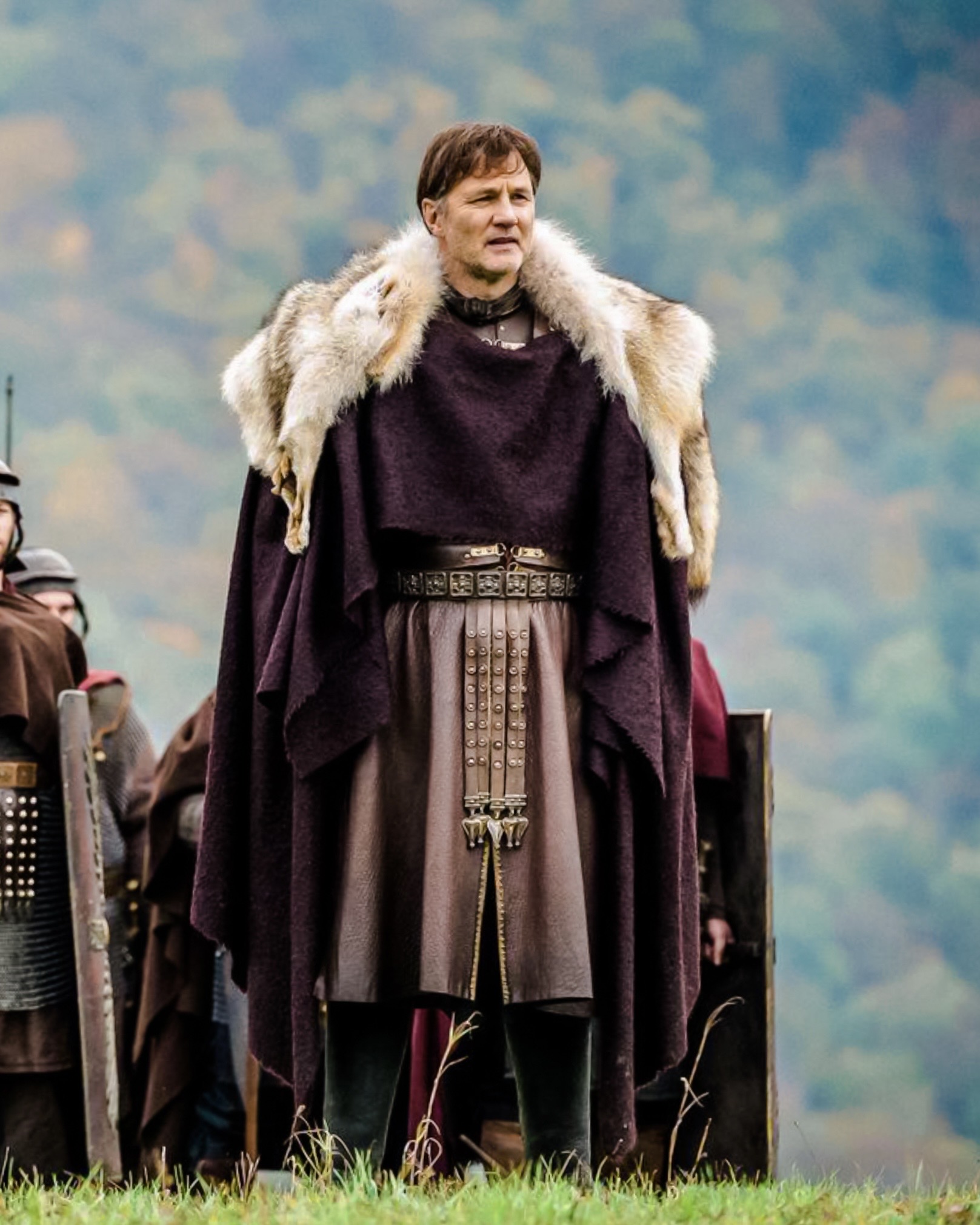
David Morrissey
What Drives a Man in Control?
From The Walking Dead’s Governor to a career defined by authority, David Morrissey remains one of Britain’s most compelling screen presences. In Britannia, he reflects on control, contradiction and the roles that stay with him.
You’ve built a career playing men in positions of power. What interests you about those roles?
I think there’s something in those characters that appears solid on the surface but often isn’t underneath, and that’s always interesting to explore. I do tend to play guys in charge, and there is something familiar in that, but what excites me is when there’s something else going on beneath it — something more personal, or even something slightly fractured. It’s never really about the authority itself; it’s about what sits behind it. The contradictions are where the character lives, because you can have someone who appears completely certain, completely in control, but internally they’re dealing with something very different, and that tension is always something I’m drawn to.
“I’ve been a fan of his writing for a long time.”
When Britannia came your way, what made you want to step into that world?
It was before I even read the script — once I knew Jez Butterworth was involved, as I’ve been a fan of his writing for a long time. I knew that this period in British history was one he had researched extensively. I loved Jerusalem; I’ve seen it about five times. I spoke to him on the phone, and he outlined the character, what he wanted to do with it, and where he wanted to take it, so it was just wonderful to go to work with him, really.
Your character in Britannia leads from the front, but there’s also something unpredictable about him. How did you approach that?
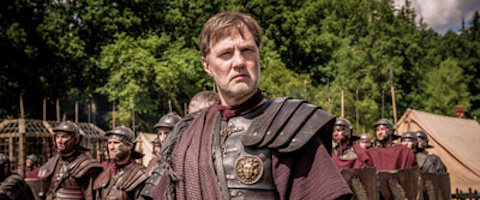
One of the great things about it was working with a writer who really prioritises character. Some writers are more plot- or story-driven, but this always comes back to the character. He gave me great dialogue, and it’s dialogue I could play with, and there is the idea in there of having someone who has commanding dialogue but is also slightly off-piste, going against the norm. You learn that his men want to follow him, but they worry he is going native, and you see his brutality, but also something unhinged in the man. There’s this public side which his soldiers see, and then a private side where he’s on a much more personal and spiritual journey, taking himself to quite a dark place to see what he can find there.
“There’s this public side… and then a private side where he’s on a much more personal and spiritual journey.”
Britannia has a very distinct tone — at times brutal, at times almost surreal. Did that influence how you played him?
For me personally, it was the idea of having someone pursuing a personal agenda within a very concrete force, which Jez was very clear about from the start. He had to be something to his men, but also what he was doing was following something else entirely, which was this spiritual quest for something like immortality. He is a man who is out for discovery, and he will sacrifice himself to have that discovery. It’s a very obsessive pursuit of what these people have, what these Druids possess. He wants that, and there is a kind of psychological breakdown inside the man, so that is what I was there to pursue.
You’ve worked on large-scale series before, including The Walking Dead. How does something like Britannia compare?
Yes, I think what writers often have is a structure, but what they really need to do is finesse it as they go along. We got the scripts as we were going, but in good time, and I’ve grown to like that as an actor. If you are in a big series like The Walking Dead, the writers like to see the rushes and dailies because surprising things will come out of the shoot, and if they are too rigid, they are not developing what is in front of them. It’s a fine line between having a structure you can build on and being open to the elements of surprise that come from performances, chemistry and what’s actually happening on screen.
“It’s a fine line between having a structure you can build on, and being open to what’s actually happening on screen.”
With a script like Britannia, do you find yourself wanting to shape the dialogue?
With this role, there was no need. I know I have done that in the past, but the dialogue is so strong that there is really no reason to change any of it. We would talk about character development and where he would take the character, and I would talk about my feelings about that, but once the script came, there wasn’t much you needed to do with it. As a playwright, he knows how to drive a story through dialogue, and he’s not afraid of big scenes or letting actors carry that weight, which I found a real joy to perform.
Did the journey of this character feel familiar to you, or was it something new?
It felt very different for me. Although I tend to play guys in charge, and there was something familiar in that, it’s a very different sort of journey he makes. He is part of a massive army, part of an empire force, so there is nothing ad hoc about him, nothing spontaneous in terms of his conquering ideas. But the fact that inside him there was a personal and very much a spiritual side to him, that was new, and I was very excited by that.
“I really loved the experience and the character.”
Without giving anything away, would you return to that world?
Yes is the short answer. I’d be up for returning to that world because I really loved the experience and the character, and those are the ones that stay with you.
David Morrissey is an English actor known for roles across film and television, including The Walking Dead. He appears in Britannia.
Interview by Carl Marsh
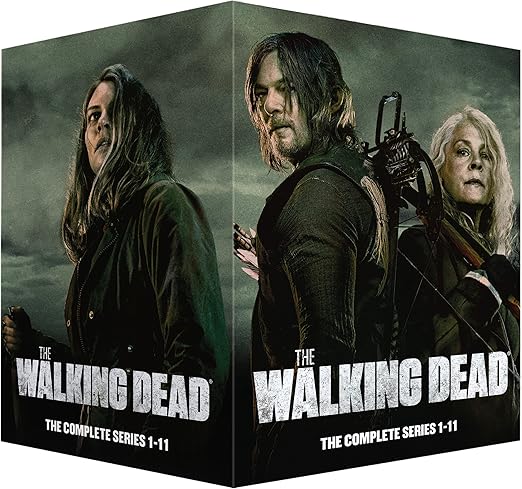
Featured Viewing: The Walking Dead
More Interviews

Whoopi Goldberg


LATEST INTERVIEWS
David Morrissey
Alicia Coppola

Sorabh Pant

Simon Reeve
James Norton

Heida Reed
INTERVIEW DIRECTORY