
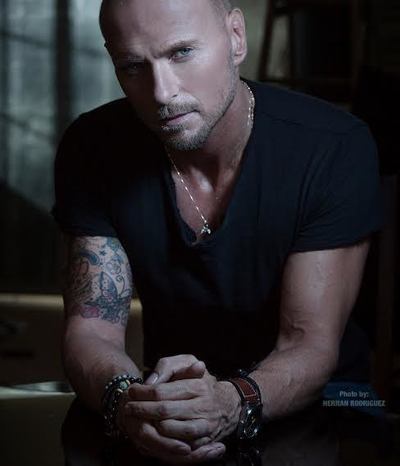
Luke Goss
Holding the Line
From global fame with Bros to a decades-long career in film, Luke Goss reflects on identity, creative control, and the discipline required to stay relevant in a changing industry.
After Bros, was acting always something you were moving towards, or did it just come from needing something that felt like your own?
I think acting was somewhat a ramification of my life at that time. When I left the band, I knew Matt wanted to do his thing, and I guess I didn’t want to be a victim of sitting on my arse, wondering what’s next. I knew it would have to be something that felt like it was mine. I have to give credit to a British stage director, Marina Caldarone, because she asked me to do a show called Plan 9 from Outer Space, which, without a doubt, was the catalyst for my love affair with film and acting.
It was a very modest beginning — repertory theatre, as you know, is certainly not a place for prima donnas, it’s a place where you’ve got to work your arse off. We did a show, and on the opening night, I broke my arm. I thought that was God’s way of saying, “Do you really want to do this?” The crew, the cast, the director — we rallied together, we rejigged a few things, and the audience stayed, which is such a beautifully romantic thing for me, because they didn’t leave. I went to the hospital, got a cast, and rushed back to the theatre. I was obviously extremely scared, as it was my first ever show, but it turned out to be a big success, and we toured it around the UK. That was the kick-off, really. I felt more camaraderie, support, and friendship from that little show than I had ever felt in years of music. I am quite a simple person at heart, a down-to-earth individual, and there was just something very real about that environment — a support system built on people trying to succeed together. It’s a collaboration, and that felt great. Then followed theatre in the West End and over 50 films. There’s something intoxicating about the collaborative energy of drama — film, stage — it just gets under your skin.
“I didn’t want to be a victim of sitting on my arse, wondering what’s next.”
Do you still feel like there’s something unfinished with theatre, even after everything film has given you?
You know what, maybe one day in the future — maybe a decade from now — if there is a really lovely little play, something simple that’s really dependent on the writing and maybe a co-star or two. Film can be quite grand at times, and certainly with the band it was a huge machine, but theatre — especially smaller productions — is beautifully intimate. It’s about people listening to words and suspending disbelief in a way that feels almost sacred. You can have something as simple as a wicker basket on stage, and people accept it as a carriage, and they’ll go with you on that journey. That’s an experience that’s hard to replicate anywhere else.
So yeah, maybe one day I’d like to do that again, maybe with a friend, someone I’ve worked with before, and just say, “Let’s do something for a few weeks and see what happens.” I wouldn’t want a long run again, I know that, but a short, intimate piece — something honest and stripped back — that would be special.
Now you’ve moved into writing and directing as well. How do you see yourself evolving on that side?
Well, I’ve been producing and writing screenplays regularly, and stepping into directing feels like a natural progression from that. I wouldn’t be bold enough to say I’m trying to set myself apart in some grand way, but I know what I’m drawn to. I love photography, I love composition, and I’m inspired by filmmakers like Michael Mann, Michael Bay, and David Fincher — and for composition, Federico Fellini is the Holy Grail. What interests me is letting things breathe. Not everything has to be cut, action, cut, action. There’s something powerful about a longer shot, even one that feels slightly uncomfortable in its length, because you know it’s deliberate — it’s not a mistake, it’s a choice. We all have busy lives, and I think there’s something valuable in sitting down with a film that isn’t just trying to give you a ride, but is trying to hold your attention differently. Something quieter, something more considered — that’s the kind of space I’m interested in exploring.
“Not everything has to be cut, action, cut, action.”
What is it about the industry now that doesn’t quite sit right with you?
I’d much rather work with people who genuinely love film, people who aren’t dependent on massive budgets or huge marketing machines. It’s more about saying, “Let’s take what we have — a script, characters, some glass, a camera — and see if we can create something truthful.” If I can find an audience that connects with that, then I can keep doing it for the rest of my life. I always think of it like music — do you make a single to chase the charts, or do you make an album because you believe in it? I’ve always leaned towards making the album. I don’t need to be the new hot thing; I want people to say they like the films and they feel the integrity behind them.
For me, I don’t want to be an employee for the rest of my life. There are a lot of people trying to achieve things for reasons that don’t really interest me — fame, notoriety, playing the game, networking. I couldn’t give a fuck about networking; it’s tedious, and I’ve never believed that it’s the thing that leads you to the work you really want to do.
“I couldn’t give a fuck about networking; it’s tedious.”
At this point, what actually keeps you grounded in it all, rather than getting pulled into that side of it?
I think letting go of ego is something you can only really arrive at with time. As Robert Davi once said to me, “You and I are soldiers of cinema,” and that stayed with me. We don’t always have the luxury of picking and choosing at the highest level, so you have to find a way to create something truthful and authentic regardless of the circumstances. This business can chew you up and spit you out if you chase the wrong things, if you get caught up in the idea of being the next hot thing. So you take a breath, you focus on the work, and you keep going. Some things will land, some won’t, and that’s just part of it. For me, the goal is simple — to keep doing this for the rest of my life. And once you accept that, it changes how you approach everything.
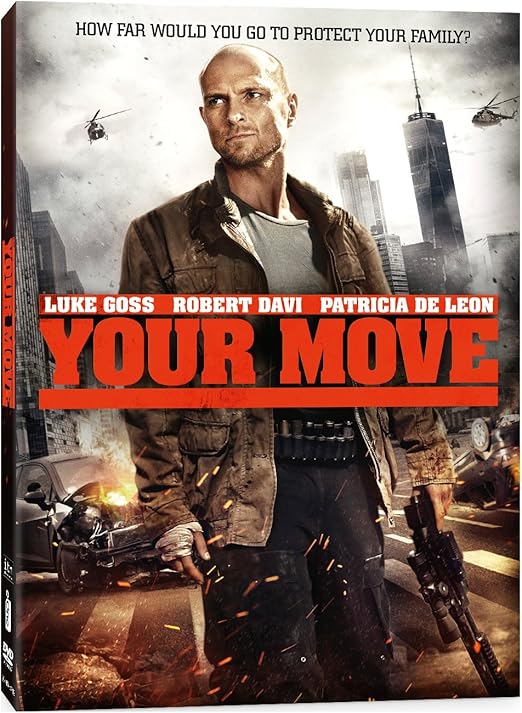
Looking back at your directing debut, Your Move, what were you trying to get across with that story?
Of course…Your Move, which I directed, and I’m massively proud of it because it’s been a real labour of love and a huge amount of work. It’s a story about a man whose wife is targeted by someone who believes she belongs to him, and that obsession leads to something very dark. There’s a moment early on where he witnesses a brutal attack on his wife and child over a video call, and from there it becomes about what he has to do to try and get them back. Her father has connections to the underworld, which complicates things because I can’t reveal everything I know in case it shuts the whole thing down before I get to them.
What I wanted to do with it was bring the audience into that frustration — they see the villain early, they know what I know, but the system says otherwise, and you’re stuck trying to prove something you already know is true. It becomes a cat-and-mouse story, but also a grounded thriller about what someone would actually have to do, on their own and without resources, to try to save their family.
“This business can chew you up and spit you out if you chase the wrong things.”
And on that one, who did you end up surrounding yourself with?
I had Robert Davi in it, Patricia De León, and an actor I found called Alain Mora — and he is a fucking tour de force. I felt very lucky to have found him because he’s genuinely worthy of some serious recognition. Patricia, who played my wife, was just incredible — completely raw, completely believable, everything was there on screen. Davi gave what I think is one of the most character-driven performances I’d seen from him in a long time; he was just on another level in it. I was in it as well, playing the lead, so it was a big experience for me, both in front of and behind the camera.
Working on projects like that, what did you find yourself valuing more in the people around you?
Well, I worked again with Perry Bhandal, who directed Interview With A Hitman, and we always had a strong working relationship. We put together The Last Boy, and both of us were very focused on getting the script right — really pushing it as far as it could go before anything else. That was always important to me because if the script didn’t work, nothing else mattered. We approached it in a very collaborative way, just trying to make the best possible film without getting caught up in anything around it, and that’s something I’ve come to value more and more — working with people who are there for the right reasons and who genuinely care about the work.
When a role pushes you slightly out of your comfort zone, is that something you actively lean into?
That one with Paula Patton and Omar Epps, directed by Deon Taylor — Traffik — was a good example of that because it deals with human trafficking, so straight away you’re stepping into something quite heavy. I play the nemesis in that story, and he’s not a nice character at all — he’s a fucking arsehole — and it was one of the few times where I was genuinely relieved when it was over. It pushed me because there were elements of it I wasn’t entirely comfortable with, especially around invading a woman’s space on screen. I knew I could do it, but I didn’t know if I wanted that experience or that kind of role attached to me, and then I thought, you’ve got to face that. If something makes you uncomfortable, there’s probably a reason to explore it. Working with strong actors around you helps, and I think sometimes those roles teach you something, even if they’re not enjoyable in the moment.
“He’s not a nice character at all — he’s a fucking arsehole.”
When you’re choosing roles now, what actually draws you in — hero, villain, or something in between?
I’m happy to play both, but to be honest with you, villains in scripts lately can feel a bit flat. The kind of villains I’m drawn to are the ones that feel human — someone like Benicio Del Toro, where you can understand them even if what they’re doing is wrong. There’s something tragic in that, and it makes them far more interesting to watch. If I’m playing a hero, I’d rather they were flawed, a bit rough around the edges. If it’s just someone trying to take over the world, I couldn’t give a fuck about that. What I like is when a character believes they’re right, even if the audience knows they’re not — that tension is what makes it compelling. With Victor in Interview With A Hitman, that was the challenge. I kept thinking, how do I make someone like this watchable? What I realised is that if you strip away arrogance and posturing, and just let him exist in a very contained, stoic way, people will stay with him. He’s in that world because it’s kill or be killed, he’s good at it, but he wants out — and that’s where it all unravels. That’s the space I enjoy — the anti-hero, someone operating in grey areas, doing what they believe is necessary. The clean-cut version of a hero doesn’t really interest me.
What kind of themes do you find yourself drawn to now when you’re reading a script?
I am a very spiritual person, so I always feel like whatever I’m involved in has to respect that in some way, but at the same time, I’m interested in the question of what someone would do when they’re pushed. No matter what your position or your beliefs are, if it comes down to protecting your family, what would you actually do? That’s what I love about film — you can explore those contradictions, you can push something to the point where it becomes uncomfortable or even controversial, and once people start debating it, you know you’ve got them because it means they care. I’m always drawn to that tension, that balance of opposites, and from a filmmaking point of view, I love that world as well — working in shadows, letting the audience fill in the gaps rather than showing everything. If you trust the audience and don’t spoon-feed them, it makes the whole thing feel more engaging and more real.
Is there any kind of film shoots or styles that you find yourself switching off from?
If I’m honest with you, I don’t enjoy films that feel overly lit, overly clean, or formulaic, where everything is right there in front of you, and nothing is allowed to live. You get that feeling sometimes where it’s just cut, cut, cut, constantly pushing you forward, and you never get a chance to sit in a moment. I remember watching Kingdom of Heaven, and right at the beginning, you had a character you felt you could sit with, even follow into battle, and that’s what I think films need to give you — a connection. When something feels overly controlled or shaped by too many outside voices, you can sense it, and it becomes harder to invest in. For me, cinema should be driven by story, character and composition. When that disappears, it can start to feel more like a video game than a film, which is why I find myself drawn more towards independent work, as it tends to feel more sincere.
Do you think many action films now end up chasing scale rather than building something people can actually connect to?
On the record, I have to say Michael Bay is still the guy who does it right; he knows exactly what he’s doing. The first Transformers had a lot of charm; those characters had heart, and even within that scale, something was engaging about it. A lot of people try to emulate that, and you can see the influence everywhere, but another director who had a huge impact on me was Tony Scott — he was just a glorious filmmaker, and when people have compared things I’ve done to something like Man On Fire, that’s a massive compliment because that’s a film with real weight to it. The difference is that when a story scales back, it works, but when everything becomes about bigger destruction and more chaos, you lose sight of what actually matters. If you don’t care about what’s happening to the people in the story, then none of that scale really means anything.
The industry can be pretty brutal in how it judges people — how have you learned to deal with that over time? I’ll be honest with you, it doesn’t get any easier. People think you develop this thick skin, and some do, but I don’t. You’re always going to be judged — too this, too that — and then on the other side, sometimes you’re exactly what people want, so you have to find a way to live with that. For me, it comes down to acceptance. I look at myself and think this is what I’ve got, this is who I am, and that has to be enough. I meditate every morning, I pray, and that helps ground me because it keeps things in perspective when everything else is noisy — work, promotion, expectations — it can become overwhelming very quickly. So I try to simplify it, acknowledge when something hurts because it does, but don’t let it take over. This is a subjective business; people are going to have opinions, and you have to be able to take both the good and the bad without letting either define you.
“That’s what I love about film — you can explore those contradictions.”
Is that where the spiritual side of things really comes in for you — keeping yourself grounded in all of it?
I have been because my grandfather was a spiritualist and a healer, and I was raised by him and my mother, who I lost a few years ago. It’s always been a big part of my life, but what really changed things for me was taking some time away from film. I just decided I needed to step back for a while because I realised I was constantly on set, constantly working, and although I loved it, I wasn’t really checking in with myself. So I took that time to focus on meditation, on simplifying things, and just trying to understand who I was a bit more clearly. When I came back, people noticed it — they said I seemed calmer — and I think that’s what it gave me. You still take the work seriously, of course, but you stop letting it consume you, and that shift made everything feel a lot more manageable.
And physically as well, you’ve always kept yourself in great shape — how do you approach that now?
I decided years ago with my wife that we would follow something we call “our life age” — it’s basically about how you feel rather than what the number says. I’ve always believed that age can sometimes pull you into certain behaviours, how you dress, how you move, how you train, and I’ve never really bought into that. For me, it’s about staying strong, staying active, and living with that same energy. I eat well, I train regularly, and I probably work harder now than I did in my twenties, lifting heavier, staying agile, just looking after myself. At the same time, mindset plays a huge part in it. If you carry negativity or cynicism, that wears you down far quicker than anything physical. I’ve always tried to stay open, to be kind, to connect with people — even something as simple as replying to someone who reaches out can have a real impact, and that matters to me. I think that kind of energy keeps you going just as much as anything you do in the gym.
What made you want to step back into music with Bros?
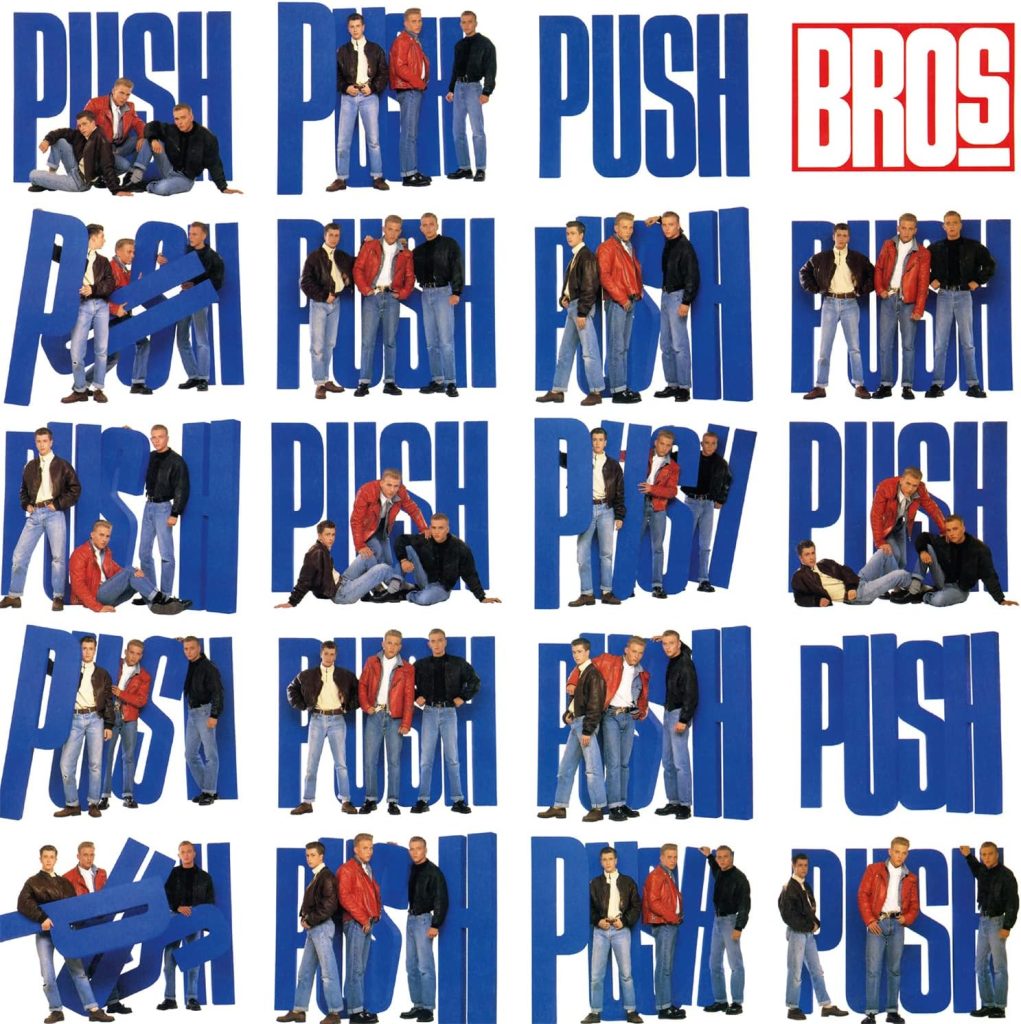
For me, it was something I genuinely wanted to do — I didn’t need to do it, which is a nice place to be, but I wanted music back in my life. I love playing the drums, I always have, and the idea of getting back on stage, seeing the fans again, and just playing loud music felt right. When me and Matt started talking about it again, it wasn’t about trying to recreate something; it was more about how we could do it in a way that felt right now, something that still had the energy people remember but also felt current. There’s always going to be noise around it, people questioning why you’re doing it, but for us, it was about doing it properly. We put everything into it so that the fans would get a great experience, and that’s what matters. If people come away feeling like they’ve had a great night and the music still connects, then that’s the win.
When you look at the work now, what are you actually trying to move towards?
I’ll definitely continue directing, but for me it’s about finding the right story — something I can really commit to, because directing isn’t something you dip in and out of. It stays with you long after filming finishes, through the edit and everything else, so it has to be something you really believe in. At the same time, I’m more selective now, because it’s easy to keep saying yes, especially when it’s your livelihood, but doing too much can work against you. So it becomes about choosing carefully — finding projects that I connect with, that feel right, and that hopefully the audience will connect with as well. There’s a lot out there, and not all of it is worth your time, so you have to navigate that and stay focused on what actually matters to you creatively.
“People think you develop this thick skin, and some do, but I don’t.”
And when people look back in twenty years, what would you want them to understand about you?
I’ll be well into my sixties by then, so I don’t know (laughs), but I think I’d like to feel that I’ve represented myself more accurately over time. When you’re part of something big at a young age, people form an idea of who you are very quickly, and that doesn’t always reflect reality. I was just a kid trying to figure things out, and a lot of that stays with you. What matters to me is consistency — that whatever I’ve done, whether it’s music, film or anything else, there’s been an authenticity to it, something genuine running through it. I want people to feel that who I am and how I’ve been seen eventually line up, that there’s no gap between the two. And beyond that, just that I was a good person, that I approached things the right way, and that I stayed true to myself.
Luke Goss is an actor, filmmaker and musician, best known as a member of Bros and for a wide range of film roles across action, drama and independent cinema.
Interview by Carl Marsh
More Interviews

Whoopi Goldberg


LATEST INTERVIEWS
David Morrissey
Alicia Coppola
Sorabh Pant

Simon Reeve
James Norton

Heida Reed
INTERVIEW DIRECTORY