
Andrew Lewis Conn
Cinema, Culture and the Making of a Big American Novel
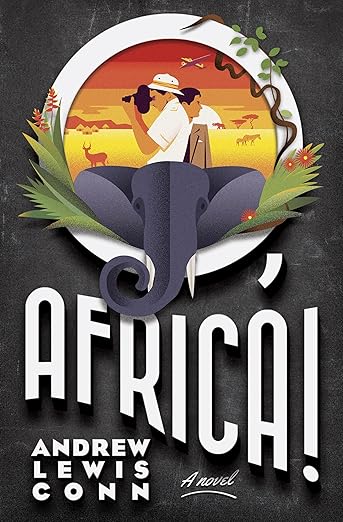
Novelist Andrew Lewis Conn discusses the origins of O, Africa!—a sweeping story about cinema, culture and identity—and reflects on the strange psychology that drives writers to spend years chasing a single idea.
How did O, Africa! come to be?
Similar to my experience writing P, my first novel, with O, Africa! I wanted to write a self-consciously big book — a big American book that grapples with big American themes. At least for now, I’m a maximalist: the material has to be big enough, expansive enough, to sustain me over years and years while I’m working full-time.
The initial spark of inspiration came in 2002 from reading an article by Michael Wolff in New York Magazine that mentioned a documentarian compiling the world’s largest video repository of September 11 footage. Wolff’s article had a one-sentence reference to the Korda brothers, “who in the early days of Hollywood created a bank of footage about the African bush that became the B-roll for every movie set in Africa.” It was just one line, but I remember thinking: “Good Christ, there’s a big book in there.” The early days of cinema, the birth of the movie industry, the first cameras rolling into Africa — the imposition of technology on the primitive. This felt like incredibly rich material. Other tailwinds began gathering. One of my favourite authors, Norman Mailer, once wrote that “minorities are the nervous system of America,” a great line with which I wholeheartedly agree. Around the same time, I was hugely enamoured with Michael Chabon’s The Amazing Adventures of Kavalier & Clay. I began wondering whether a similarly ambitious novel could be written about the birth of American cinema. So instead of the Kordas — three Hungarian brothers who left Eastern Europe and co-founded London Films — I started imagining twin American-Jewish brothers in New York who become entangled with a group of Harlem gangsters.
Film and photography. The shift from a literary culture to a visual one. How pop culture rolls over history: siblings, identity, race and sexuality in the early twentieth century. The themes kept snowballing and gathering mass, and after being fortunate enough to spend time at a couple of writers’ colonies, I finally began writing O, Africa! in February 2007. Now the thing about starting a book — and most of my writer friends recount something similar — is that you do everything you can to push it down and away and not commit to the thing. Writing a novel is going to be a huge pain in the ass: years of uncertainty, constant distraction, and a strain on the people around you. The trigger moment comes when the idea begins to take over organically — when it becomes psychologically easier to begin the book than to keep pushing it away.
“Good Christ, there’s a big book in there.”
Why was it important for you to tell this story — and what do you hope readers take away from it?
It’s kind of a cliché, but we keep certain clichés around for good reason: you write the book you’d want to read. No one else was going to write O, Africa! so that mad dream fell to me, and with that comes the responsibility — and the pleasure — of bringing such a story to life.
O, Africa! felt like a way of writing about America on a grand scale. You could argue that, along with jazz, movies are our great indigenous art form. There’s also a fascinating contradiction at the heart of American culture — a nation founded on the idea of freedom that practised slavery — and you see something similar in The Birth of a Nation, which is both the Rosetta Stone of narrative cinema and a deeply troubling historical document.
As for what I hope readers take away from it, I hope the novel entertains and surprises people. I’m a novelist, not a polemicist, and I believe novels should help us ask better questions rather than pretend to offer definitive answers. Ideally, readers will tell me what they take away from the book — and those responses will entertain and surprise me in return.
Your protagonists, twin brothers Micah and Izzy Grand, couldn’t be more different. How did you approach writing two distinct voices?
I liked the idea of having split protagonists who complement each other yet play off each other — and together form a kind of whole. I also love what I’ll call yin-yang movies, where two characters, closer than brothers or lovers, find themselves completing each other and, in some ways, functioning as a single character. Here I’m thinking of Mean Streets, Dead Ringers, or The Master — films where the tension between two personalities becomes the engine of the story.
In terms of writing in character and developing distinct voices, some writers describe their characters as “taking over.” While admitting that I’m one of those authors who walk around mumbling dialogue to himself, I’d suggest that I’m writing a novel, not holding a séance. The process of building a character is closer, I think, to a jazz musician taking flight or a good actor improvising in character: the craft and the structure give you the room to play. It’s the baseline technical requirements that allow that sense of awakening and discovery.
When creating a character, I try to determine the central question that the character poses to the world. What is it they hope to achieve — even if they’re in hiding from that realisation? And is that question compelling enough to sustain the character across the length of a long narrative? At the most basic level, Izzy — the quieter, more introspective of the twin Grand brothers — is trying to learn to be comfortable in his own skin as a gay man in 1920s America and to feel worthy of love. Micah was harder for me to define. I always imagined him as something like a young Orson Welles-type figure who seems to have no trouble satisfying all of his rapacious urges. Ultimately, though, I think Micah wants to know whether he is capable of being a good man. He attempts to reinvent himself as an artistic and romantic hero through the African experience and through his relationship with his mistress Rose, an independent-minded, light-skinned Black woman he finds himself deeply in love with despite himself. I have my own opinion about whether each brother ultimately achieves what he’s looking for, but I’ll leave that for readers to decide.
“The only thing more miserable than a writer working on a book… is a writer not working on a book.”
Do you see any of yourself in the brothers?
Yes. When I began O, Africa! I thought it would come as a relief to write something that wasn’t contemporary or directly autobiographical. In the end, however, as a friend once put it: “There are method actors — and you’re a method writer. You pour yourself into your characters.”
Micah represents the boisterous side of my personality, while Izzy reflects the quieter, more introverted side. The book, for all its plotting and period detail, ended up being intensely personal and emotionally autobiographical in ways that surprised me while writing it.
I often compare what authors do with what actors do when building a character. The work is really about understanding motivation and behaviour — the tools are simply different: words instead of voice, expression and movement. The method-acting comparison is useful here. No one watches Gangs of New York or There Will Be Blood and thinks it’s terrible that Daniel Day-Lewis killed all those people, especially when he seems so thoughtful and soft-spoken when accepting awards.
Yet people often assume writers practise a kind of personal cannibalism, where the writer and everyone in their life becomes a one-to-one analogue for characters in their fiction. And it just isn’t so.
Even if you begin with a real person as inspiration — say, your father — the technical demands of narrative quickly reshape that figure. Plotting, pacing, setting and suspense bend the character into something new. So yes, you draw from memory, dreams and lived experience, but the process becomes one of selection and amplification. Ultimately, I think writers spread themselves across all their characters. And finally, it’s worth mentioning that the book is dedicated to my sister, Jennifer. I don’t have a brother, but through the Grand boys, I wanted to explore the sibling relationship, which is such a rich one because your brother or sister is often the only peer who stays by your side throughout your life. They’re also the family fact-checkers, the ones who confirm that yes, things really were as good, strange or messed-up as you remember.
Your debut novel, P, explored filmmaking, and O, Africa! returns to that world. In another life, might you have become a filmmaker?
Movies were my first love; fiction, the woman for whom I left my girlfriend to marry my wife. I studied film in college and have always felt I learn more about writing—about plot, dialogue and character motivation—watching good actors in movies than from novels. Take the improvised scene in On the Waterfront where Marlon Brando picks up Eva Marie Saint’s dropped glove and puts it on his own hand: it teaches you almost everything you need to know about subtext and about how characters turn psychology into behaviour.
It was also the film critic Pauline Kael—with her punchy, jazzed-up prose and that seductive, conspiratorial use of “we!”—who was the first writer I got really excited about. Reading her reviews from old collections in The New Yorker during lunch breaks in the library at Stuyvesant High School was when I first became aware of what it meant for a writer to have something called “voice.”
I studied film in college and even made a full-length movie in New York with a group of students the summer I was nineteen going on twenty. It was terrible. After graduating, I wrote about films for publications including Film Comment and Time Out New York for many years, and later worked in entertainment PR for more than a decade. So yes, my love of movies absolutely informs my writing and choice of subject matter. Thematically, O, Africa! is concerned with the moment when American culture began shifting from a literary culture to an audio-visual one, and exploring that transition fascinated me.
“I believe novels should help us ask better questions rather than pretend to offer definitive answers.”
O, Africa! takes readers from the Coney Island boardwalk to the African bush. How did you choose such varied settings?
One of the great privileges of being a writer is the ability to go anywhere and do anything. London, the African bush, early Hollywood, a character arriving via Coney Island’s Wonder Wheel—why not? I’m a proud Brooklyn native, and Coney Island has always been one of my favourite places. The opening set piece of the novel—the filming of Quick Time in Coney Island—draws inspiration from Harold Lloyd’s 1928 film Speedy, which famously includes a cameo from Babe Ruth.
I’d long wanted to write about Coney Island, and its historic place in American popular culture—along with the way the early movie industry grew out of carnival and vaudeville traditions—made it the perfect starting point for the book.
One of the earliest decisions I faced was whether the African sections of the novel should take place in a real country or an invented one. In the end, I decided I wasn’t trying to write an anthropology textbook or a scholarly study of colonialism. I had two precedents in mind: Saul Bellow’s Henderson the Rain King and John Updike’s The Coup. So I created the fictional country of Maliki and intentionally made its wildlife and landscape feel almost like a Noah’s Ark—an exaggerated, dreamlike environment.
There was another practical reason, too. I wanted the Africa sections of the novel to gradually take on a magic-realist quality, and I worried that doing too much literal research might box in my imagination—or, worse, cost me years. There was also a thematic justification: the Grand brothers themselves know almost nothing about Africa when they set off on their journey, which feeds one of the book’s larger ideas—how popular culture can steamroll facts and reshape our collective understanding of history.
The novel is set in 1928. What was your research process like when recreating that world?
Having never written historical fiction before, one of the early questions I wrestled with was the classic chicken-and-egg problem: do you spend years researching until you reach a point of confidence, or do you simply start writing and discover what you need to know along the way?
When I began the book, I was freelancing, and one of my jobs was private tutoring. Following along with my students’ prep-school reading lists gave me the chance to revisit many of the books I’d loved growing up. Returning to writers like Hemingway and Fitzgerald — novels actually written in the 1920s — reminded me of something obvious but important: good novels from a period don’t read like period pieces.
Frederick doesn’t sidle up to Catherine and say, “Would you like a bite of this Clark Bar, the most popular candy bar in America in 1928, with sales of three-and-a-half million a year?” Re-reading those books was a revelation. It freed me from the idea that historical fiction has to be loaded with factoids. Instead, it’s about choosing the one or two details that quietly convince the reader you know what you’re talking about.
There was some film watching — The Birth of a Nation, Speedy, and a lot of Harold Lloyd to help shape the Henry Till character — though probably fewer silent films than readers might expect. Inspiration also came from unlikely places: Susan Sontag’s On Photography, Walter Benjamin’s essay “The Work of Art in the Age of Mechanical Reproduction” and even music. Arthur Marblestone’s entrance via the Wonder Wheel was sparked by a lyric from Bob Dylan and The Band’s Basement Tapes — “Now I come in on a Ferris wheel, and boys I sure was slick.” And the photographs from Leni Riefenstahl’s African expeditions left a deep visual imprint on me. When you’re writing a book intensely, you find yourself pulling ideas from everywhere around you.
More than anything, though, I wanted to find a voice that felt right for the period. One decision that helped was writing the book in the present tense — “he says,” “she goes” — something I borrowed from John Updike’s Rabbit novels. It gave the story a sense of immediacy and prevented the book from feeling like an exercise in nostalgic recreation. As Philip Roth once put it when discussing The Plot Against America: “Remember, don’t invent.” With O, Africa! I wasn’t trying to recreate the 1920s with documentary accuracy — I was trying to capture the people and places living in my imagination.
“Movies were my first love; fiction, the woman for whom I left my girlfriend to marry my wife.”
What would you say is your favourite book, and why?
I’d probably have to say Ulysses, corny or pretentious as that might sound. I was determined to write a novel after finishing college. Although I intended to take an intensive Ulysses seminar during my senior year, a scheduling conflict forced me to tackle the book on my own a year or two later, working slowly through it with annotations and guidebooks.
Reading Ulysses that way was the great reading experience of my adult life. It changed my sense of what a novel could do. The only way I could deal with that influence was to face it head-on. I remember comparing it to playing tennis against someone vastly better than you: you know you’re going to lose, but you hope you’ll come out a better player for the experience. My first novel, P, ended up as a strange contemporary riff on Ulysses, set in 1990s New York and starring a failed pornographer as the Bloom figure and a ten-year-old girl genius as a modern Stephen Dedalus.
What other books belong on your top shelf?
Norman Mailer was a huge influence on me growing up. I loved the sheer ambition of his writing and the sense that writing serious fiction is hard work — back work — not just an airy intellectual exercise. Alongside John Updike’s Rabbit tetralogy, which was another formative reading experience, I’m not sure there’s another book that tells us more about America than The Executioner’s Song.
Philip Roth is another enormous influence. His work is both manic and controlled, comic and high-minded, colloquial but literary. My two favourite Roth books are probably The Counterlife — which shows how to do postmodernism without gimmicks — and Sabbath’s Theater, which is astonishing. The mix of explicit sexuality with profound reflections on family, memory and mortality feels almost acrobatic.
Beyond that, I probably learned more about voice from the film critic Pauline Kael than from most novelists, so I’d include her collection For Keeps. Nabokov’s Lolita remains endlessly renewing and inspiring, and the opening section of Don DeLillo’s Underworld might be the finest fifty pages written in the last quarter-century. The usual suspects, really.
“One of the great privileges of being a writer is the ability to go anywhere and do anything.”
How did you get into writing?
I was always interested in writing, but film was really my first love. I was a dual major in film and English in college, and the deeper I got into film production, the more I realised I wasn’t particularly suited to it. What I loved about fiction was the directness of its expression. My first published pieces were film essays and criticism, and there are still aspects of filmmaking I adore: the camaraderie of collaboration, the moments when something magical happens on set, and the way student filmmaking often feels like a mix of carpentry and art because of the sheer amount of physical work involved.
I still love movies and spend an inordinate amount of time thinking and talking about them. But I’ve come to agree with David Foster Wallace, who once said in a Charlie Rose interview that the novel remains one of the best devices ever created for teaching us what it means to be human. When I’m gone, if someone wants to know what this odd guy from Brooklyn thought about time, God, technology, sex, movies, America, work or family, they’ll be able to look at the books and get a fairly clear sense. Not necessarily in a straightforward autobiographical way, but in the sense Martin Amis suggested when he said, speaking about Lolita, that “style is morality.”
The deeper I’ve gone into fiction writing, the more I’ve come to see it as a kind of freedom. Beyond the pleasure of crafting sentences or building characters that feel psychologically real, writing allows you to go anywhere and do anything. When I’m writing, I’m no longer my mother’s son, my wife’s husband, my daughter’s father, a Nice Jewish Boy from Brooklyn, or a Senior Vice President at a communications company. I am answerable to no one. Of course, I value all those roles in real life, but balancing honouring them while temporarily rejecting them to create something new is complicated. Any work of art worth its salt, in a sense, exists because the artist believes something new needs to exist. Writers are a psychologically complicated tribe.
What advice would you offer to someone who wants to write?
Read widely. Tough it out at a day job rather than rushing into an MFA. Surround yourself with a small group of honest readers who will critique your work without agendas. Be ruthless with yourself. Make no excuses. Get your ass in a chair — and keep it there.
“The novel remains one of the best devices ever created for teaching us what it means to be human.”
What are you currently working on, or planning over the next year or so?
I’m working on taking a nap. Beyond that, my third novel, The Dream Life of Corporations, aims to be what I’d call a “Big Book About the Way We Live Now,” in the tradition of Joseph Heller’s Something Happened, John Updike’s Rabbit tetralogy, and Jonathan Franzen’s achievements with The Corrections and Freedom.
The inspiration for the book comes from several places. For nearly twenty years, I’ve made a living in New York working in public relations and corporate communications. In other words, I’ve earned my daily bread as a writer, but I’m practising a very specific kind of writing with very specific business objectives. The way language is deployed and manipulated in corporate communication feels like extraordinarily rich territory for fiction. I’m also fascinated by how dramatically our working lives have changed in such a short period of time. My parents retired just before the internet, email and social media completely reshaped the workplace. If they were dropped into an office today, they would hardly recognise what work even is anymore. Trying to describe that shift — the endless loops of communication, the constant connectivity, the tension between professional life and inner imaginative life — feels like a responsibility a novelist should take on. At the same time, I want the book to be deeply Freudian. I’ve long believed that dream life and unconscious life are just as rich and meaningful as our waking experience. Corporate culture, with its obsession with ego and persona, often tries to suppress that unconscious world — but Freud would say the unconscious always finds its way back out. So the collective dream life of the corporation becomes something strange and unruly. The novel will be about visions, personas collapsing, and repression breaking loose — think David Lynch’s Blue Velvet set in a New York office. There have been some very good recent books about the lower rungs of office life, like Joshua Ferris’s Then We Came to the End and Ed Park’s Personal Days, but I don’t think anyone has yet attempted a large-scale novel about the upper levels of corporate communication culture. As I’m only just beginning serious work on it, I’ll end with a note about ambition: when you start a book, you have to convince yourself it’s unprecedented, the most important thing you’ve ever attempted. Norman Mailer once compared novelists to terrorists — both spend years secretly working on a grand plan, driven by the belief that if they pull it off, they might alter society’s consciousness just a little. Writers are a strange tribe.
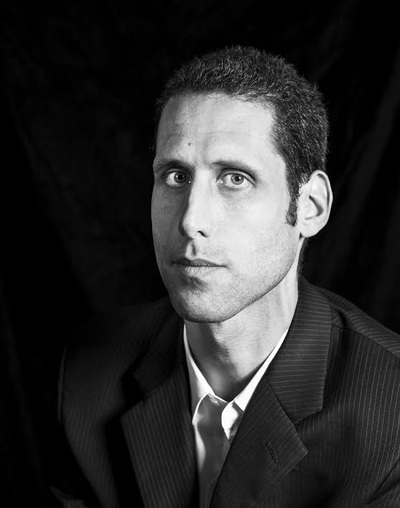
Andrew Lewis Conn is the author of the novel O, Africa!, a work exploring cinema, culture and identity in the American imagination.
Further Reading: O’Africa!
More Interviews

Whoopi Goldberg


Interview by Carl Marsh
LATEST INTERVIEWS
David Morrissey

Alicia Coppola

Sorabh Pant

Simon Reeve

James Norton
Heida Reed
INTERVIEW DIRECTORY