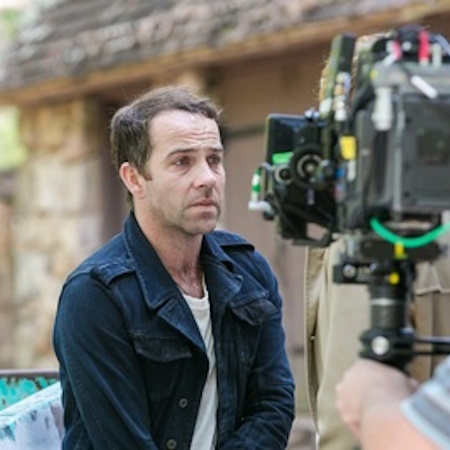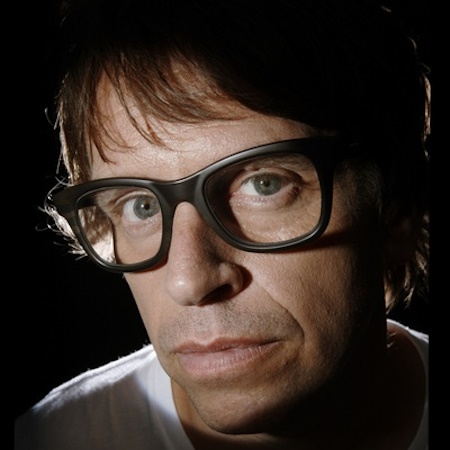


Jason Hewitt
Where History Becomes Story
Blending historical detail with human drama, Jason Hewitt draws on the past to explore the present. Best known for The Dynamite Room, he reflects on storytelling, research and the line between fact and imagination.
What first drew you to writing historical fiction, particularly the Second World War?
Well, I’ve got a history degree so, to be honest, I’ve always been a bit of a historian at heart. I don’t really know where the initial idea for The Dynamite Room came from, but at some point I decided that I was going to write a novel set during the Second World War. It’s such a rich period for storytellers, but I wanted to do something different, and then by chance I came across a story about a beach in Suffolk called Shingle Street where, apparently, German debris would sometimes wash up — clothing, food wrappers, even bodies — and the fear from locals that one day a German would wash up on the shore but he wouldn’t be dead. From that I started to think, if a German soldier did arrive on the Suffolk coast in 1940, what would he do first? Probably take refuge in a house somewhere, and if he did, who would be the most unlikely person for him to be holed up with? From there, Lydia was born.
“If a German soldier did arrive on the Suffolk coast in 1940, what would he do first?”
Your work moves across different countries during the war. What draws you to those less obvious parts of history?
Yes, the idea of Norway as a setting was actually in my mind before Suffolk, although I wasn’t sure whether I would get it into this story or whether it would have to wait for another novel. I’d written a book before that was never published which touched very briefly on Sweden’s involvement in the war, and I made a small reference to Narvik in northern Norway and the battle there in April 1940. It was really just a throwaway detail at the time, but it stuck with me, and the more I read about what happened there, the more I realised I wanted to explore it further. When I realised this story needed a second location, Norway felt like the obvious choice, partly because it’s a part of the war that many people outside Scandinavia don’t know well.
You’ve spoken about physically acting out scenes while writing. What does that process give you?
Ha! You would have thought one of my neighbours might have checked I wasn’t actually grappling with a German soldier in my living room. You get all sorts in Wimbledon. To be honest, I think they’re used to me making strange noises and thumping around by now. Acting out scenes does help though — it gives me a sense of how a character might stand or move, the small physical details, the habits, the little things like picking at a floorboard or drumming fingers. Those details are often what make a character feel real on the page.
“Those little physical details are often what make a character feel real.”
You work across novels, theatre and acting. How do those different disciplines feed into each other?
At the moment I describe myself as a novelist, playwright and actor, in that order, mainly because I’m spending most of my time writing novels and I haven’t acted for a year. I’d like to juggle all three, but something always has to take priority, and right now that’s writing. I’ve got a play going up to Edinburgh Fringe this year though, and I’d love to do more acting again when the opportunity comes along. Acting is the perfect antidote to the long, solitary hours of writing.
If one of your stories were adapted, would you ever want to step into that world yourself as an actor?
I would bite my hand off to play Heiden in an adaptation — not my writing hand, obviously — but in all honesty I know my limits and I’m probably not a good enough actor for what would be a very demanding role. I also don’t really look anything like him. I’d need to be more toned and considerably better looking for a start. If Michael Fassbender, Damien Lewis or Tom Hiddleston are available though, they’re very welcome to get in touch.
“I would bite my hand off to play ‘Heiden’ — not my writing hand, obviously.”
Is there one book that has stayed with you more than any other?
That’s almost impossible to answer, but if I had to choose I’d probably go with Wuthering Heights. I’ve always loved nineteenth-century Gothic fiction, and it has everything — it’s savage, dramatic, ghostly, bleak and deeply romantic, and beautifully told.
Jason Hewitt is a British novelist, playwright and actor, best known for The Dynamite Room.
Interview by Carl Marsh
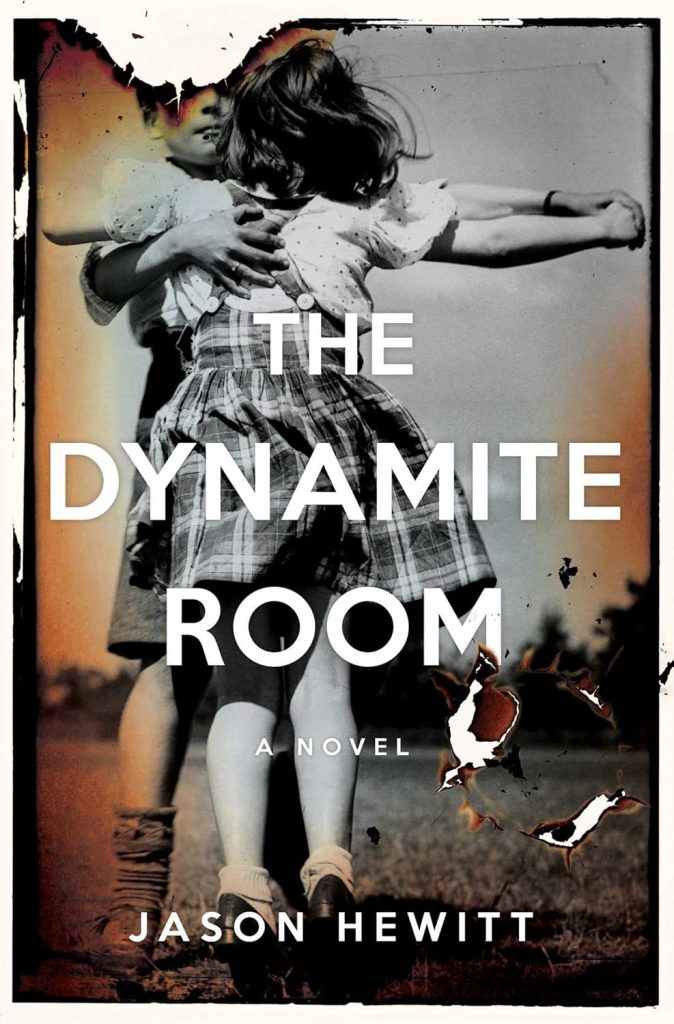
Further Reading: The Dynamite Room
More Interviews

Whoopi Goldberg


LATEST INTERVIEWS

David Morrissey

Alicia Coppola

Sorabh Pant

Simon Reeve

James Norton

Heida Reed
INTERVIEW DIRECTORY