
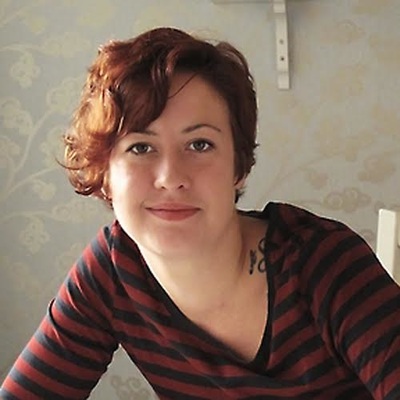
Katarina Bivald
The Lives We Read
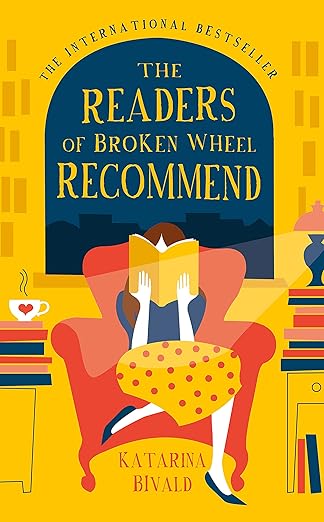
Swedish author Katarina Bivald reflects on her debut novel The Readers of Broken Wheel Recommend, rejection, imagination, and why reading remains one of the most powerful ways to both escape the world and understand it.
Your novel centres on someone who believes deeply in books. Do you think people need reading in their lives?
There should be no ‘should’ involved in reading. That being said, I defy anyone to find a better way than reading to both escape from the world and discover it.
“There should be no ‘should’ involved in reading.”
Debut novels often carry autobiographical traces. How much of you lives inside Sara and the world you’ve created?
I didn’t set out to make Sara like me; in fact, I thought I had managed to do the opposite. She has no life and very few friends; whatever she has experienced is through books. She’s quiet, and in the beginning at least, unsure of herself. Definitely not me. But when I tried to explain to my friends and family that she was ‘not’ me, they all looked away, then said, “no, no, of course not,” much too quickly! So I think there is a lot of Sara in me.
That being said, I have friends. And a life. Sort of.
And then there are other, less obvious, examples. I think the thing about writing is that your own dreams, hopes, and fears tend to sneak into it. I share Andy’s enthusiasm for new projects; I fear that, like Caroline, I will wake up one day and be all responsible with no sex life; I wish one day to be as loyal as George.
You’ve worked in a bookshop and read widely. Did you personally read all the books referenced in the novel?
I have indeed: all Sara’s views on books are my own, and most of Amy’s.
“That being said, I have friends. And a life. Sort of.”
If I pushed you for a handful of all-time favourite reads, could you even begin to narrow them down?
I could tell you, but I’d very likely have to stalk you for weeks, demanding that you update the list. Sort of like the protagonist in Nick Hornby’s High Fidelity, when he’s finally asked about his top five songs, and then has to chase the poor journalist to make changes.
What did the process of getting your debut novel published actually look like?
Oh, I have an impressive collection of rejection slips by now. In fact, I don’t think there’s a single publisher in Sweden that hasn’t at some point rejected the book. But it needed to be done; the novel simply needed to get better.
“I don’t think there’s a single publisher in Sweden that hasn’t at some point rejected the book.”
Scandinavian fiction often reaches English readers through crime novels. Do you feel other voices are being overlooked?
Not at all, which I think shows a depressing lack of fighting spirit in me. I am more likely to think of all the great English and American books out there and wonder why they need any more. But that’s probably because I can read the Swedish books anyway. What enrages me is that great books in French, Spanish, Italian, Polish, Russian, Chinese, and so forth are not being translated. It’s a depressing thought – so many stories and worlds not open to us.
For anyone thinking about writing a book themselves, what would you say to them?
Get rejected. It’ll improve your story to rewrite it, and it will make publication, when it does happen, all the more fun.
“It’s a depressing thought — so many stories and worlds not open to us.”
When someone finishes your book, what do you hope stays with them?
I wanted them – I still want them – to get to know Amy, George, Caroline, Tom, and all the rest. And I want them to put the book down with a smile. And if they pick up some recommendations on great books along the way, well, my work here is done.
Is there anything in life that makes you sad?
People spend so much time and energy pretending to be normal when they could be interesting instead—making small talk about the weather, work, or any such safe topic, when most of us are strange enough to be in a Carl Hiaasen novel.
“People spending so much time and energy pretending to be normal.”
And angry?
Privilege. Not just material inequalities (although it should be impossible for any human being to reconcile themselves with having too much, when people who could have been saved are dying). But emotional, psychological privilege as well – thinking that our own way of looking at life is the only reasonable one, refusing to acknowledge that we are as biased as anyone else. White men who don’t think we need another story about a woman of colour because they’ve read one; straight people who notice the one gay character in a book but not the hundreds or thousands of straight ones; and so on.
And what brings you happiness?
Roads; the way they keep going, urging you to follow them just a little while longer. Trees; the way many of them will last longer than us, but keep changing. Flowers, to a lesser extent, because they tend to die when you have an idle author with a watering can in the household. The scent of a new book. Learning something new.
Katarina Bivald is a Swedish author best known for her debut novel The Readers of Broken Wheel Recommend, with further work exploring identity, books, and human connection.
Interview by Carl Marsh


LATEST INTERVIEWS
David Morrissey
Alicia Coppola
Sorabh Pant

Simon Reeve

James Norton

Heida Reed
INTERVIEW DIRECTORY