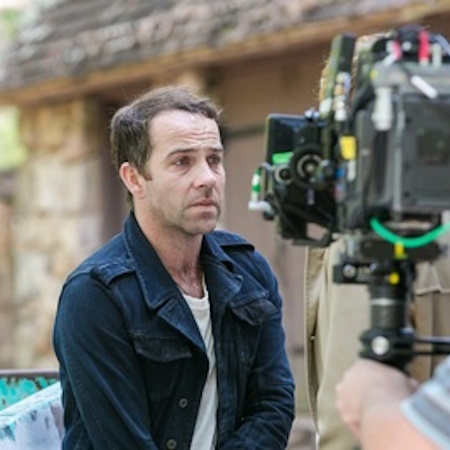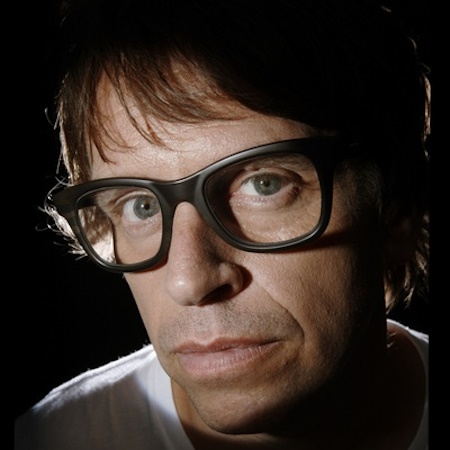


S.J. Watson
Writing What Matters
Best known for the bestselling novel Before I Go To Sleep, S.J. Watson discusses the realities of writing, the pressure of success and why stories still matter.
From a writer’s point of view, what is it that books can do that nothing else quite matches?
Books entertain and inform; they can be an escape, but, most importantly, I think, they allow us to glimpse other worlds, other lives. They make us better people.
“They allow us to glimpse other worlds, other lives.”
When your work reaches a wider audience — whether through readers or movie adaptation — how much do you hold onto expectations?
I very deliberately had no expectations. I’d heard so many stories of films not quite happening, or being disappointing, that I thought it best just to let Rowan (Joffe, writer and director) and Liza (Marshall, producer) get on with it. In the end, I think they did an amazing job, and I really love the film.
“I’m not one for air-punches, generally…”
Seeing actors bring your work to life must be a strange moment — what was your reaction when you found out who was involved?
I probably did a little dance and then called my partner to tell him. I’m not one for air-punches, generally, but there may even have been one of those.
Your novel Second Life explores identity and hidden lives — what drew you to that story?
It’s about a woman, Julia, whose sister is murdered. Frustrated by the police, she starts digging and discovers her sister had another secret life, and when Julia investigates, she finds herself exploring her own desires.
“I had to decide to write the book I wanted to write and would want to read.”
How do you deal with the pressure that comes after a successful first book?
When I wrote the first, it was really only to please myself, my friends, and maybe, hopefully, an agent. With Second Life, there are obviously many more people interested; it was hard not to second-guess what readers would want.
Ultimately, I had to decide to write the book I wanted to write and would want to read, and hope that other people would connect with it.
You worked in the NHS before writing full-time — how did that shift change your perspective?
I miss my colleagues and some of my patients. But I don’t miss the work, no. I loved it, but it increasingly became a distraction from what I really wanted to do: write.
Getting an agent can feel like a mystery to most writers — how did it happen for you?
I met my agent on the last night of the course I was doing. She came to speak to us all, and I said hello. Several cocktails later, she asked me what my book was about, and I told her, using the 25-word pitch I’d worked out the previous week. She asked me to send it to her when it was done.
My advice would be to research who the right agent is for you, approach them respectfully and explain why you think you might want to work with them on your book, and, most importantly, make sure the book you’re asking them to represent is as good as it can be.
What do you say to someone who feels they have a book in them?
Don’t do it. Whatever you do, don’t do it. But, if you read that and think, “Well, sod you, I’m going to anyway!” then you probably have what it takes. And if that’s the case, my advice would be simply to read and write as much as you possibly can. You only get better by practising.
“Don’t do it. Whatever you do, don’t do it.”
What keeps you focused on writing in the long term?
Writing. I’m (always) working on the next book.
S.J. Watson is the author of Before I Go To Sleep and other bestselling psychological thrillers.
Interview by Carl Marsh
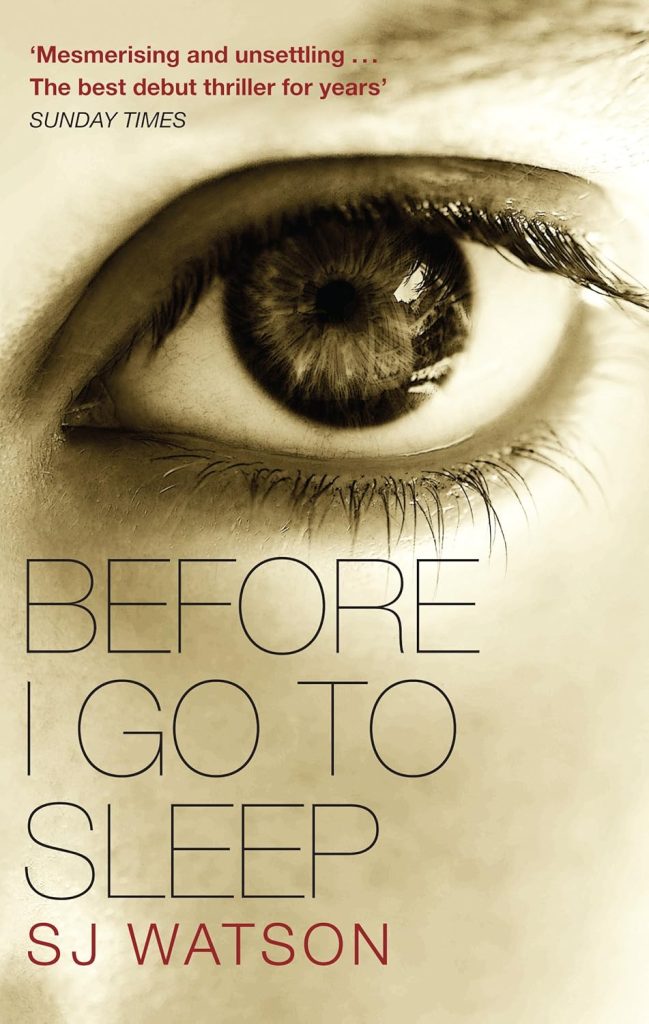
Further Reading: Before I Go To Sleep
More Interviews

Whoopi Goldberg


LATEST INTERVIEWS

David Morrissey

Alicia Coppola

Sorabh Pant

Simon Reeve

James Norton

Heida Reed
INTERVIEW DIRECTORY