
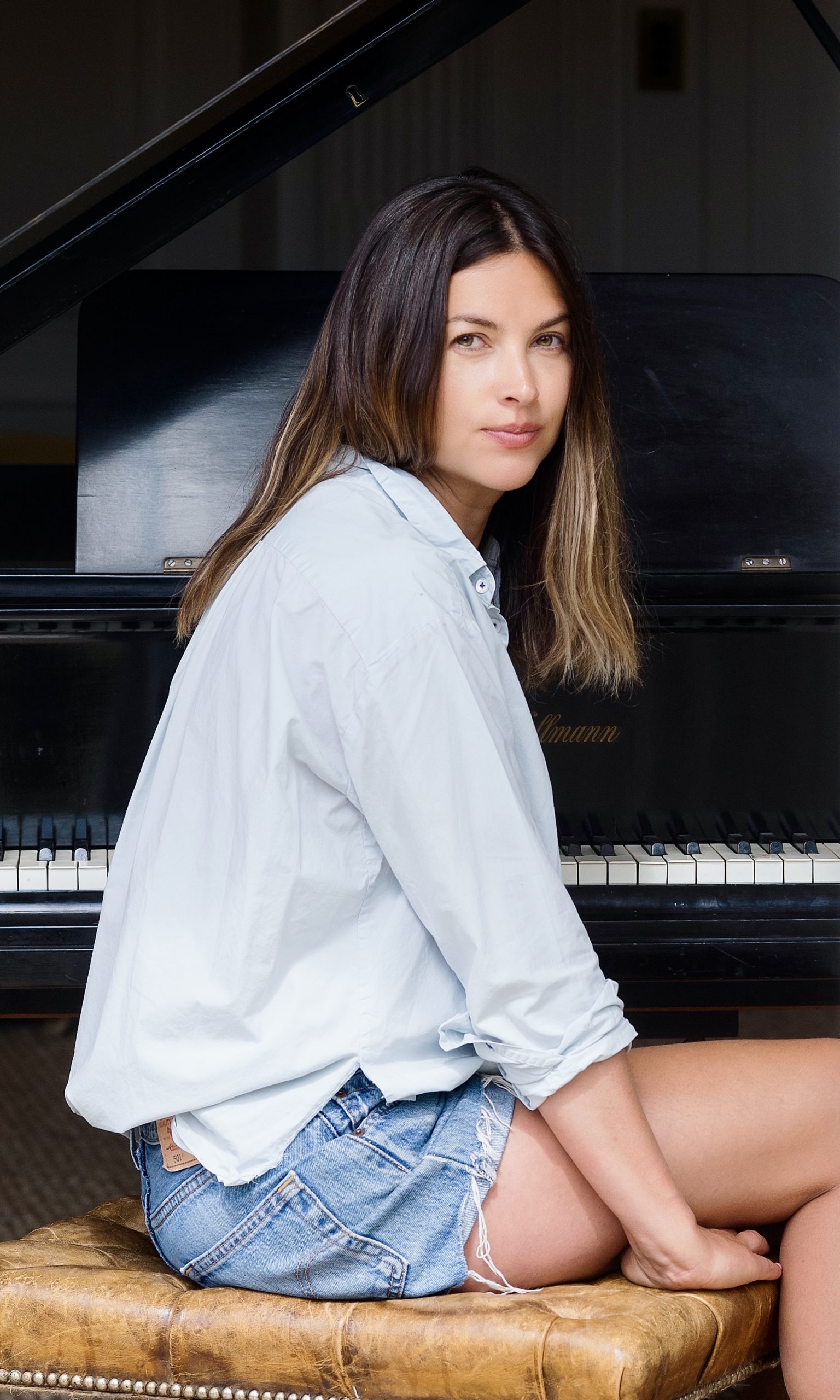
Amelia Warner
The Wrong Road
Composer Amelia Warner reflects on music as sanctuary, leaving acting behind, discovering film scoring and why finding the right creative path changed everything.
Your music often feels cinematic. When you’re writing your own material, are you thinking in stories and images?
I think I do write with some sort of narrative in mind. With Visitors, I imagined this big empty house and the people who might once have lived there. I kind of told the story through those imagined characters. With Haven, it felt like the opposite. It felt like a house that was full of life and full of love. I had that loose narrative in my head and I think I need some sort of narrative when I’m writing my own music.
With films it’s completely different because you’re writing to picture. You’re writing to specific cues and using the film as your guide. It’s almost like writing to a brief. It’s a very different process, but I always love it when something I’ve written outside that world gets used somewhere because it gives it a new life.
“I had this incredible feeling of being in the right place, being in our house, being home and all being together.”
What inspired Haven?
I’d just had a baby and I think that when you’ve got a really tiny newborn, everything becomes very simple. Your whole world revolves around that new baby, getting them settled in, finding your new routine and being together as a family. That’s really what I was experiencing at the time.
We’d moved house just before and then had the baby very soon afterwards, so we found ourselves in this new home together. We had this lovely, really special time and I felt this real connection to the house and to being at home. I had this very strong sense of being home. I don’t know if it was some sort of nesting instinct, but I had this incredible feeling of being in the right place, being in our house, being home and all being together. It was a really special moment.
That’s really where Haven came from. We ended up recording all of the music at home because I wanted it to feel part of that space and part of that feeling. I wanted the record to belong to that house and to that time in our lives. It all came from that sense of comfort, connection and feeling completely at home.
So all five tracks were recorded in the house?
All five tracks were recorded in the house. What was so nice about doing it at home was being able to use the space in different ways. We recorded in the drawing room, but we also set microphones up outside in the hallway, so at times it almost feels as though you’re standing just outside the room listening in. Then, as the record develops, hopefully it feels as though you’ve moved into the room itself and into that warmth and richness.
We recorded lots of ambient sounds as well. We lit the fire and recorded it. We went into the garden and recorded birdsong. It’s amazing here and there’s always so much birdsong around us. All of those sounds became part of the record and helped create a sense of immersion in the space itself. I’ve always loved that feeling of hearing the outside world and hearing sound travel. I love being outside and hearing the sound of a piano drifting out from somewhere, so it felt natural to bring those elements into the music.
One of your earlier pieces, Eve, became a turning point in your career. How important was that track in leading you towards film scoring?
Eve was actually the track that got me into film scoring. The director of Mum’s List, Neil Jones, loved that piece and it became one of the main themes in the film. We built a lot of the score around it, so it was a really important track for me.
“The piano became the thing I went to and the thing I did that was completely my own. It was my private thing.”
Music seems to have always been there for you. When did you realise it was more than just a private passion?
I’d always been musical. I’d always written music and I’d played the piano since I was tiny. It was a huge part of my identity and who I was. The strange thing was that it became my sanctuary. The piano became the thing I went to and the thing I did that was completely my own. It was my private thing, so I never really considered sharing it or putting it out into the world.
I wasn’t classically trained and I honestly thought a huge swathe of the industry was closed to me because of that. When I was growing up, I just didn’t think those opportunities were available. I thought there were limits to what I could do and that music would always remain something that was just for me and for my own private joy. It was only later that I realised that wasn’t true at all and that there were lots of people with backgrounds similar to mine.
As I got older, and especially once I had children, I started looking at things differently. I felt that if I was going to spend time away from them, it had to be doing something I genuinely loved. It had to be the thing that brought me joy and made me feel most like myself. Music had always been that thing. I think I got braver once I had children. I wanted to show them that I was doing something I loved and try to be an example to them.
With both of your parents working as actors, did performing feel like the natural path to follow?
Definitely. It was kind of the family business. Lots of my mum’s friends were actors and I grew up around that world, so it just felt like a natural step. I started acting when I was about fifteen or sixteen and I never really questioned it, to be honest. It was just something I was doing and it felt completely normal to me at the time.
But as I got older, and especially once I was in my twenties, I realised it wasn’t a good fit for me. I had amazing experiences and I feel really lucky to have done what I did, but it became more and more uncomfortable. I just felt that I was on the wrong road and on the wrong path. It wasn’t where I was supposed to be and eventually I kind of retreated from it.
Before becoming known for your film scores, you recorded and released music as Slow Moving Millie. Looking back, was that project part of figuring out where you belonged creatively?
Yes, I think it probably was. It’s funny because I was actually thinking about that the other day. Slow Moving Millie was a kind of side project and almost an experiment. I think that’s why I was able to explore things under that name. It gave me a space where I could try things out and see what happened. I was incredibly lucky with things like the John Lewis advert and the opportunities that followed from that, and when those opportunities come along you have to see where they lead. But it never really felt like the place I was naturally heading. By that point I’d already started doing some work for picture. I’d done a couple of short films and commercials that were instrumental and more classical in style, and I was beginning to get a taste for that world. The more I did it, the more strongly I felt pulled towards it. That was the direction I needed to go in.
“I just felt that I was on the wrong road and on the wrong path.”
Are there any pieces of music you’ve written that still feel especially personal to you?
I think We Came Home is probably the one I have the strongest connection to. But For Love means a lot to me as well, in a different way. That piece feels very joyful and really encapsulates that period of my life. Those are probably the two I feel closest to.
Which artists or composers have had the biggest influence on you?
I love both Sigur Rós and Penguin Cafe. Sigur Rós was one of those really seminal discoveries for me. I remember being in Australia when I was about twenty or twenty-one and somebody played their first album in a car. I’d never heard anything like it. It completely stopped me in my tracks and I listened to them endlessly throughout my twenties. I still think they’re incredible.
In terms of inspiration, I listen to people like Hauschka, Max Richter, Jóhann Jóhannsson and Dustin O’Halloran. I love that slightly minimalist, often piano-based music that can say so much with so little. But then I listen to everything. I love electronic music, I love folk music and I love hip-hop. I’m a complete magpie when it comes to music and I bounce between genres all the time.
Are there still musical directions you’d like to explore in the future?
I’d love to explore more electronic music. I really like projects like Kiasmos and bands like Grandbrothers because they sit somewhere between piano music and electronic music. It’s a genre that really fascinates me and one I’d love to spend more time with. I think you have to be very good at the technical side and the programming side of things, which I’m not. I’ve still got a lot to learn in that area, so it wouldn’t be the easiest thing for me to do, but it’s definitely something I’d like to learn more about.
”I’m a complete magpie when it comes to music and I bounce between genres all the time.”
How does a piece of music usually begin for you?
It depends what I’m working on. If it’s a film score, sometimes an idea comes directly from the script. A theme or motif will suddenly emerge from reading it and then everything grows from there. Other times I’ll be working cue by cue and trying to make something fit a particular moment. Then there are the ideas that arrive completely out of nowhere. I’ll be out shopping, walking somewhere or doing something completely unrelated and suddenly something appears. I end up grabbing my phone and recording a voice note because otherwise I’ll lose it. I have lots of very strange voice notes on my phone because inspiration has a habit of arriving at the most inconvenient moments.
Has family life changed the way you approach creativity?
It’s actually been really positive. I’ve felt very creative and I’ve had more time to create because it’s so easy to fill your day with things that stop you getting to the work. I think I’m probably a bit of a procrastinator, so I’ll often fill my day with other things rather than sit down at the piano. When all of that was stripped away and life became much simpler, it gave me the space to focus on creating.
Having my husband at home more and having the children around has been wonderful as well. They’re still young, so we’ve been able to enjoy that time together. We’ve actually had a really nice time as a family and it’s reminded me how important simplicity can be.
“Inspiration has a habit of arriving at the most inconvenient moments.”
You’ve spoken about feeling uncomfortable as an actor. Does that connect to your reluctance to perform live?
Probably. I’ve never really performed live and, honestly, I have a real terror of it. The London Contemporary Orchestra played some of my music and that was an incredible experience because I could simply sit and watch. It did make me think that I’d like to do some small performances one day, but I still find that side of things very daunting.
I wasn’t a happy actor and I was very uncomfortable acting. I think part of that was the performance aspect of it. Performance is something I really struggle with. Maybe it’s something you either naturally have or something you learn. I honestly don’t know. We’ll see.
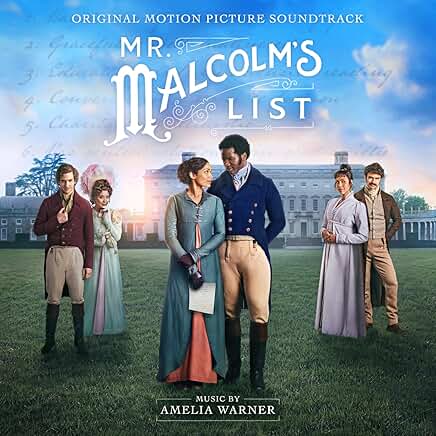
Amelia Warner is a composer and musician whose work includes the scores for Mum’s List, Wild Mountain Thyme and Mr Malcolm’s List. Married to actor Jamie Dornan, Warner has built an acclaimed career in film composition alongside her earlier work as an actress and recording artist.
Interview by Carl Marsh


LATEST INTERVIEWS
David Morrissey
Alicia Coppola

Sorabh Pant

Simon Reeve

James Norton
Heida Reed
INTERVIEW DIRECTORY