
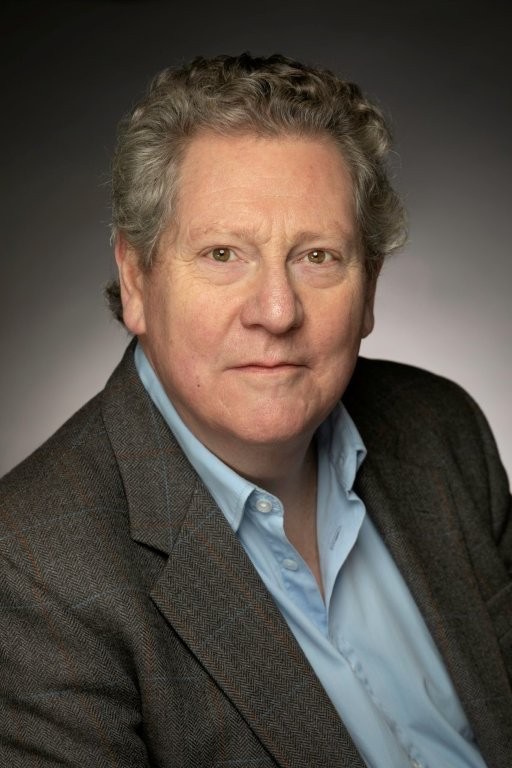
Andrew Lownie
The Secrets Power Would Rather Keep
Biographer Andrew Lownie discusses royal secrecy, access to public records, the cost of confronting powerful institutions and why he believes the monarchy needs greater transparency.
You’ve spent years investigating the lives of powerful people, but Entitled has become part of an extraordinary unfolding story. Did you ever imagine your research would become so relevant to events happening around you?
No, absolutely not. You know, for the last 10 or 15 years, I’ve been trying to write about the way that the British establishment covers up scandals, and about the gap between the curated narrative and the reality. Clearly, the royal family is a classic example, and I didn’t realise it would actually be a book about endemic corruption within an institution, not just two bad apples in the orchard. So no, and I mean clearly, the book did something to loosen the earth. Then we had Virginia Giuffre’s book, and, of course, the Epstein files coming out. So the whole thing began to kind of snowball. But I think without her memoir and without the Epstein Transparency Act, the royal family would have shaken this off, and no doubt we’d have Fergie appearing on chat shows at this very moment.
“I’m a great believer in accountability and transparency, and if people have scrutiny, they’re less likely to behave badly.”
Was there a particular moment when you realised this was no longer simply a historical biography?
Yeah, I mean, I realised pretty early on the level of protection Andrew had. I think one of the shocking moments was to find stories of people going to the Queen or the Queen’s private secretary and being told to get lost, basically, that she wasn’t interested. That was shocking because we all rather revered the Queen. We thought she should put public duty ahead of her own family, which is why I describe myself as a monarchist, but as a slightly disillusioned one now.
Was there anything you initially struggled to believe until you found corroborating evidence? Was there any evidence that made you question your own sanity when you discovered it?
Well, I pride myself on my research. Everything’s backed up with footnotes, and some 3,000 people were approached for this book, of whom about 300 spoke, 150 of them on the record, and that’s unusual for a royal book. I mean, normally it’s all unknown sources. I only used about a tenth of the material, either for legal reasons or because I couldn’t get a second source. But everything was signed off by lawyers and by the interviewees. Everything was double-sourced, so I was pretty sure of my material. I mean, no one has tried to sue me yet, touch wood.
I think the thing is, people didn’t want to believe a lot of this. It was only really with the publication of the Epstein material that people, particularly in the media, realised that this was actually very serious, and that it wasn’t just an isolated incident, but that this had been going on for a long time.
Andrew Mountbatten-Windsor recently succeeded in challenging the legality of police search warrants, although that didn’t settle the underlying investigation. How significant is that development, and what do you believe happens next?
Well, it’s not significant at all. It’s a legal technicality. All that happened was that the police used the wrong section of the Police and Criminal Evidence Act, so I don’t think they should be blamed. The only difference is that we’ll get a ruling next year on whether the evidence collected under the search warrants was valid. I think it will be so that it won’t make any difference there. That evidence is only a small part of the investigation, but I think it shows people this won’t be a quick fix. The police may spend years investigating before bringing any charges, if they do.
Editor’s note: The High Court ruled the search warrants unlawful on 8 October 2026. The criminal investigation continued following that ruling, and Andrew Mountbatten-Windsor has denied wrongdoing.
Your research also raises questions about what other people knew. How do you investigate responsibility when the people who might have answers refuse to speak?
Absolutely, it’s very hard, and that’s why all those people who wouldn’t speak to me, I’ve actually suggested Thames Valley Police talk to and see if they’ll talk to them. I do think there’s a need for a parliamentary inquiry where people would be forced on oath to talk about what went on.
Has your research fundamentally changed your opinion of people or institutions you previously respected?
Yes, I mean I’ve become, in the course of researching these sorts of books, pretty immune to the lies that people tell, and just because someone is in a smart suit and has a posh accent doesn’t mean they’re not as dodgy as the guy down the market.
“The smaller publishers will run a mile from this.”
Ad · Further reading
Entitled
The Rise and Fall of the House of York
The biography at the centre of this interview follows the lives of Andrew Mountbatten-Windsor and Sarah Ferguson.
Andrew reads the audiobook himself. The Audible button opens Amazonâs general Audible membership offer. Search Audible for Entitled by Andrew Lownie. See Amazon for eligibility and terms.
As an Amazon Associate I earn from qualifying purchases. I also earn commission on eligible Audible sign-ups.
With Sarah Ferguson potentially telling her own story, what could she reveal that might alter our understanding of the House of York?
Well, I’m not sure that Ferguson will do a book. She’s done several already. But, you know, she’s picked up a lot of royal gossip over 40 years, and I think she could be very damaging, and she could be very selective. But I don’t think she will.
Your audiobook of Entitled was shortlisted for a Speakies Award, and you narrated it yourself. After spending years investigating the House of York, what was it like having to read every revelation aloud?
Well, it’s an interesting experience. One, I’m not a trained actor, so it’s difficult to know how you talk about things. Do you change your voice for quotes and things like that? But I noticed lots of things when I read it aloud that I hadn’t noticed when I read it to myself, and that was quite an interesting experience. I mean, it’s very nice to be asked to do it, and I think a lot of authors do read their own books. I think I’ve done the last three or four of mine, but I do think that actors do a much better job of it. But for something so personal, it was great to talk about the book myself through the audio.
When actors narrate audiobooks, they’re generally working from somebody else’s words, like reading from a script. But because you wrote it yourself, were you tempted to go off-piste, add an observation or expand on something that wasn’t actually in the book?
Well, of course, it’s tempting to either cut things or to add things. But no, I knew I couldn’t do that. I had a very, very good editor sitting opposite me, checking everything. But mentally, I made a lot of notes of things that I would have done differently if I’d perhaps read the book to myself first, which is what I’ll do next time.
“It’s a very complex thing, betrayal. But it’s a subject that intrigues me, whether it’s betrayal of families or betrayal of countries.”
When you’re investigating people who have spent their lives controlling their public image, how do you distinguish between someone genuinely protecting their privacy and someone desperately trying to hide the truth? This could be anybody, not necessarily Andrew.
Yeah, well, it’s very difficult, and that’s why you go down lots of rabbit holes. Of course, there is a legitimate right to privacy, and that’s true even of Andrew. I do think if you’re a public person and subject to basically being supported by the taxpayers, as the royal family are, then the rules don’t apply in the same way. If you’ve used the press to promote your image, you can’t then hide and say, “I’m entitled to a private life.”
But I do feel, as I get older and get more experience, more of that sense of Graham Greene, the bit of ice in the heart, that you sometimes have to be quite ruthless if you’re trying to be true to your book and not give people an easy ride. It may be uncomfortable. It may cause difficulties in doing subsequent books, or even in relations that you have, for example, with your subjects’ families. But I suppose the guiding principle is what actually happened.
Do you think the British establishment has changed significantly in how it protects its own?
I suspect it hasn’t changed; we’re just more aware of how it operates. We live in a less deferential society, so more people are likely to be whistleblowers. We have social media; we don’t have the control, and the mainstream press is slightly more emboldened now. I think it’s ever thus. I mean, I know from my book on Edward VIII how the press covered up his Nazi sympathies and colluded with the government not to highlight the Marburg files showing his treachery. That wouldn’t happen so much now, and there’s going to be, with Substack and podcasts and others, more chance for these stories coming out, and I think that’s good. I’m a big believer in accountability and transparency, and when people face scrutiny, they’re less likely to behave badly.
You’ve criticised the restrictions historians face when trying to access official records. What’s the most absurd or frustrating obstacle you’ve encountered while trying to establish something that should be public knowledge?
Well, for example, on Andrew, I’ve put in FOI requests, dozens of them, with one question on each particular trip that he went on as a taxpayer-funded trade envoy: who accompanied him? That’s the sort of information that should be publicly available. It’s the sort of material that wasn’t in the Court Circular. The government, whether it’s the Foreign Office or the Department for Business and Trade, have used every possible exemption to refuse answering it, including law enforcement, health and safety, national security, international relations, personal data, that I’m vexatious, that they hold no information, or they hold too much information, and there are cost compliance issues. And that’s a very simple question.
I’m a great believer in keeping the real secret ‘secret’, and then telling everything else. Because if you don’t, you create this vacuum for speculation and fantasy, and you encourage whistleblowers because they distrust the system. It’s all about trust in institutions. If you feel institutions are covering their backs because of bad behaviour or corrupt behaviour, that doesn’t instil trust in that institution.
I guess a refusal could tell you just as much as the documents themselves if you were given access to them, couldn’t it?
Absolutely, and I mean, I get lots of “neither confirm nor deny” responses from government, which normally means confirm. A number of people were very publicly supportive of Andrew as a trade envoy. I wrote back to them when I was researching the book and said, “Do you still stand by your words?” Either they didn’t answer, or they said, “No comment.” I think that was pretty revealing.
“My wife certainly says she’s less worried about the death threats than the libel threats.”
I’ve got to ask you about the Cambridge spy Guy Burgess. Do you think some of the greatest threats to national security come from ideological conviction, personal greed or simply a sense of entitlement?
Well, I think entitlement is a strong element in it, or the sense of not getting what you feel you’re entitled to, which I think was Guy Burgess’s problem. He didn’t feel his talents were recognised. He felt he wasn’t being recognised for the wonderful person he was, and therefore he turned against the establishment. So I think there’s that element. We always say it’s MICE: money, ideology, compromise or ego. And I think ego is a very strong part of it. Certainly, when secret agents try to compromise people, they focus on things like ego. Money, clearly, more recently, has become more important; ideology, less, but of course it’s always a mix of all of them.
In some ways, Guy Burgess genuinely believed Russia was the promised land and a way to balance American power. So there was that element. He got a little bit of money, not much, and there wasn’t much compromise because he was so indiscreet that he wasn’t worried about being caught doing anything. It’s a very complex thing, betrayal. But it’s a subject that intrigues me, whether it’s betrayal of families or betrayal of countries.
When you’re investigating somebody who’s no longer alive, where do you draw the line between exposing an uncomfortable truth and potentially causing distress to their family or the public?
Well, I think my responsibility as a biographer is to tell the truth about what happened, even if that makes people uncomfortable, whether it’s the family or the government or whatever. So I hope my reputation is kind of warts and all. I think for too long we’ve had people self-censoring. I think one of the extraordinary things when I did Traitor King on Edward VIII was to look at the Churchill papers, which countless historians had combed over, and to find the threat from Churchill to court-martial Edward, which hadn’t really appeared, but was clearly there. People didn’t want to mention it. I think too many historians try to curry favour with the establishment, make small deals, and avoid uncomfortable truths because it would cause them problems. My own feeling is that my allegiance is to telling the reality of what happened rather than this curated narrative that’s created.
Have you ever genuinely feared the personal consequences of publishing something you’ve uncovered?
Well, when I did the Mountbatten book, I fought a long campaign to get the diaries of Louis and Edwina Mountbatten released. These were diaries and letters bought by the nation for the nation, and which should have been released. Though my book had been published, there was nothing in it for me. I felt there was an important principle here that this stuff should be made available, and we did win the case. 33,000 pages, probably the most important collection of documents after the Churchill Papers, is now available to historians. That cost me half a million pounds, and I mortgaged my properties and liquidated all my savings. So that was a high personal price, and I think that’s where the price comes in, or the threat of being sued for libel and, again, getting you in your pocket. My wife certainly says she’s less worried about the death threats than the libel threats.
You’re both a literary agent and a bestselling author, but do you see publishers becoming more cautious about controversial books because of the threat of being sued, or are they still willing to take risks?
No, no. I think the sad thing I’ve found as an agent is that books can make a difference. Books can shift the dial, and there are just fewer of those now being published because of lawfare, basically, SLAPPs from rich and powerful people. There are a few very robust editors, one of whom is the editor on my book, who are prepared to stand up. But they have to work for big companies like Collins or Penguin with deep pockets to do so. The smaller publishers will run a mile from this, and I think the worrying thing is that a lot of publishers, even quite big ones, don’t have proper insurance to cover them.
Because it’s a hassle to fight these things and expensive, even if you’ve got a strong case, they will either shy away or settle, which gives these rich and powerful people more incentive to shut the story down. We see it with newspapers. There’s less money there to pay for investigative teams, and it’s very worrying.
After years of uncovering deception, secrecy and hypocrisy, has your work made you more cynical about human nature or more determined to find the truth?
Well, a bit of both. It drives me on, and people are a bit more supportive. When I first did this, 10 or 15 years ago, I was pretty much a lone voice, isolated with my head above the parapet. Now people seem to think that the things I think are important are also important. So, in some ways, it’s given me a sense of people’s goodness. People do have very strong values and stand by them.
But yeah, it does make me disillusioned because I believe in a lot of these institutions: the monarchy, the judiciary, the police, civil service, the intelligence services. And finding people there who abuse their positions and don’t serve the public interest is pretty depressing. And the more I dig into it, the more examples I find.
“I’m a great believer in keeping the real secret ‘secret’, and then telling everything else.”
If you were given unrestricted access to one sealed British archive, with no conditions attached, whose records would you open first, and what would you hope to find?
Well, I’m writing a biography of Prince Philip at the moment, so I think I’d like to see Prince Philip’s archives. But lots of people have lots of dark secrets. With Mountbatten, though, the material was given to Southampton; a lot of stuff was kept back at Broadlands. The Duke of Windsor: a lot of that material- the Marburg files- some of that stuff was destroyed; some of it’s still closed. All the books I’ve done in the past, a lot of the Guy Burgess files are still closed. I mean, he died in 1963. So yeah, I’d like to return to people I’ve studied and know a little bit about, to see what more I could learn.
Is there a story you’re still determined to tell, even though you don’t yet know whether anyone will let you get to the truth?
Well, I’m doing a sequel to Entitled called Untitled, which will carry the story from Andrew’s arrest through to whatever happens, and as part of that, I think it will also look at how the royal family have dealt with this crisis, whether they have modernised and perhaps come clean about things. So that’s on my agenda. That’s maybe several years off, maybe after Prince Philip, but I think there’s a lot still to come out.
We’ve got the official life of the Queen, which may be a long time away, and I don’t think we’ll see any papers of hers until that book comes out. But I hope there’s more openness about royal archives. Much of this material, even going back to the Victorian period, is closed. I think there are a lot of royal stories that, if there were a slightly more transparent approach to things, could be told. They are an important part of our history, and it’s a missing dimension because these records have either been destroyed or are still withheld.
Would you have more faith in Prince William, as the future king, than you have in King Charles when it comes to greater openness from the royal household?
Well, I’m hoping that. I’m afraid that the indication so far is that he will be as controlling, if not more controlling and secretive, than his father. But I hope that, with public pressure, we can get Parliament to make the monarchy accountable to Parliament so that we can ask questions about them, particularly their finances. If they see that the only way to survive is to modernise and make themselves fit for purpose in the 21st century, as the European monarchies have, then William may be forced to go along with that to survive.
I think that would be good for the monarchy. It would be good for democracy, and it would restore trust and respect for the institution, which I think has been pretty battered.
I guess tourism is something to consider too. When people come to London, many want to see Buckingham Palace, the Changing of the Guard and all the history surrounding the monarchy. Would greater openness change any of that?
Well, I don’t think we need to stop having the Changing of the Guard, and Buckingham Palace will still be there. In fact, it’s more likely to be open to the public, I hope, in the future than it is now, because there’s no security concern about it if there’s no one living there. I think a lot of those things that people love about Britain, the pomp and the ceremony, Trooping the Colour, all those things can remain. It’s just about transparency about finances and records, and the relationship between the press and the royal family, and I think all those things would be good for both the royal family and faith in our institutions.
“I think my responsibility as a biographer is to tell the truth about what happened, even if that makes people uncomfortable, whether it’s the family or the government or whatever.”
You’ve made me realise that the buildings will still be there, the guards will still be there, and the history will still be there. Perhaps the British monarchy should become more like its European counterparts.
Yeah, yeah. I think the European model is a good one. I mean, you’ve seen Queen Margrethe of Denmark take titles away from grandchildren. There’s still the tradition. They still turn up at important events. They’re still part of history and tradition, but there is a sense that they are public servants rather than gilded aristocrats. There are so many parallels, I think, with the French Revolution. There’s the sense of Marie Antoinette with some of the royals, and “let them eat cake”.
Andrew Lownie is Author of Entitled: The Rise and Fall of the House of York which has been nominated in the Best Audiobook: Non-fiction category for The British Audio Awards 2026 (aka ‘the Speakies’). For more information visit www.thebookseller.com/the-british-audio-awards/the-british-audio-awards
Substack – https://
Youtube – https://www.youtube.
Website – https://andrewlownie.me/
This interview has been edited for length and clarity.
Ad · Further reading
Entitled
The Rise and Fall of the House of York
The biography at the centre of this interview follows the lives of Andrew Mountbatten-Windsor and Sarah Ferguson.
Andrew reads the audiobook himself. The Audible button opens Amazonâs general Audible membership offer. Search Audible for Entitled by Andrew Lownie. See Amazon for eligibility and terms.
As an Amazon Associate I earn from qualifying purchases. I also earn commission on eligible Audible sign-ups.
Interview by Carl Marsh
Ad · Further listening
Entitled
The Rise and Fall of the House of York
Hear Andrew Lownie read his own biography of the House of York.
View the Audible offerThe button opens Amazonâs general Audible membership offer. Search Audible for Entitled by Andrew Lownie. See Amazon for eligibility and terms.
As an Amazon Associate I earn from qualifying purchases. I also earn commission on eligible Audible sign-ups.
More Interviews

Whoopi Goldberg


LATEST INTERVIEWS
David Morrissey
Alicia Coppola
Sorabh Pant
Simon Reeve
James Norton

Heida Reed
INTERVIEW DIRECTORY