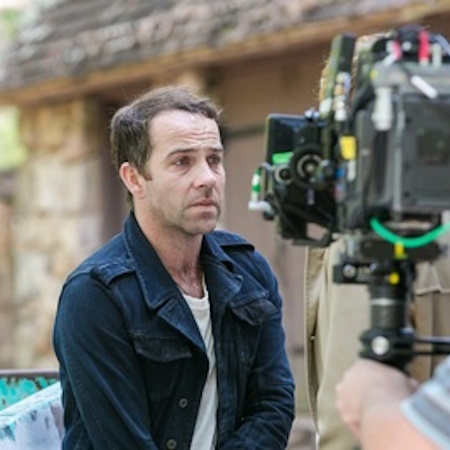

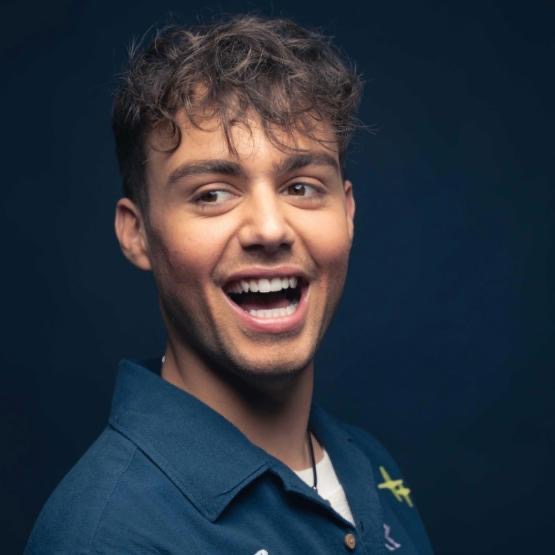
Bradley Riches
Feeling Seen
Ahead of his appearance at the Bradford Literature Festival this July, actor and author Bradley Riches reflects on Heartstopper, Emmerdale, growing up non-speaking, writing his first book and why being understood has mattered more than being recognised.
You’ll be appearing at the Bradford Literature Festival this summer. So, what is it about meeting readers face-to-face that still surprises you?
I’d obviously never written a book before the last one, and then I did a Waterstones book tour, meeting lots of different people. It really put into perspective how much the book means to people, especially because it’s such a heartfelt book about neurodiversity and autism. To see a hundred people standing in front of you who were excited about it before they’d even read it, because they saw themselves in it, saw a family member in it, or thought it might help them understand someone they loved a bit more, made me realise how much this book could actually mean to so many people.
You have one of those moments where you think, “Oh wow… I’m really doing this,” and it’s helping a lot of people. In this industry, you’re always thinking, “Maybe I’m not doing enough. Maybe that’s not successful enough. Maybe that’s not working.” But then you meet the people who’ve read the book, or are about to read it, or want to read it, and that’s what surprises me. It’s a cool surprise knowing people are actually picking up the book and reading it.
“It’s helping a lot of people.”
You’ve achieved a lot at a very young age. Did you ever feel like you’d grown up faster than the people around you?
Not really. I think I’m quite a mature, immature person. I’m quite clued up, I understand people, and I think I’m a good judge of character, but I’ve still got that bubbly side, and I don’t take life too seriously. I’ve had such a great support network throughout my childhood, my teenage years and adulthood that I’ve always had that grounding. I was about 17 or 18 when everything first started happening, so I’d already had my childhood, school and college years to understand who I was before Heartstopper came along. It definitely made me grow up quicker, but not because I felt like I’d lost my younger years. It just made me more mature about the things I wanted to focus on and not be silly about. So yeah, there are definitely pros and cons.
Am I right in saying you were nonverbal until around age 10?
Yeah. I was non-speaking until I was about 10. Around the age of nine, I started making noises, and then by about 10, I had what people would probably call selective mutism. At school, I wouldn’t speak, but at home, I started speaking to my family and my sister. I then went through speech therapy, and I wouldn’t say I became a confident speaker until I was around 12. It’s obviously not an overnight journey. It’s a long journey.
So when did you first realise you saw the world slightly differently from other people?
Writing this book made me reflect on many things, especially after speaking with my parents about memories I’d forgotten. When you’re really young, you don’t know any different, but I think it was definitely around five, six or seven that I started noticing. You look around your primary school class and think, “I don’t want to do that. Why can’t I sit through this lesson? Why do I have to leave?” You start comparing yourself to everyone else. Why do they have friends? Why can’t I play with someone without speaking? Why am I doing all these different things? That’s when it really put into perspective that I was a bit different.
I wasn’t able to go through school like the average child. I remember having a one-to-one support teacher when nobody else did, and it’s little things like that which make you realise it. I always felt like I was just me. I didn’t feel that different, but then you’d see things like that and think, “Oh… maybe I am a bit different to everyone else.” So yeah, definitely during those primary school years.
“It’s not an overnight journey. It’s a long journey.”
So, Heartstopper became much bigger than a television show for a lot of people. When did you realise it meant something deeper to its audience?
I think it was such a cool thing because it’s a queer show, but it’s a positive queer show. People obviously go through their struggles, but everyone’s happy in their identity and understands who they are, and we’d never really seen that before. A lot of queer dramas quite rightly explore the darker sides of homophobia and those experiences, but this was something completely different.
When it first landed on Netflix, I don’t think many people knew about it outside the comic book fans, but during that first week, it just exploded. It’s all well and good to say it became one of the most-watched series on Netflix, but because it meant so much to so many people, it made them feel seen. The more people watched it, the more people talked about it, and the more inclusive the world became. It happened almost instantly, and we all loved making the show. Seeing how much it resonated with people was really special.
Yeah, and for me, it gave a lot of people a version of themselves they hadn’t seen on screen before. So, did being part of that ever change the way you thought about your own story?
Yeah, 100%. We were all so young. Most of us were 17, 18 or 19. One of the girls was 27, but she looked so young that we used to call her the grandmother of the group! I was playing a 15-year-old and thinking, “This is really cool.” One thing I’ve noticed, especially speaking to older people, even people in their 60s and 70s, is that they sometimes find it really hard to watch because they’re mourning something they never got to have. They never got to experience that kind of young teenage love with another boy. It was never really a thing. I felt a little bit like that too. Looking back, I wish Bradley had been that confident in his sexuality and himself at 16. It was quite cathartic, in a way, playing the person I could have been. There’s no point dwelling on the past, but it definitely opened my eyes. I realised this was someone I could easily have been at school if I’d been happier and more accepting of who I was.
So, looking back now, what do you think it gave you beyond a career opportunity?
Obviously, it gave me amazing friends, but it also taught me a lot about myself. Before I started filming, I was openly gay to some people, but there were still family members I’d never really come out to. I kept thinking, “Do I really want to make a thing of it?” You have all those conversations in your head. Then suddenly I was in one of the biggest gay shows on Netflix, and it almost became this unspoken thing. It definitely helped me feel more confident in myself. I think everyone on that show found that. You’re playing characters who are going to help so many people, and sometimes you end up learning from the characters you’re playing. I think we all became more accepting of ourselves and learnt to love who we were born to be.
And with Emmerdale, it’s been part of British life for decades. Did joining something with that history feel like stepping into a workplace or stepping into an institution?
It was really exciting because my family had always watched the show. If I’d walked in on day one and met everyone at once, I think I’d have been absolutely petrified. Instead, you gradually find your feet. I started filming with the actor who plays my brother, then you meet more people, then eventually you meet some of the legends who’ve been there for years. I thought that somewhere producing that much television might not be as much fun as people imagined, because there’s so much to get through, but it genuinely is. It feels like work, but it feels like fun work. I never really feel like I’m working. It’s such a joyful place to be, and I’m really grateful for that.
What has Emmerdale taught you about acting that other jobs couldn’t?
The biggest thing is trusting my instincts. When I first joined, I couldn’t believe the pace. On Heartstopper, we might film four scenes in a day, and that’s considered busy. On Emmerdale, I was doing around 10 scenes a day. It almost feels like live theatre. You do a scene, they move the cameras, and you’re straight into the next one. It’s taught me not to overthink. I learn the lines, I understand where my characters come from and where they’re going, but I don’t decide exactly what I’m going to do until I’m standing there because the other actor might do something completely different to what you expected. Even today, there was a scene that didn’t seem particularly important when I first read it, but when the other actor played it, it suddenly became something much bigger. That’s what it’s taught me more than anything – trust your instincts.
A lot of young people look up to you. Is that something you embrace now, or something you still feel the weight of?
At the beginning, I definitely felt the weight of it. I kept thinking, “What more can I do? I have to keep doing bigger things.” Now I embrace it because I know I’m doing everything I can. The people who look up to me do so because they’re enjoying what I’m doing and because they feel seen by it. I’ve stopped putting that pressure on myself. Now I think, “What I’m doing is enough.” I want to keep doing what I’m doing and not put unnecessary pressure on myself because I think that’s what people connect with. Sometimes, just being authentically yourself is enough for someone to have a role model to look up to.
“It definitely allowed me to be more confident in myself.”
Has there ever been a point where you felt the public version of Bradley was starting to drift away from the real one?
Yeah, I think so, but in a bit of a weird way. Before Big Brother, I’d always been playing characters, so Bradley was still just mine. People would say, “Oh my God, I love James,” or they’d talk about my character in Heartstopper. That’s what the public knew. Then I did Big Brother, and that was just me being myself. Suddenly, people weren’t seeing a character anymore; they were seeing Bradley. That felt strange because it was like Bradley wasn’t just mine anymore; everyone kind of knew him. It wasn’t a bad thing, just different. Older people who might have known me only through a character suddenly knew me as myself. That was definitely scary after Big Brother, especially because I’d gone from teenage girls recognising me from Heartstopper to grown men coming up saying, “You’re the lad from Big Brother.” It was a completely different audience, but it was a positive thing because just being myself ended up helping a lot of people as well.
Do you think people know you, or do they know your story?
I think more people know my story, especially since the book. Writing a book means you’re incredibly honest, although there are obviously things you leave out or simply forget. Sometimes I meet people, especially on the book tour, and I think, “Blimey… do you know me that well?” Big Brother probably added to that because you’re not just talking about your life; you’re washing the dishes, messing around, and just being yourself all day. People feel like they know you. Some probably think they know me more than they actually do, which is a completely different thing. My family and friends know the real me, and I still like to keep parts of my life private.
Yet, you’ve gone from wanting to be seen to being recognised. Are they actually the same thing?
No, I don’t think they are. Growing up, especially through primary and secondary school, I just wanted to feel seen, heard and understood. I wanted people to understand me rather than misunderstand me. Now I do feel seen. I’m comfortable with who I am. Being recognised is different. That’s more about the work I’ve done and the advocacy I want to keep doing. Feeling seen is much more personal, whereas being recognised is more about your career. They definitely overlap, but they’re not the same thing.
“Feeling seen is much more personal.”
What made you want to tell stories through books rather than leave everything to acting?
I’d built an audience through television and social media, and I started thinking about what could reach even more people. A book is something anyone can pick up or listen to. You don’t have to go to the theatre or be in a certain place to watch it on television. It also gives you complete control over what you want to say. Playing my characters in Heartstopper and Emmerdale has been amazing, but this was my own passion project. I could decide what story I wanted to tell and what I thought might genuinely help people. That’s why I wanted to write it.
When you’re writing, are there truths that are easier to tell on the page than they are face to face?
Definitely, I always joke that the book is basically what you’d get if you sat down with me and asked me loads of questions, only it’s much more organised because I’d probably ramble in real life. It gave me the chance to reflect on all the little things I’d learnt over the years, the tips and tricks that have helped me. Without a book, I’d probably end up talking rubbish. Putting it all down on paper, with photographs and everything clearly laid out, makes it much easier to understand and more accessible. It definitely felt like the right way to tell the story.
Do you think writing helps you understand yourself, or does it raise more questions?
I think it definitely helped me understand myself more. It made me reflect on things I hadn’t really thought about before, especially conversations with my parents and my experiences at school. But it also makes you question things. When I was writing some of the tips and advice, I caught myself thinking, “I haven’t used that one in ages.” I had to remind myself to practise what I preach. It definitely opened my eyes and reminded me to listen to myself more and to listen to my mind and body.
And what are you more interested in becoming than simply achieving in life? Acting, writing… whatever comes next?
I’m really enjoying doing a bit of both. I’ve definitely got more book ideas, whether that’s fiction or non-fiction, but acting is definitely my passion. Theatre, musicals… I’d love to do more of that. I want to keep trying different things and balance everything. Writing this book has been such a fun experience that I definitely don’t want it to be the last one.
“I had to remind myself to practise what I preach.”
Do you think your books could eventually make the move to the screen?
I definitely think there’s life in them. Whether that’s theatre, television, film or even something that’s more documentary-style, I think there are loads of different ways they could be told. It’s definitely got legs; hopefully, when I write my first fiction book, that’ll become a big Netflix blockbuster! So yeah, hopefully something else can come from it.
What do you miss most about being unknown?
This is a bit of a random one, but now whenever I walk into a room, I automatically look around and wonder who’s going to recognise me. If I’m not really in the mood, I catch myself thinking, “Oh God…”
The other day I walked into a place with my partner and a friend who’s also in Emmerdale, and I remember saying, “Do you think everyone in here watches Emmerdale?” Then, one by one, people started coming over.
It’s not that I don’t appreciate people saying hello, because I really do. It’s just that once one person comes over, everyone else notices, and suddenly you’ve got lots of conversations happening at once. I think I miss just walking into a room without thinking about any of that.
Has success ever felt lonelier than you’d expected?
No, not really. I’ve got an amazing partner and amazing parents. One thing I’ve always loved about my family is that they celebrate the little wins just as much as the big ones. I rang them the other day and told them my book had become a Sunday Times bestseller. They were pleased, but they didn’t really know what that meant! Then I’ll ring them and say, “I got up at six o’clock this morning and had a shower,” and they’ll celebrate that just as much. It’s the same excitement whether it’s something massive or something tiny. They’re a great support, and they keep me grounded.
“They celebrate the little wins just as much as the big ones.”
Family have a way of keeping you grounded, don’t they?
Definitely! You could literally say you’d had lunch with David Beckham and he’d given you a million pounds…
…and they’d still ask, “So… what’s for dinner?”
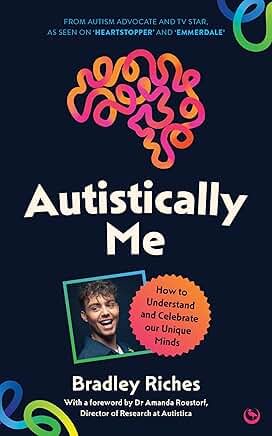
Bradley Riches appears at this year’s Bradford Literature Festival. His latest book, Autistically Me: How to Understand and Celebrate Our Unique Minds, is out now.
Interview by Carl Marsh


LATEST INTERVIEWS
David Morrissey
Alicia Coppola

Sorabh Pant

Simon Reeve

James Norton

Heida Reed
INTERVIEW DIRECTORY