

Conn Iggulden
History, Storytelling and the Discipline Behind It
Writer Conn Iggulden — known for his bestselling historical fiction including the Emperor and Conqueror series, as well as The Dangerous Book for Boys — discusses storytelling, research and the enduring power of books.
You started writing at a very young age — at what point did it stop being something you hoped for, and start feeling inevitable?
I was writing from the age of around 11 – and I mean trying to finish full length manuscripts and sending them to publishers. I didn’t understand about agents for a long time. I remember counting the words on a page by David Gemmell and then multiplying up by the number of pages, to get a ballpark figure for the length of a book.
“A good book is stepping out of yourself into someone else’s world.”
With The Gates of Rome, did success change how you saw yourself as a writer — or simply confirm what you already believed?
In one sense it took 15 years of constant writing and rejection. In another, I sent it to one agent with a simple covering letter. She said yes and placed it with five publishers who bid against each other — those were heady times. The Gates of Rome went to No.2 on the Sunday Times hardback bestseller list, and I remember the publisher telling me it didn’t always work like that. I loved the book, though, so it didn’t seem surprising to me that other people would as well.
When you’re writing historical fiction, how do you balance truth with storytelling?
I love historical fiction — adore it. It gives a writer access to scenes of extraordinary power. The flaw in the genre is that the research takes forever.
“The research takes time, but it’s part of the process.”
Your work involves a huge amount of research — how do you manage that without losing the story?
The research takes time, but it’s part of the process. It’s what allows you to build something believable.
Which books have stayed with you — not just as a reader, but in the way you think or write?
Again it depends on context. For laughter, I’d choose Three Men in a Boat, or books by Peter Pook or PG Wodehouse or Sue Townsend. For crime, Lee Child, or Michael Connelly, or a hundred others. For fantasy, Brent Weeks, Mark Lawrence and so on. For historical fiction James Clavell, George MacDonald Fraser, Ben Kane, Anthony Riches — I could go on and on with that one, obviously.
I loved the books Fight Club and The Secret Garden, when all I wanted was to be Dickon and have some contact with wild animals. Books have always been special to me — it’s not an internal thing at all. A good book is stepping out of yourself into someone else’s world.
“They bring joy and they stimulate the mind.”
What does reading give you now that nothing else quite can?
Sometimes, it’s just for fun. I might read a thriller in the bath, or stay up too late with a gripping story when I have an early call the following morning. Like most people, I can become interested in a character and simply want to know what happens next to them — it’s not much more complicated than that.
Other times, I might read an idea that stays with me. Without looking it up, here is a line from a Terry Pratchett and Neil Gaiman book called Good Omens. I might be phrasing it a little differently, but here goes: “My young would not have dreamed of going to church, but the church he avoided so carefully was the Church of England, of course. There was no question at all about that.” The idea amuses and intrigues me, even if I have the words half wrong. There’s a great truth about the English and their attitudes to church, humorously expressed. Pratchett also wrote: “Build a man a fire, and he’s warm for a day. Set a man on fire, and he’s warm for the rest of his life”. Yes, that made me laugh, but it’s also an example of the sort of thing you can only find in a good book. They bring joy and they stimulate the mind. What’s not to love?
What part of writing do you find hardest — starting, sustaining, or letting it go?
The flaw in the genre is that the research takes forever.
“You cannot write about people if you are blinded by tears.”
You’ve had global success — has that changed how you measure a good book by yourself?
It really isn’t possible to choose between them — I’m proud of them all. The Genghis ones meant I had to ride horses across Mongolia, which will always be a cherished memory, and the same goes for tall ship sailing in the Pacific on the 12–4 watch to learn about ships for The Death of Kings.
The Dangerous Book for Boys is like nothing else I’ve done, but it seems to have reached people all over the world. That is a joy.
What do most new writers misunderstand about the reality of writing?
Learn about people, but as Graham Greene said, “Keep a chip of ice in your heart. You cannot write about people if you are blinded by tears.”
“The Genghis ones meant I had to ride horses across Mongolia.”
Do you still feel pulled towards new genres or ideas?
Definitely, I love historical fiction — adore it, and it gives a writer access to scenes of extraordinary power. One of these days, I’m going to try my hand at pure fiction and see what happens.
What do you think it will feel like seeing your work move beyond the page — into television or film?
There are film and TV options on Emperor, Conqueror and The Dangerous Book. I will keep fingers and toes crossed. I don’t expect any film or TV deal to make any money, but they should reach out to a lot more people — tap them on the shoulder and say, “Try 20 pages and put it down if you don’t like it.” That’s pretty much all I’ve ever wanted.
“One of these days, I’m going to try my hand at pure fiction and see what happens.”
And finally — if you were writing yourself as a character, what kind of person would you make yourself, and why?
Part of me would like to be a dog, no doubt about that. I’m big and enthusiastic and happy enough with a patch of sunshine and a little affection and a bowl of something nice to eat. I like the idea of not worrying about the future — it will come, good and bad together.
Dogs treat triumph and disaster just the same. That’s not such a bad thing.
Conn Iggulden is a British author known for his bestselling historical fiction, including the Emperor and Conqueror series, as well as The Dangerous Book for Boys, which has reached readers around the world.
Interview by Carl Marsh
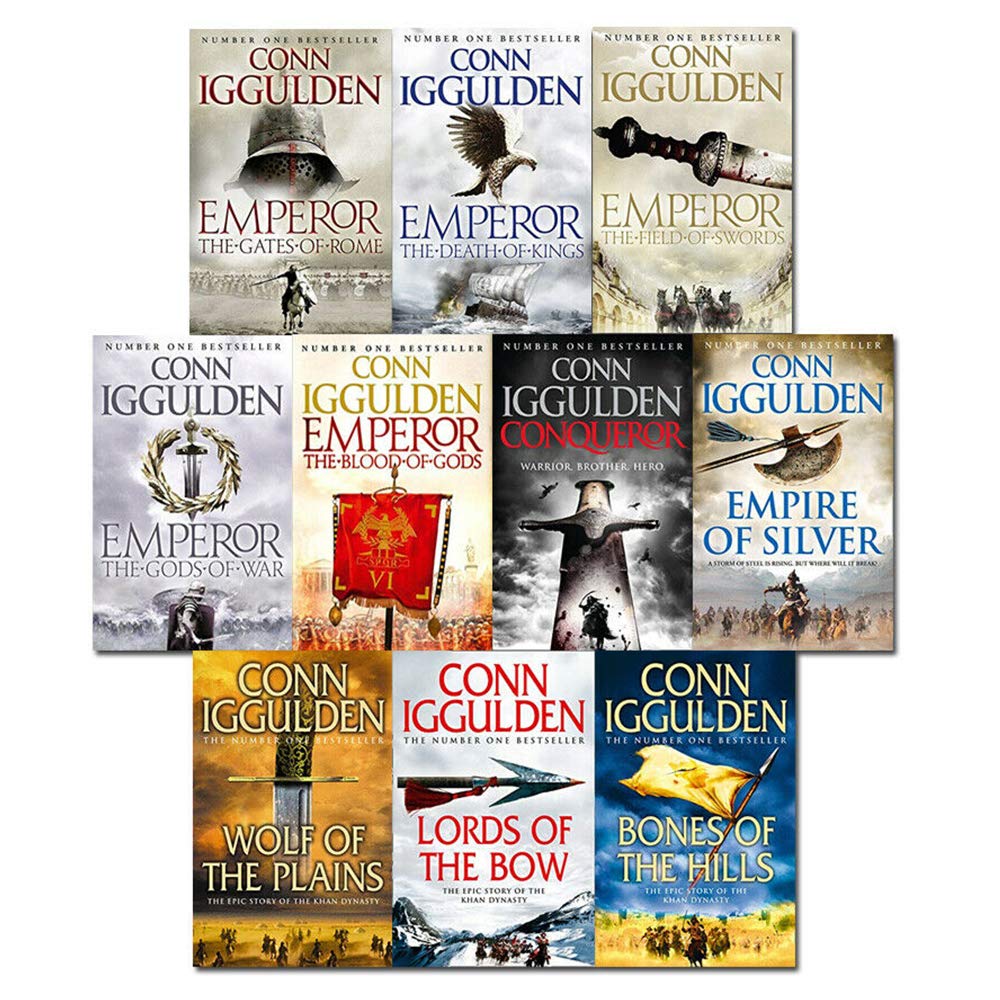
Further Reading: Emperor/Conqueror Series
More Interviews

Whoopi Goldberg


LATEST INTERVIEWS
David Morrissey

Alicia Coppola

Sorabh Pant

Simon Reeve

James Norton

Heida Reed
INTERVIEW DIRECTORY