
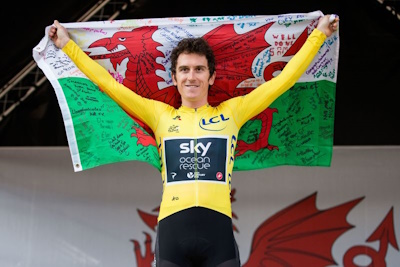
Geraint Thomas
Finding Joy in the Hardest Miles
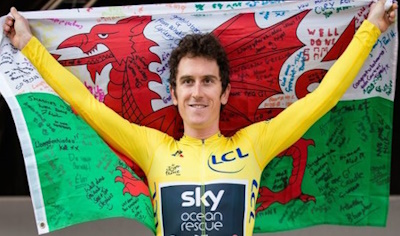
Welsh cyclist Geraint Thomas, Olympic champion and Tour de France winner, rose from Cardiff’s Maindy track to the pinnacle of professional cycling. He reflects on setbacks, controversy around the sport and why passion still drives him.
When you were younger, did anyone ever tell you that cycling was a waste of time?
Generally it was more that people didn’t really understand the sport. People would ask why I was doing that sort of thing. When I started winning a bit of prize money on weekends from local races, that helped motivate me. The main stress for me early on was actually when I shaved my legs for the first time and tried to make sure nobody found out about it.
“On the track there were no brakes and only one gear — it didn’t seem geeky at all once they saw it.”
That must have been difficult to hide from your schoolmates?
Yeah, I used to do games and P.E. in joggers and managed to get away with it most of the time. Eventually some of my mates came down to Maindy cycling track and saw me riding. On the track there were no brakes and only one gear, so it all looked pretty different anyway and it didn’t seem geeky at all once they saw it.
What first sparked your interest in cycling?
I was actually going swimming down at Maindy Pool when I saw an advert for the Maindy Flyers Cycling Club that had just started. I went along, made some good friends, started winning some races and a little bit of money through that, and I just enjoyed it. It went from there.
“The main stress early on was shaving my legs and hiding it.”
Do you remember when you realised cycling could become your career?
Probably when I won the Junior World Championships on the track in Los Angeles in 2004. That was when I thought this was all I wanted to do. I didn’t want to go to university, although I still applied because my mum wanted me to.
How quickly did you experience your first major setback as a professional cyclist?
Pretty much straight away. In January 2005 I crashed in Australia and ruptured my spleen. I ended up having it removed and was in intensive care, so it was pretty serious and quite scary. But I had a lot of support around me — not just my family, but also the people at British Cycling who helped me through it.
“I had a lot of support around me — not just my family.”
Cycling has gone through periods where doping scandals dominated headlines. How did that affect you?
It’s frustrating, but in my head I was just going to do everything the right way, the way I’d been brought up and with the mentality of British Cycling. When big names like Lance Armstrong were eventually caught it showed the sport wasn’t brushing things under the carpet anymore. Because of that I feel like cycling is actually one of the cleanest sports now, even though the reputation from those years still lingers.
Could you ever keep racing if the passion disappeared and it became just about money?
No, it’s too hard for that. You’ve got to love it. You can’t go out and do five-hour rides and all the training if you don’t enjoy it. As soon as it gets to that stage you’d probably stop.
“I was just going to do everything the right way.”
Even after everything you’ve achieved, do you still want to keep improving?
Yeah, definitely. You always want to win again and you’re always looking to improve. That drive never really goes away.
Are you your own biggest critic?
Yeah, probably. You’re always analysing sessions and thinking about what you could do better. You’re constantly assessing things and trying to improve.
“You’ve got to love it.”
Does the sport allow much time to switch off during the year?
October is usually when we get a bit of time to chill out. You can eat what you want, have a drink and not think about the bike all the time. After that it’s about getting back into training again.
Cycling is known for brutal crashes. Which injuries have been toughest to deal with?
The spleen injury early on was obviously a big one.
I’ve also broken bones like my hand and when that happens you’re forced off the bike and can’t race. That’s often the hardest thing mentally, because you want to be out there competing.
What keeps you going through those setbacks?
You just deal with it and get through it really. It becomes a challenge in a way and you want to come back stronger.
“The spleen injury early on was obviously a big one.”
Finally, what advice would you give young people who dream of following a similar path in sport?
The main thing is to enjoy it. I never took it too seriously when I was young — it was about having fun and spending time with friends. If you don’t enjoy it, you won’t stick with it anyway. Especially when you’re young, there’s no rush. Just enjoy riding and see where it takes you.
Geraint Thomas is an Olympic champion and Tour de France winner who has spent much of his career racing for Team Sky and Ineos Grenadiers.
Interview by Carl Marsh


LATEST INTERVIEWS

David Morrissey

Alicia Coppola
Sorabh Pant
Simon Reeve

James Norton

Heida Reed
INTERVIEW DIRECTORY