
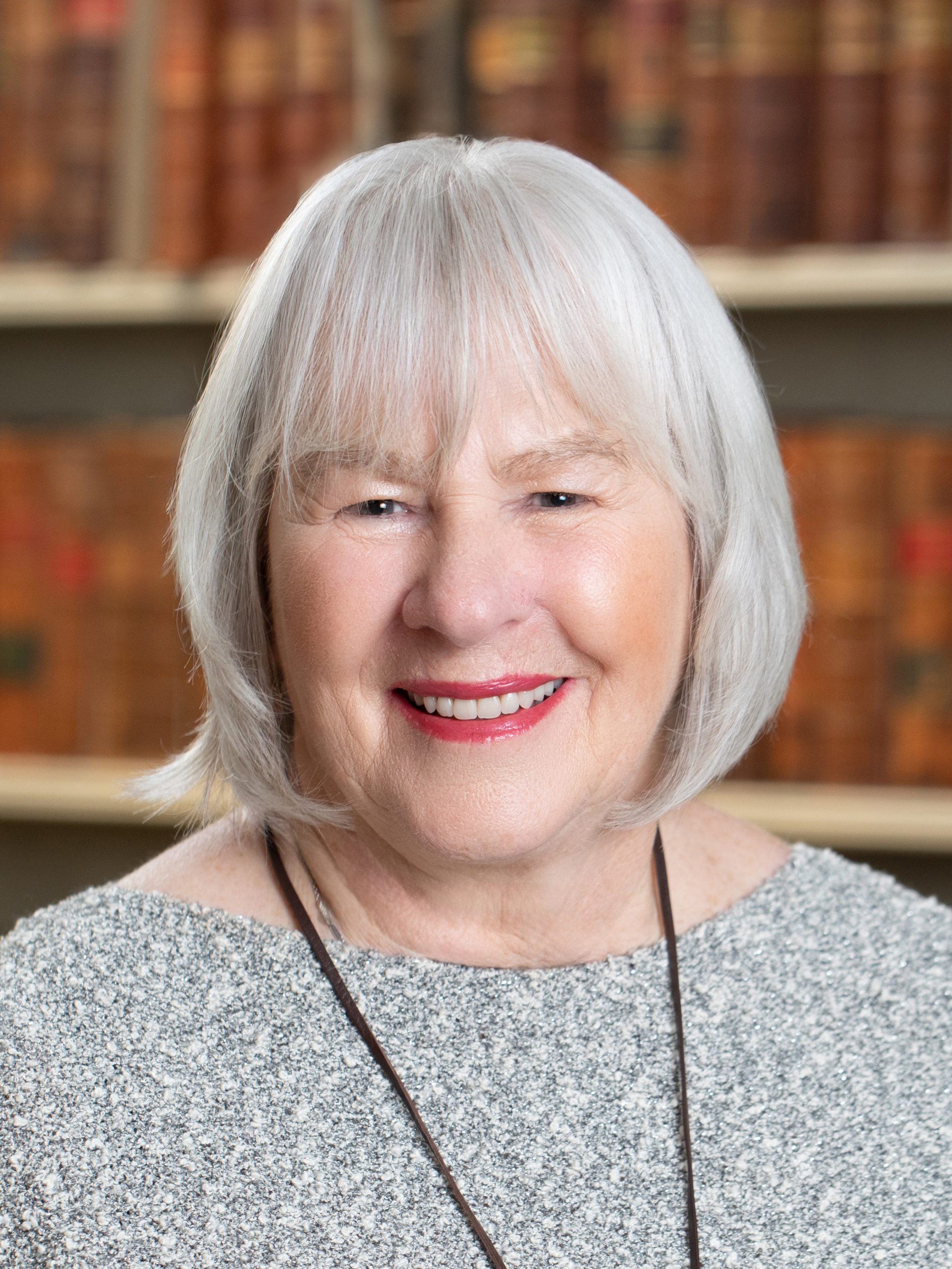
Heather Morris
The Stories That Find Her
From The Tattooist of Auschwitz to The Piano Teacher of Montparnasse, bestselling author Heather Morris explores Holocaust survivors, forgotten Resistance heroines, the power of music and friendships forged through history.
Before we discuss your new book, I watched the documentary in which you travelled to Auschwitz and Slovakia with Lali Sokolov’s son. I was particularly moved by what you did in the village where Lali was born.
That town, Krompachy, is very personal to me. They’ve actually made me an honorary citizen there. I have the documents, and my name is on a board in their town hall. It’s only a small place, with one council office, but I’m there as an honorary citizen of Krompachy. It brought tears to my eyes because that wasn’t why I did what I did.
I’d been there before, and on my second visit I was walking around the village with the mayor. Right in the middle of this beautiful little town was an overgrown piece of land. She pointed it out and told me that was where the synagogue had stood, where Lali would have gone to worship. After the war, when no Jewish families returned, the building gradually became run-down. Eventually, they had to demolish it. But the villagers wouldn’t use the land for anything else. Not one person living there today identifies as Jewish, yet they still regarded it as sacred ground. When I saw it, the weeds and grass were three or four feet high. It had become an eyesore in the middle of the village. I asked the mayor, “What can we do to give it a new lease of life?” And that’s how it began.
“If one of them disapproved of it, then that book would never see the light of day.”
Ad · Further reading
Heather Morris
Read The Piano Teacher of Montparnasse, the novel at the heart of this interview.
Also by Heather: The Tattooist of Auschwitz.
As an Amazon Associate I earn from qualifying purchases. I also earn commission on eligible Audible sign-ups. Audible offers are subject to membership eligibility and terms; see Amazon for details.
That was genuinely moving to watch. I’ve been wanting to visit Slovakia myself, and you’ve given me another reason to go.
It’s a beautiful country, Slovakia. I think it’s one of Europe’s undiscovered treasures. Outside Bratislava, which gets the tourists travelling along the Danube, there isn’t a huge tourist industry. But it’s incredibly lush and green, with snow-capped mountains, lakes and rivers. It reminds me very much of New Zealand. One day, the rest of the world will discover how beautiful it is.
I’ll try to get there before everybody else does! And if I visit Krompachy, I’ll take a photograph and send it to you.
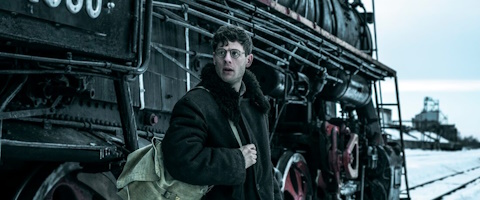
You should! The railway station used in the miniseries is still there, too. It’s no longer operating as a station, but it hasn’t really changed. That’s why we were able to film there.
Now, The Piano Teacher of Montparnasse effectively found its way to you through Hans Zimmer and Kara Talve. Do you ever wonder why these extraordinary stories keep finding you?
I suppose the simple answer is that I put myself out there. I get a lot of stories. At the moment, I’m juggling three others that have come to me through people who’ve read my books, watched the miniseries or somehow heard about what I do. They have a story in their family, or one they know about, and they want it told. Many of them are wonderful family stories, but they’re not necessarily novels. There might be a beautiful little vignette there, but not enough to sustain an entire book. Every now and then, though, you find these little gems.
That’s what happened with The Piano Teacher of Montparnasse, and with Three Sisters. It was the same with Sisters Under the Rising Sun, my story about the Australian nurses and the nuns held captive by the Japanese. I was having lunch with a colleague I’d known for about 20 years, and the war came up. She casually mentioned that one of the nurses, the head nurse, had been her second cousin. She knew the story incredibly well. That’s what can happen when you open your mind and listen to people.
It’s fascinating, isn’t it? You can have an ordinary conversation with somebody and discover something extraordinary. One little detail suddenly becomes an entire story.
Pretty much, yes.
“They call me sister. I call them brother.”
When Kara first told you about her grandmother and Andrée, what made you think this was one of those stories you absolutely had to tell?
It was the power of music. I’ve literally just returned from Los Angeles, where I spent 48 hours with Kara. We were filming together in Santa Monica and in the studio with the piano. Some of that footage will be coming out on social media. But initially, Kara only knew the story from her grandmother’s perspective. At that stage, I didn’t know whether there was a complete book there. What struck me was hearing the passion in her voice.
She became quite emotional as she told me about the piano. She said, “I have that piano.” It’s the piano she used when composing music for The Tattooist of Auschwitz. Think about what that means. A piano that was central to her grandmother’s survival during the Holocaust was being used, 80 years later, to compose music for another Holocaust story. You can actually hear it in the television series. At the end of episode one, there’s a scene where Gita and Lali have just met. Gita stands up after having her number tattooed — Lali always called it being numbered, not tattooed — and she walks away, weaving through the other women. That’s where the love theme comes in. And in that music, you’re hearing Kara playing her grandmother’s 120-year-old, slightly out-of-tune birdcage piano.
I’m going to watch that scene again. Knowing the instrument’s history will make it feel completely different. You were with that piano only a couple of days ago. What was it like actually touching something that had lived through so much?
Oh, it was incredible. I did it again just 48 hours ago. I can’t play the piano. I can’t play any musical instrument, actually. But we were standing beside it while the camera people were setting up, and I was running my fingers over the keys. I looked at Kara and said, “It just gives me goosebumps.” These were the keys her grandmother’s fingers had touched as a frightened young girl. They were also the keys Andrée had played.
Andrée’s parents had bought that piano for her when she was a child. It was the instrument that helped create her passion for music. And Andrée Levallois was so much more than the small part of her life I’ve written about. She became a respected piano teacher and musician. She wrote books on teaching music to children, published in France. So here I was, touching this piano that had meant so much to two generations of women and had helped create so much music.
An object like that somehow makes history more tangible than a document or photograph ever could.
Absolutely, because it’s tactile. You can touch it. It has chips and marks. It shows its age. There was even a little dust on it. Kara keeps some of her awards on top of the piano—Grammys and all these beautiful things—and we had to take them off for filming. I saw a camera crew member wipe away the dust, and I wiped a little myself. I said, “I feel like I’m wiping away the dust of a hundred years.” It was a very strange feeling.
“All I’ve got to do, though, is live long enough to be able to write all three of them.”
Andrée and her family weren’t simply hiding a Jewish child. They were already involved in the French Resistance. Did discovering the extent of their activities change the book you originally imagined writing?
It did, actually. At first, I saw it as Josie’s story—this young Jewish girl, what happened to her, and how she survived. But then we began discovering more about Andrée. We had an incredible historian and researcher who dug deep into the archives, not just in Paris but across regional France as well. That’s one of the frustrating things about researching in France: there isn’t just one place where all the records are kept. We found documents that even my French publisher didn’t know existed, and they contained extraordinary information.
Andrée and her mother, Tina, had made statements in 1950 detailing their work for the Resistance. They described the missions they’d undertaken and named people in their network. They included real names and aliases. Documents from two men who’d held senior positions in the French Resistance supported their statements and could confirm what these women had done.
Now, here’s the extraordinary part of why those records existed. After the war, Charles de Gaulle accepted the claims of men who said they’d served in the Resistance and awarded them pensions in recognition of their role in liberating France. But women had to prove their involvement. Their word wasn’t enough. They had to provide details, supporting evidence, and confirmation from men already recognised as Resistance leaders. Because he [de Gaulle] was a bastard and denied these women what they should have been given automatically, I got incredible documents. So, love him or hate him, those demands left us with extraordinary evidence of what these women actually did.
We also tracked down Andrée’s granddaughter, Frédérique, who lives in Paris. Andrée had been part of her life for 40 years, so she knew her grandmother extremely well. She had photographs, documents, and personal mementoes she was willing to share with us. Suddenly, we had this wonderful access to Andrée’s world. That’s when I realised it wasn’t simply Josie’s story. It was Andrée’s. And I wanted the title to reflect that. Not The Rescued Jewish Girl. Not The Resistance Fighter. The Piano Teacher of Montparnasse. I wanted readers to encounter an ordinary piano teacher and then discover what an extraordinary woman she was.
“I immediately changed my flight, not back to Australia, but to Tel Aviv.”
Josie was effectively hidden in plain sight, even continuing to attend school. When you discovered that, did you start thinking about how many people must have known what was happening and chosen to protect her?
Yes, absolutely. I’ve visited all these places in Paris. The apartment building where Josie lived with her mother and brother is still there. People still live in it. Just around the corner, the building where Andrée and her parents lived still stands, too. There’s a beautiful sunken park close to Josie’s apartment. They created it in the early 1930s on the site of an old gasworks. They excavated the contaminated soil, and instead of filling the area back up to street level, they left it as a sunken garden. That’s still there. We walked through it.
The school is still there. There’s even a little bookshop that’s still there. It was extraordinary to walk around this neighbourhood and see how much of the world Josie knew still existed. Then we started investigating the school. We discovered that the headmistress had gone to extraordinary lengths to protect Josie, but she wasn’t the only Jewish child being hidden there. There were several other Jewish girls. One of the teachers not only helped protect them but actually had girls living with her. Like Andrée, she was subsequently recognised by Yad Vashem as one of the Righteous Among the Nations. People in the neighbourhood also posed a genuine threat. The headmistress and others had to make it clear they knew who those people were and wouldn’t tolerate anything happening to the children. There was enormous courage involved.
When you’re writing about real people, where do you draw the line between what the historical evidence tells you and what Heather Morris, the novelist, is allowed to imagine?
Well, you have to imagine the conversations. Unless something has been recorded, whether on paper, visually or through an audio recording, you don’t know the exact words people used. You might know what happened. You might have been told what had happened. You might have official documents describing what happened. But I love dialogue in my books. So I have to imagine the conversations these people would have had, how they spoke to one another and how they might have reacted.
For a 73-year-old woman to get inside the head of an 11-year-old Jewish girl in France in 1942 requires some effort! I can only hope I get it right. I’m fortunate to have an incredible editor in London who’s worked with me on my books and travels with me. She’s very much involved in the stories. She reads every chapter as I write it. I don’t have publishers who say, “Send us the finished product.” They’re involved throughout the process. And she’ll tell me, “You’ve gone out of character here. Her voice has changed.” Having somebody who can recognise that is invaluable, particularly when you’re trying to maintain the voice of an 11-year-old girl alongside someone like Andrée, who was in her forties. I had less difficulty writing Tina and Louis. I could identify with them.
Have you ever written something and then removed it because you felt you were putting thoughts into a real person’s head that they might never have had?
Yes, particularly with Josie. I was conflicted because her family, people who knew her as their mother or grandmother, told me what they believed she would have been like as a child. And sometimes that conflicted with how I wanted to portray her. I didn’t want her to be frightened, timid and anxious throughout the entire book. I wanted her to have a sense of strength.
I talked to the family about that. I explained some of the things I wanted her to do or say. Eventually, they said, “Well, she could have been like that. We don’t know.” That’s the difficult part. I’m never trying to turn a real person into somebody they weren’t. But when nobody can tell me precisely what they were like, I have to visualise them. I call it reimagining. At first, I imagined Josie as much more tomboyish and outgoing, wanting to get involved in everything. Then I had to tell myself, “Come on, Heather. Be sensible. Bring her back.” She was a frightened 11- or 12-year-old girl. I couldn’t forget that.
“I feel like I’m wiping away the dust of 100 years.”
You’ve immersed yourself in stories involving the Holocaust, persecution and survival for years. How do you stop carrying those people’s pain home with you? How do you switch off?
I think my previous occupation helped me enormously. Before I retired, I worked in the social work department of a major hospital, where dealing with tragedy and trauma was part of my everyday life. One of the things you learn very early is that you can’t help somebody if you allow their pain, trauma or guilt to transfer to you. You have to practise what health professionals call self-care. Otherwise, you’re no good to the person you’re trying to help.
I understood that in theory and through years of working in the hospital. But when I began spending time with Lali, particularly during those first few months, it didn’t work quite so well. I was horrified by some of what he told me. There were times when I didn’t know how to handle what I was hearing. Fortunately, I had a wonderful psychiatrist friend at the hospital. I had what amounted to free access to therapy. I could knock on his door and say, “I can’t handle this. Lali’s doing my head in.” And he’d remind me, very firmly, “Transference. Get over it. It’s not your pain, not your trauma and not your guilt.”
Of course, sometimes it was difficult. What I also came to appreciate was the difference between acute trauma and historical trauma. At the hospital, I was generally dealing with people experiencing something that had just happened, such as a major accident, a sudden illness or a family crisis. With Lali, I was listening to somebody who’d carried his memories for decades. His trauma was historical. It was something that kept returning to him, over and over again. Learning how to negotiate that difference was incredibly important.
“Because he [de Gaulle] was a bastard and denied these women what they should have been given automatically.”
The Tattooist of Auschwitz changed your life. When you look back at the Heather who first sat down with Lali, do you recognise the writer you were then?
No, because I wasn’t a writer! I thought I was simply going to spend time with this man who wanted somebody to hear his story. I saw Lali once or twice a week because he wanted me to. He missed Gita terribly. He wanted to join her, and he kept telling me I needed to hurry up and let him tell his story. That’s all I thought I was doing: listening.
Then, several months later, he casually asked, “Have you finished my book yet?” I said, “What?” He thought it was hilarious. His sense of humour was only just beginning to return, and he laughed and said, “What have I been wasting my time with you for?” I told him, “I thought you liked talking to me because I like listening to you!” And he said, “Well, can you find a way to tell my story? I want people to know.” I asked him why. He said, “I want people to know about Gita.” That was what mattered to him. He wanted people to know about this girl he’d met, fallen in love with and loved for the next 60 years. He wanted me to tell people how much he loved Gita.
So I said I’d try. I went home and told the family that Lali thought I could write a book. They laughed. After they finished laughing, we started discussing other ways I might tell the story. I loved films, so they suggested I write it as a screenplay. I went online and found a screenplay-writing course. I thought I had it made! So that’s what I did. I wrote the story as a screenplay, and Lali only ever saw it in that form. It was a fully written, redrafted screenplay, and eventually an Australian production company optioned it. They held the rights for six years, including while Lali was still alive. But it didn’t get made.
When the option expired and I got the rights back, I continued trying to turn it into a film. Then I was visiting my brother and sister-in-law in San Diego. I was complaining about Hollywood being only a hundred miles up the road and how I still couldn’t get the film made. We’d had a few drinks. My sister-in-law looked at me and said, “For fuck’s sake, Heather! Write the bloody thing as a book and get on with it.” And I went, “Oh, okay. I’ll give it a go.” That’s how it became a novel.
“My only responsibility is to them, not to history, not to any documents that anyone else has produced.”
Looking back now, is there anything you would have done differently with that first book?
I think it would have been a very different book if I’d written it today. It’s amazing what 10 or 12 years can do. I couldn’t have written this story at 20, 30, or even 40. I don’t think it could have happened. Maturity plays a part in how you see the world, how you perceive it and how you remember things.
We’ve often talked about this with my publishers. If the book had come out 12 years earlier, perhaps the timing wouldn’t have been right. Publishing, film and other creative industries are very cyclical. Things come around, have their moment, and then something else takes their place. I think I was fortunate that the timing was right.
I see this when interviewing directors, producers, and screenwriters. A project might sit on a shelf for years, then suddenly become exactly what everybody wants.
Exactly. Timing is everything.
After living with Andrée and Josie for so long, was it difficult to finally leave them behind when you finished The Piano Teacher of Montparnasse?
I’ll never leave them behind. Kara Talve is in my life, and so are her mother and Frédérique in Paris. We’re emailing one another all the time. Frédérique translates my emails into French, and I translate hers into English.
The same is true for the families from Three Sisters. Magda, the last of the three sisters, died about 18 months ago. But those three women have six children between them, and they remain part of my life. They call me sister, and I call them brother. There are grandchildren and great-grandchildren now. I’m invited to family celebrations and events. A little girl was born into the family a few months ago, and I was invited to the celebration. Unfortunately, I couldn’t get there. But these people stay in my life. When I write a story, I don’t simply finish the book and say goodbye to everybody. They’re family now.
Several families have entrusted you with incredibly personal histories. Has success made that responsibility easier, or does it become heavier with every book?
Easier, actually. Because they trust me, they’ve read what I’ve done before.
One of the lovely things about my books is that there’s always a backstory about how I came to tell the story in the first place. Three Sisters is a perfect example. I was in South Africa for a book festival in Franschhoek, which is in the wine region. A very smart place to hold a book festival! One early morning, I received an email from a man in Toronto. He explained that he’d picked up a copy of The Tattooist of Auschwitz on his way to visit his mother in Tel Aviv. He’d been there a couple of days, finished reading the book and left it on her coffee table. His mother walked past, glanced at the cover and said, “That must be about Lali and Gita.”
He couldn’t understand how she’d possibly know that. But she pointed to the number tattooed on the woman’s arm. Now, the Australian and Canadian editions had a different cover from the one you might know. It was a black background with the arms of a man and woman reaching towards one another, with their tattooed numbers visible. His mother pointed at the girl’s number and said, “That’s Gita’s number. I know that number.” Then she showed him her own arm. Her number was only three away. And her sister’s was only two away.
She told him, “We went to school with Gita. We were on the train to Auschwitz with Gita. We were in Block 29 with Gita.” Can you imagine? He’d picked up this book, taken it halfway around the world and left it on a coffee table, only to discover that his mother had actually known the people in it.
He contacted me, and I spoke to his mother a couple of days later. By then, I think I’d made it from Franschhoek to Cape Town and sobered up a bit! This beautiful woman in her mid-nineties said, “There’s so much I want to tell you about Lali and Gita.” She knew them very well. Gita had even stayed with the family after Lali and Gita had emigrated to Australia and the sisters had moved to Israel. Then she said, “But I don’t like talking on the telephone. You’ll have to come and see me.” All right, then! I thought about it for roughly 24 hours. There I was in South Africa, living in Australia, and this woman was in Israel. So I changed my flight. Instead of returning home, I flew straight to Tel Aviv. And that’s how I became part of this extraordinary family.
That’s incredible. And from that chance encounter came an entire book.
Yes, but here’s why the responsibility became easier. When I wrote what was effectively the final draft of Three Sisters, I made an agreement with the family. Every adult member of that family would receive the manuscript. And if even one of them disapproved of what I’d written, the book would never be published.
I was talking about three generations. These women had adult children and adult grandchildren. When I first met them, they brought together about 40 or 50 family members. I went back to see them again, too. But they told me they’d all read The Tattooist of Auschwitz, and they trusted me to treat the stories of their mothers and grandmothers with the same care. That meant an enormous amount.
My responsibility was to those families. Not to somebody else’s interpretation of history, not to another person’s memories or a competing account. I had to honour what these women had entrusted to me. People sometimes criticise historical fiction because their recollection of an event differs from somebody else’s. I can accept that. People experience the same events differently. But I know how carefully I’ve handled the stories people shared with me. And I don’t lose sleep over somebody telling me, “That’s not how it happened.” It might not be how it happened to them. That doesn’t mean it wasn’t how somebody else experienced it.
With The Piano Teacher of Montparnasse, Kara also received an advance manuscript. The same principle applied. If she was uncomfortable with something, I wanted her to tell me.
“No, because I wasn’t a writer!”
You mentioned earlier that you’re juggling three other stories. Are all three genuinely potential books?
Yes. All three have potential. The only thing I’ve got to do is live long enough to write them all!
And there’s actually another one. I’ve got a screenplay that’s been sitting in my bottom drawer for more than 20 years. It’s a completely different kind of story. It’s not set in wartime Europe. It involves the 1956 Olympic Games in Australia, espionage, murders and the Cold War. It was given to me by somebody who was actually there, and who played a very significant role. He was the head of security.
I’ve had that story for years. But it’s a bit like actors becoming typecast. You have success writing a particular kind of historical fiction, and suddenly that’s what your publishers want. It’s also what your readers want. Last year, I stepped outside my lane with The Wish, which is a contemporary story. But even that was based on something true, something that happened to me more than 20 years ago when I was working at the hospital. It involved a family and a situation that stayed with me. So I’ve written something different, but historical fiction seems to be what people want from Heather Morris. Perhaps I’m supposed to stay in my lane!
You could always do what J.K. Rowling did and write under the pseudonym Robert Galbraith. It worked for her, even if everybody eventually found out who she was.
But everybody knows it’s her!
True, but at least you’d get to step outside that lane. You could even wear a mask at the book launches!
Absolutely! But then the publishers would say, “And how are you going to promote it?”
You brought up J.K. Rowling, and here’s a little side thing. Kara is incredibly busy right now. Not only does she compose music for different projects, but she, Hans Zimmer, and her husband, Anže, who’s also a composer, have been working on the score for the new Harry Potter television series for the last 12 months.
And it’s not just the first series. They’re looking at the next six years, covering all seven books. The first series has eight episodes, so instead of trying to tell the story in a two-hour film, they have eight hours to do it. Apparently, it’s been brilliantly crafted, and they’ve been composing the music as the footage comes through.
It’s an extraordinary undertaking. John Williams created that beautiful music for the original films, and now the mantle has passed to Hans, Kara and Anže.
Well, you can’t get much better than going from John Williams to Hans Zimmer and those two. I’ve been a fan of Hans for years, and I’d absolutely love to interview him one day. You could spend hours talking about the film music he’s composed. He’s a genius.
He’s an incredible character. Larger than life! But really, he’s just a boy from London.
I’ve also become very good friends with Russell, one of his business partners, who produces his music, and Steve, his other partner, who travels with him and produces his shows
Talking of projects that can take years to come together, you’ve mentioned earlier about three potential books and that Olympic Games screenplay that’s been sitting in your drawer for over 20 years. Have you decided which story you’ll tackle next?
Not really. That’s a conversation I’ll have with my publishers when I’m in London next month. We’ll look at the different stories and decide which one is ready. A lot depends on the research. All my books require a considerable amount of research, and I live at the arse end of the world! I don’t have easy access to European archives and the places where these stories happened. Fortunately, we have researchers in different countries who can help.
For The Piano Teacher of Montparnasse, having somebody in France was invaluable. It’s about assessing how much research is complete, how well the story is coming together, and which one we’re best positioned to tell. Whichever story I choose, I’d like the next book out around this time next year. That’s the timeline I’m working towards.
“There’s a backstory to all my stories. There’s the story of how you got the story.”
One final thing. With so many of the original Paris locations still standing, can you see The Piano Teacher of Montparnasse becoming another television series or film?
I want it to be. That’s all I can say. Watch this space.
I thought you might say that! I can already imagine how it would look on screen, especially with those buildings, the streets and, of course, the piano.
Well, we know who would be scoring the music for it, don’t we?
Exactly! You’ve already got the people there. It makes perfect sense. I’ll keep my fingers crossed.
So will I!
The Piano Teacher of Montparnasse by Heather Morris is published by Firefinch on 22 October 2026 and is available in hardback, paperback, eBook and audiobook.
Ad · Further reading
Heather Morris
Read The Piano Teacher of Montparnasse, the novel at the heart of this interview.
Also by Heather: The Tattooist of Auschwitz.
As an Amazon Associate I earn from qualifying purchases. I also earn commission on eligible Audible sign-ups. Audible offers are subject to membership eligibility and terms; see Amazon for details.
Interview by Carl Marsh
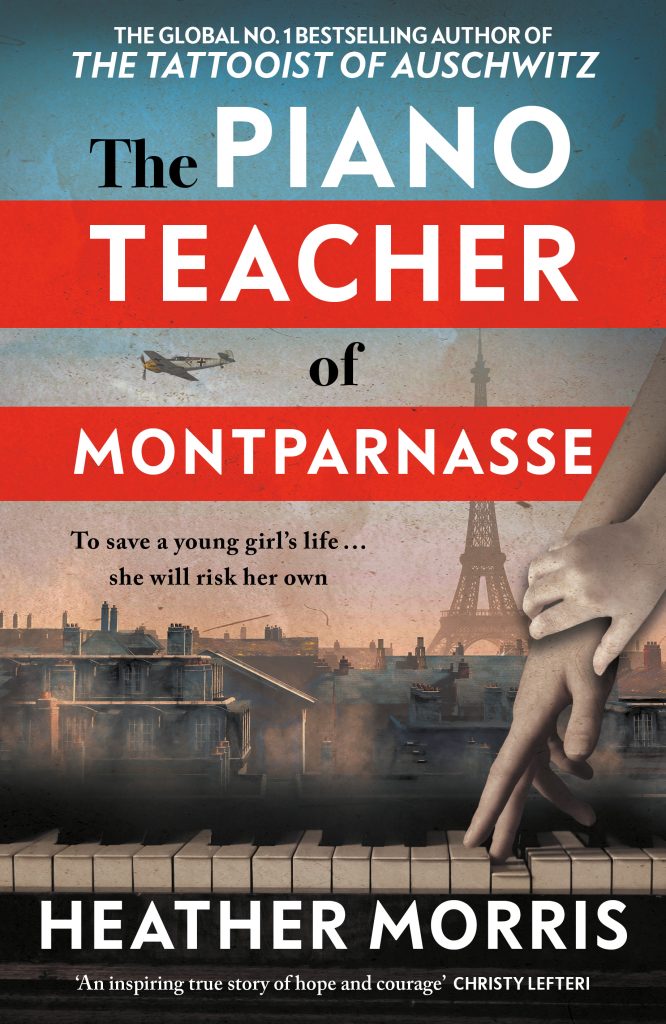
Further Reading: The Piano Teacher of Montparnasse
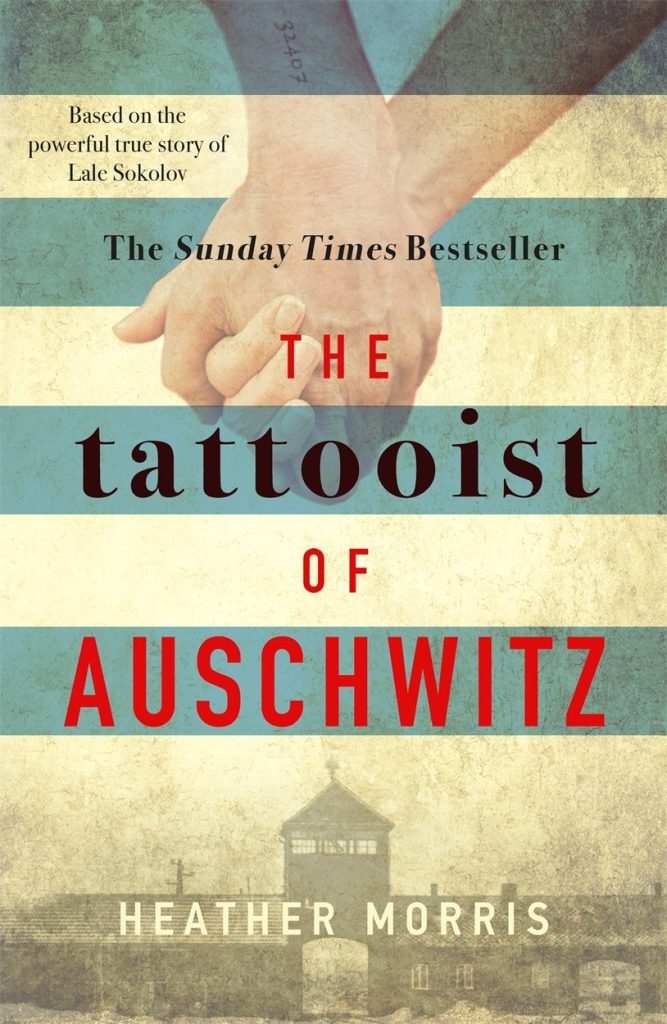
Further Reading: The Tattooist of Auschwitz
Ad · Further listening
Listen to Heather Morris
Discover The Piano Teacher of Montparnasse as an audiobook.
View the Audible offerFor eligible customers. See Amazon for the current membership offer and terms.
As an Amazon Associate I earn from qualifying purchases. I also earn commission on eligible Audible sign-ups.
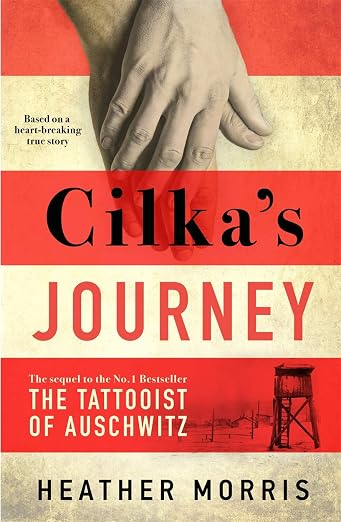
Further Reading: Cilka’s Journey
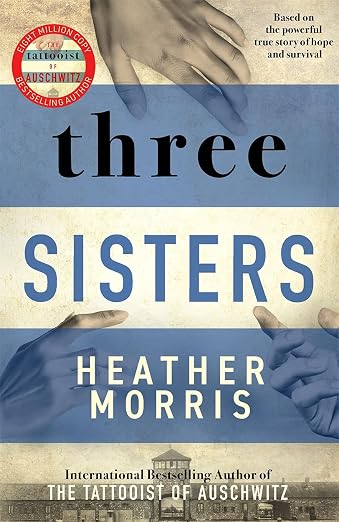
Further Reading: Three Sisters
More Interviews

Whoopi Goldberg


LATEST INTERVIEWS
David Morrissey
Alicia Coppola

Sorabh Pant

Simon Reeve
James Norton

Heida Reed
INTERVIEW DIRECTORY