

Jamie Lowther-Pinkerton
“It’s Almost Impossible to Rebuild Trust When It’s Gone”
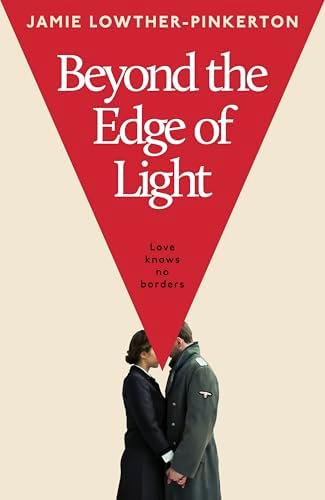
Former SAS commander and Royal Household adviser Jamie Lowther-Pinkerton talks about courage, discretion, duty and the personal history behind his debut novel, Beyond the Edge of Light.
After a life spent in worlds where discretion and loyalty mattered enormously, how liberating was it to finally sit down and write fiction?
Well, I tell you what, one led to the other. To be frank, with both of my previous careers, one in the [SAS] Regiment and then the other working for the Royal Household, I knew I could never write anything factual — or at least, at the moment, I don’t think it’s the right thing to do. And I’ve always been a bit of a Walter Mitty. So actually being able to think up, you know, make up my own world was a huge attraction to me. Nobody’s looking over your shoulder. You can make it up and research it properly, but you can go whatever way you want. It’s lovely. Very liberating.
“Nobody’s looking over your shoulder.”
Beyond the Edge of Light is your first novel, and you’ve waited until your sixties to write it. Why did this particular story finally make you a novelist?
Part of the reason for waiting so long is that there are brilliant young novelists around who can sit down and have the sort of mind where they can write profound stuff. That wasn’t me. I needed to live a bit of a life to be able to come up with the people. All the characters in it are based loosely, or even closely, on people I’ve met over the years, not least my mother, who’s the main protagonist. I’ve always written, and I’ve always had this inkling to write a novel, and I never wanted to write a history book or anything like that. I sat down and started doing it just before COVID. I didn’t think it would get anywhere, but I loved writing it. So that was an end in itself, and it’s lovely to get it published.
Your mother helped inspire Missie. How much of that side of her did you truly know, given how little she could say about her wartime intelligence work?
We only discovered she was anything to do with MI5 when I was in my late twenties. She let something slip. As far as we were concerned, she was Miss Marple, sitting in the countryside knitting cardigans for godchildren and things. But she was a massive part of it. I was quite nervous writing through the eyes of a woman and not wishing to get it wrong, so I went for the woman whom I probably knew better than anybody else knew her, apart from my father and my sister.
The character is massively hers. I know how she would have reacted to things because she was a very strong, very intelligent woman. She was the daughter of a general in the old Indian Army and grew up on the North-West Frontier of India, and that sort of thing, and that was a massive influence on me. Obviously, Missie ends up at Bletchley. My mother was in MI5, so the paths diverge fairly rapidly.
At its heart is a wonderfully difficult question: can somebody genuinely love a person their country has ordered them to destroy?
Yes. In this book, I’ve tried to move away from the general. Obviously, if you’re a Brit, you fall in love with somebody before the war, your country goes to war, then you go to war in the service of your country — if you’re like you and me, basically. But what I’ve tried to do here is make it a bit of a Greek tragedy and narrow it down to a personal choice. She’s confronted with this impossible thing to answer: where does your loyalty lie? Is it to an individual who you’re in love with, who you know you have life-and-death control over, or is it to your country?
Having experienced war yourself, was there ever a danger of knowing too much when trying to write Conrad and this world as fiction?
It’s a very good question. What I tended to do, Carl — and you’ll relate to this — is I started writing the sort of full planning op for that operation on the East Coast, and a very wise friend of mine said, “Listen, just give people the sense of what it is like to have to think through those sorts of things if you’re commanding an operation like that.” So I had to be quite self-limiting on it. You’re absolutely right, and I cut away a heck of a lot to keep the momentum going. All the fun planning stuff, which you and I would love reading about, but nobody else!
“Where does your loyalty lie?”
Love, honour, loyalty and duty constantly collide in the novel. Which becomes hardest to hold onto when circumstances turn extreme?
I think it’s something you can’t formulate in your mind. I think it’s something that will only come to you when you’re confronted with it. There’s an instantaneous choice, in my opinion. If you have the luxury of the time to think about it, then you may rationalise it and avoid putting yourself in the situation. But in this case, she couldn’t.
Twenty years in the Army included commanding troops and a squadron in the SAS. What do people who’ve never served most misunderstand about courage?
Gosh. I think certain people teach the rest of us how to be brave. I’m not one — well, who knows? I don’t think I’m one of them. But I have to say, when I’ve been worried about something, nervous about something in an operational setting, I think, you know, you look around you and see these paragons who are on either side of you. They’re probably feeling exactly the same as you are, but it doesn’t seem like that at the time.
So I think you draw hugely on the courage and character of people around you in these situations where you feel you can’t let them down.
When responsibility includes other people’s lives, does fear eventually disappear, or do the best soldiers become better at functioning alongside it?
I don’t think fear necessarily disappears. I think it goes back to that point I was making before about being there in the instant. Have you got time? You hear this a lot from soldiers, particularly soldiers of whatever rank who find themselves in a sort of leadership role, whether it’s lance corporal or a guardsman, or a trooper, or whatever. I don’t think you’ve got time at certain points to be afraid. If you know what I mean, it’s a sort of snap-decision thing, and you’ll either do something or you won’t. This is where training comes in. You know, Rommel’s old adage: train hard, fight easy. Your fears can be subsumed, if you like, into drills.
And adaptability, as you say. One of the things I came away from the Regiment thinking was that, however much I messed up the plan or got the wrong plan or whatever, they were of a calibre and decency to get me out of it without pointing the finger. Even the rough diamonds, you know, it’s that sort of melting pot which is so powerful, I think. And not just in the Regiment. In the Irish Guards, it was the same.
“I think there are certain people who teach the rest of us how to be brave.”
One chapter of your life involved one of Britain’s most secretive military organisations; another involved one of its most scrutinised families. Which was harder to navigate?
I’m glad I did it the way around I did, because being in the Regiment actually gave you all sorts of skills, and actually faith in human nature and things, that made it much easier to tackle what was a pretty alien environment, actually, going into the Royal Household. It was great, and it does a huge amount for this country, but at the same time it’s quite Byzantine. You know, are you on safe ground here?
I think it hugely helped me, having gone through the chicane, if you like, of regimental life. Not with the guys themselves, but with the tasks we were sent to do, wherever they were. I haven’t answered your question! But I would say I found the Regiment much more straightforward.
Ten years working closely with William, Harry and Catherine must have required enormous trust. What did that period teach you about the value of discretion?
Well, I tell you what it did do. I think that’s why I’ve been quite careful since. I do talk about my time in the Royal Household, but you’ve got to be very, very careful that you don’t betray trust because, as you know, it’s almost impossible to rebuild it when it’s gone.
In that job, I worked hand in glove with the two young men, and then Catherine, Duchess of Cambridge, as she was in my day. They were great people, but they needed somebody who they felt they could trust. If you blew that, you might as well go. So it was everything, actually, and it continues to be, to be frank.
“I would say I found the Regiment much more straightforward.”
We live in an age where seemingly anyone and everyone can tell their story. You’ve been clear there won’t be a Royal memoir. Why does keeping someone’s confidence still matter?
There are quite a lot of components to that, aren’t there? There’s the moral component for your own self-esteem. If I did let them down — even if they didn’t say anything, but I knew I’d said something — it doesn’t help for people like me to say things when they’ve left these positions. If I felt that I’d let them down, or I felt that I’d let my soldiers and the Regiment down, then I would have felt like a much lesser person. That makes me sound very arrogant, as if I think I’m a great person. I don’t, but it would have really dented me, actually.
Does loyalty have an expiry date?
Loyalty only has an expiry date if those who you have been loyal to do something which is so catastrophically against your own moral compass that you have to make a decision. I can’t envisage this in either of my previous lives.
It’s a bit like Conrad, you know, in my book. He was a Prussian officer. He didn’t approve at all of what the Nazis were. In fact, he hated them. But his loyalty was initially to his country and then to his family, so he had to decide whether to fight for Germany. There was never any question that he was going to do that because it would have endangered his family on the one hand, and it would have been contrary to all his basic principles on the other, in terms of country.
“It’s almost impossible to rebuild it when it’s gone.”
Why did you settle on Missie and Conrad, and the Second World War, for the novel?
Now and again people say, come on, the Second World War is passé, all that sort of thing. I went to a festival the other day and heard Antony Beevor talking. He was absolutely clear that there are still so many different layers to unpick from the Second World War. Don’t get me wrong, I’m talking about a war here, so it sounds crass of me to say this, but it is one of those eras that keeps on giving in terms of history and fiction. When war is happening, it distils human emotions down to their absolute bare bones, and that’s what I find fascinating about it. In terms of the Prussian side, I had a friend who’s no longer with us, sadly, who was confronted with this precise situation, and therefore I was able to base Conrad’s character very closely on him. He was a great guy.
There’s clearly still a huge interest in that history. I’ve been fortunate enough to visit Pearl Harbour, Auschwitz and, just a couple of months ago, Hiroshima, and they’re as busy as you could imagine.
It’s really interesting. If you compare Europe, and particularly Eastern Europe, with us, you go to the incredible museums in Poland which they’ve created, and the Poles are so brilliant in that they’ve forgiven, but they have not forgotten. It’s very different for us. We were never invaded. For us, that really seismic national experience, I think, is the First World War, which is why the kids go off to the battlefields there the whole time, because it was something that hit every parish to the tune of 50 men or 10 men or whatever it was.
Whereas the Second World War has always been an adventure for us, because we won the Battle of Britain, and we had Monty, and we had all this sort of stuff. There was great tragedy there, don’t get me wrong, but it wasn’t on the scale of what happened to Poland and Eastern Europe and that sort of thing, which I think has had that seismic effect there.
There’s an interesting connection between soldiering, Royal service and the novel: all three involve duty sometimes coming before what an individual wants. Has duty ever asked too much of you personally?
No, it hasn’t actually, and that sounds a bit holier-than-thou, but duty, as you know, has been bound up with huge fun most of the time. I mean, it’s great being a soldier. It’s great being in the Royal Household and that sort of thing.
There’s a very, very profound point you’re making there. One thing I don’t like is this temptation these days for people to say, “Well, of course family has to come first.” Well, you tell that to the rear gunner of a Lancaster bomber. You tell that to somebody who has had to go off on tour number three in Afghanistan, or wherever it is. Did family come first for them? They loved their family no less than anybody else, but no, it did not. So this idea that family has to come first is a new construct, actually. I get it. Don’t get me wrong. I see where people are coming from when they say that, but it just isn’t true.
“They loved their family no less than anybody else, but no, it did not.”
After the Army, the SAS, Royal Household and now a debut novel, is there still anything left that you feel you need to prove?
Well, I’ve always been a chapters man, as you can probably see from that, and I’m going to try and write a couple more novels — and I’m careful what I say here with my publisher! But I like painting, and I don’t want to make 66 the final chapter. I want to do lots more things which I’ve been peripherally interested in, like the writing. I’ve always been a diarist, but now I want to bring the writing into the centre. So there will be other chapters, I hope. Touch wood.
Beyond the Edge of Light, Jamie Lowther-Pinkerton’s debut novel, is out now. On Saturday 26 September, he appears at Hereford Military History Festival as part of The SAS – Past, Present and Future, a panel looking at the Regiment’s history and future.
Interview by Carl Marsh


LATEST INTERVIEWS
David Morrissey

Alicia Coppola

Sorabh Pant

Simon Reeve

James Norton

Heida Reed
INTERVIEW DIRECTORY