
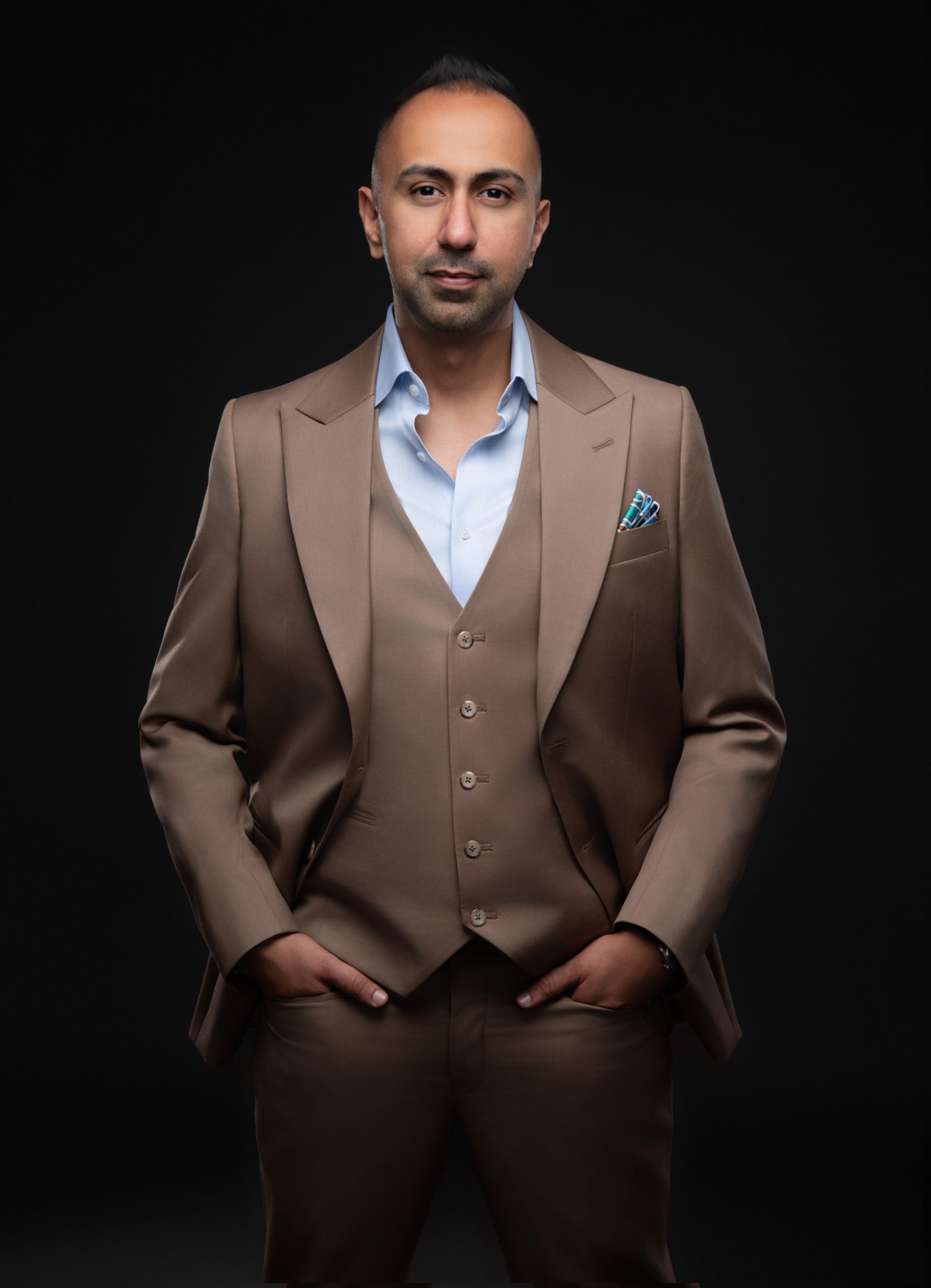
Jigar Sagar
The Code Behind Success
Entrepreneur and investor Jigar Sagar discusses the lessons his father taught him, why failure matters, Dubai’s business culture, AI, time and the habits behind success.
Your father left school very young, worked as a manual labourer and eventually built his own business. You’ve gone on to build businesses worth hundreds of millions. How much of what you’ve achieved is really an extension of his story?
There is no connection between the actual wealth he created and what I created in terms of the businesses themselves. It wasn’t that I inherited a family business and grew it, but there is a massive connection between what I learned as a child while being around his business and how I was eventually able to grow mine. I was exposed to business lessons from a very young age because I spent time with my father at work, and I think I was simply a curious child. I always wanted to understand the why behind things. Why do we need to know the customer’s name? Why do we care when their daughter is getting married? At that age, I didn’t necessarily understand why those things mattered, but while writing the book I had to look deeply at some of the things I’ve done, consciously and subconsciously, and so much of it traced back to those formative years. I absolutely credit him with teaching me a huge amount, both about what to do and what not to do.
“The most valuable thing you have is time.”
Is there something about his attitude towards work or money that you still carry with you now?
Treat it like a baby. There’s a small story about my father cleaning the floors that stayed with me. He owned the business. It was essentially a mum-and-pop jewellery shop with four or five staff members, yet he was the one walking around with the mop and cleaning the glass counters. I was the boss’s kid, so even at a young age I had an ego. I remember thinking, What are you doing? You have staff for this.
His response was: “The day you become a parent, you will realise that you don’t give your staff your baby’s bottom to clean up.” As a child, I brushed it off, but later, even as an employee before I launched these businesses, I treated that job as if it were my baby.
As a child, if you wanted something, your father made you work for it while your uncle spoiled you. Looking back, was your father giving you something far more valuable by saying no?
I think the value came partly from the way he said no. There was rarely a justification. It was a pure parenting style of simply saying no rather than explaining why. That left me with a certain desire, perhaps even an emptiness, which pushed me to believe I was responsible for myself. Nobody was coming — not my father, not my mother — to put things on a platter for me. And it was particularly hard because I wasn’t growing up surrounded by poverty. I was surrounded by gold, diamonds, jewellery, cash, and money because of his business. Yet if I wanted a simple toy costing five dirhams, I had to work for it. It didn’t turn me into a rebel. It made me believe that if you want something, you have to get it. No one’s going to give it to you.
I suppose children who get everything handed to them can sometimes lose that hunger.
Absolutely. I already had that hunger. When I had a smaller toy, I wanted the bigger toy. As a child, it was materialistic, but even now I still feel I want more—not necessarily more material things. Today, for example, I want to build a legacy. There’s no end point to that. It isn’t saying I want £500 million in my bank account. Leaving a legacy is an open-ended goal.
But I’m still very clear that I have to do the work. I have to put in the effort and energy. You can collaborate, build a team, and have people help you toward your goal, but none of that happens unless you actually move toward it.
At the heart of The Hidden Code for Business Success is the idea that you can learn business. Why do intelligent, hardworking people still get it spectacularly wrong?
I think intelligence and luck are given far more credit than they deserve. I’ve seen far too many intelligent people fail and far too many rich people fail, while I’ve also seen people with small, good habits, consistently repeated, succeed.
People call it persistence and give it different names, but it’s really about building small habits and sticking to them. It isn’t as simple as saying, Wake up at five in the morning and you’ll be successful. I don’t think that’s true because people have different energy cycles.
But if you consistently make time for what matters to you, put yourself in a happier place, and build better relationships, you increase your chances of success.
Do you genuinely believe entrepreneurship can be learned, then, or is some of it something you either have or you don’t?
One hundred per cent it can be learned. I’m not saying you necessarily learn entrepreneurship at school or university. I think it comes through experience combined with education, whether that’s podcasts, online content, books or formal education. To become a successful entrepreneur, you need those experiences, but you don’t need to live my entire life, or somebody else’s, to gain them. You can pick up a book. That’s why books matter. Someone might need to live for forty years to learn what another person learned in that time. In contrast, if you can absorb even a fraction of those experiences in a few hours of reading, you have effectively lived a small part of that person’s life and learned from it. That’s why I believe entrepreneurship is a skill you can learn.
One warning in the book is against offering too many things and losing focus. Yet you’ve founded more than 100 businesses. Aren’t you breaking your own rule on a fairly spectacular scale?
The difference is that you’re trying to do too many things at once. You might look at me holistically and say, You’re launching five businesses; surely that’s too much. But I think you can train your brain to compartmentalise and switch between things.
For me, it comes back to focus, and focus itself can be trained. You can develop it through meditation, mental exercises or even maths. I’ve trained myself to concentrate and to switch quickly from one focus point to another. While I’m answering your question, I’m focused completely on this conversation. If I then have to deal with something else, I can switch off this conversation and switch on that one. It’s the speed at which you can move between those points of focus that matters.
“Your neighbours don’t want to see you fail; they actually want to see you succeed.”
Have you ever had to tell yourself, Jigar, leave this one alone?
Oh yes, and it hurts. You’re fighting your ego and the expectation that because you’ve had success, everything you touch should succeed. There’s that voice telling you, Come on, you know this. You’re too intelligent for this to fail. But I’ve had more failures than successes. People see someone running more than thirty businesses and focus on the success. What they don’t see are the seventy-plus failures sitting on the other side of the story. Those failures have taught me much more. From an experience perspective, the lessons from failure are often far more valuable than the lessons from success, and they’ve made it much easier for me to let things go now than it would have been twenty years ago.
Business books normally teach success through what worked. I’m often more interested in the opposite. What have you got badly wrong that cost you the most?
I’ve never really thought about failure purely in terms of the money it cost me, because I’ve never seen money as the most valuable thing. One thing I learned early is that your most valuable asset is time. I can raise money and build wealth, but I can never get back this time we’re spending right now.
I also don’t believe this idea that you shouldn’t have regrets. I think it’s okay to have regrets. If you could go backwards and you wouldn’t repeat something because you’ve learned from it, then surely that means something. One mistake I made earlier in life was thinking there was always more time. I remember being at school and working at the same time, thinking, Why are you working now? You’ve got plenty of time. At university it was similar: Graduate first. You can work afterwards.
COVID really validated my thinking around time. Fortunately, I didn’t lose anybody in my immediate family or among those closest to me, but watching those numbers of deaths appearing every day affected me deeply. I started asking myself: if everything I’ve built suddenly disappeared, was that it? Are we really here simply to earn money, own a nice house and drive a fancy car? If I die, I’m not taking the house, my name, fame or bank balance with me. The time I’m alive — the time I have on this planet — is what I need to make the most of.
There’s a phrase we use here: there’s no point being the richest man in the graveyard.
Yes, although for me it goes beyond wealth. We tend to connect everything to money because that’s how the human brain often thinks. But imagine somebody from a normal middle-income background who isn’t chasing enormous wealth and is satisfied with what they have. My father was actually like that. He never felt this constant desire to have more, whereas I’m the opposite. The question is still: what was it all for? Did you enjoy the journey? Were you happy? Did you leave behind some happy faces? Did you leave something meaningful? Because what do you truly leave behind? Not a bank account, at least in my opinion.
You’ve built businesses in Dubai while the city itself has transformed enormously. What does Dubai understand about entrepreneurs that Britain and much of Europe still doesn’t?
There is an energy in Dubai, and across the UAE, around wanting to see your peers succeed. It isn’t focused on one demographic either. Anybody who comes here, lives here and spends some time here quickly realises that your neighbours don’t want to see you fail; they actually want to see you succeed. Unfortunately, I don’t think that exists to the same degree in the UK and much of Europe. There is more jealousy. I’m not saying Dubai has no corporate jealousy—of course it does—but overall, the government wants to see you succeed. At the corporate level, founders want their managers and leadership teams to succeed and potentially become entrepreneurs themselves. They might even want those C-suite employees to become their co-founders in something new.
When an entire society carries an energy of wanting to succeed and wanting other people to succeed, rather than constantly pushing people down, that becomes incredibly powerful.
You can throw stones at Dubai and bash it in the media as much as you want, but when the people themselves have an internal drive to succeed and pull others upwards, it’s very difficult to imagine the city failing. Ultimately, people drive a city. Not roads and streetlights.
“I’ve had more failures than successes.”
Turning that around, what does Dubai still get wrong?
Historically, from a regulatory perspective, the city was perhaps too focused on bringing in the big boys — big money and big brands. That’s changed significantly over the last couple of decades, and there is now much more understanding of entrepreneurship and startups. But there’s still catching up to do at ground level, particularly around access to capital. Dubai has one of the largest concentrations of wealth around, yet it can still be one of the hardest places for a startup to raise funds.
Is there a danger that when everybody around you appears successful, entrepreneurship starts looking easier than it actually is?
Yes. People can be intelligent and wealthy and still think entrepreneurship is easy because they’ve never had to execute it.
One difference between the UAE and Europe or the UK, in my opinion, is that the motivation and passion to become an entrepreneur is higher here. But motivation doesn’t automatically equal know-how. I didn’t need anybody to motivate me as a child. I naturally wanted to build things and create value. But even then I struggled because I didn’t know everything, and school doesn’t prepare you for it.
It really doesn’t. I wish schools taught more of that.
Exactly.
Sitting on the investor side of The Final Pitch Dubai, how quickly can you tell that somebody pitching you hasn’t got a viable business?
Your gut gives you immediate feedback. But I’ve always said you shouldn’t fight your gut, and you shouldn’t blindly believe it either. There’s a reason gut instinct can be powerful: it’s probably leading you towards an answer. A smarter approach is to notice what your gut is telling you, then validate it with data. Over time, you actually become better at judging your own gut rather than worrying about judging the person sitting across the table. You’ll never be right every time, but the probability of getting it wrong decreases as you get better at understanding people and psychology.
Was there ever an idea you initially thought was terrible, only for it to change your mind completely?
A contestant on the show was with a company called Speak Up. It was essentially a Booking.com-style platform for speakers. I couldn’t relate to it initially. I get invited to speak at events myself, but I couldn’t see why I would use it, or why event organisers wouldn’t just go through agents. I didn’t select them, and neither did any of the other judges. Then one of the contestants I’d shortlisted dropped out, so I was asked to go back into the pool and choose somebody else. I ended up picking them.
By the finale, that company walked away with the most investment, not just from me but from another judge who hadn’t originally selected them either.
What impressed me was that they took the feedback, adapted and changed their pitch. If they’d repeated the first version, they probably wouldn’t have succeeded. That was one thing I liked about The Final Pitch: people were mentored and allowed to absorb feedback before coming back.
That goes back to what you said about treating a business like your baby. You still have to listen when somebody qualified tells you it needs changing.
Exactly. There’s a lot of garbage on social media saying that if you have passion, you’ll win. The truth is you can be as passionate as you like about something, or have no passion for it yourself and employ people who do. Ultimately, the customer still has to want to buy what you’re selling. Otherwise, your passion is useless.
“I love building. I don’t think I can ever stop.”
Artificial intelligence can now write business plans, analyse markets and build software. Does AI make this the greatest time to become an entrepreneur — or the easiest time to convince yourself that you are one?
AI assists you and makes your life easier, but it doesn’t necessarily make you a successful entrepreneur. You might save money on things like validation or writing a business plan instead of paying a third-party consultant, but people still don’t realise how much garbage AI can throw at you.
I’m not saying it won’t improve. I grew up in a world where, as a young child, I didn’t know what email was—formal communication involved faxes. Then we had email, text messages, WhatsApp and so on. Now we have another tool, whether it’s Claude or ChatGPT. It doesn’t make us smarter. It’s just another tool.
What scares me is seeing people talk to ChatGPT, Claude, or AI as though AI is God. I challenge people to go back to an answer AI gives them and say, You’re wrong. You’ll be surprised how often it agrees and says it was wrong, sometimes just because you challenged it.
I had exactly that in Tokyo. I used ChatGPT for directions because I don’t speak Japanese and ended up on the wrong bloody train three times. I’d challenge it because the signs didn’t seem right, and it would basically reply, “That’s on me.”
Exactly. Every time you receive a response, challenge it unless you know for certain it’s right. Push it beyond the first response.
After building businesses, accumulating wealth and helping thousands of entrepreneurs, at what point does another successful company stop changing your life?
For me, it stopped changing my life around COVID. I still do this because I enjoy creating. I love building. I don’t think I can ever stop. It isn’t about money or chasing awards. It feels like part of who I am. It gives me a sense of satisfaction and, if I can put it this way, a sense of belonging on planet Earth.
Then there’s the question of your calling. After a lot of soul-searching, I realised that if you stripped me of my name, fame, bank accounts, wealth, family, contacts and network — stripped everything away — there is one thing I would still have: my knowledge and experience. When I look at that knowledge, it is predominantly business knowledge. That’s why I decided that part of my legacy should be empowering entrepreneurs. Writing the book is one part of that.
““If you want to get what you want, you have to get it. No one’s going to give it to you.”
You’ve described this as the book you wish you’d had at 23. If you could hand it to the 23-year-old Jigar now, what mistake would you desperately want it to stop him making — and do you think he’d listen?
That’s a very powerful question. At 23, it would probably come down to the same issue I mentioned earlier: believing that you have time. We all hear this advice from parents, elders, and teachers: Sleep on it. Don’t make a rash decision. Sleep on it. What I would want the 23-year-old me to understand is that there’s often no point in sleeping on it.
The reality is that either you need more information to decide, or you already have all the information you need. Sleeping doesn’t change the decision. I probably wasted valuable days and weeks of my life waiting for the perfect answer when, in reality, I already knew what the decision was. I knew what I had to do. It was simply about doing it. So don’t waste time. If you already know what you need to do, do it.
If you need more information, that’s different. If you ask me to invest in a business, I might want financial due diligence, legal due diligence, background checks on your partners and so on. That’s genuine additional information. But once you’ve validated what needs validating, what exactly are you waiting for?
So don’t blindly shoot from the hip—validate it, then move.
Exactly. Validate it. I’m not saying shoot from the hip. But once you’ve done that, what are you waiting for?
I always say: are we waiting for Christmas?
Let’s get going.
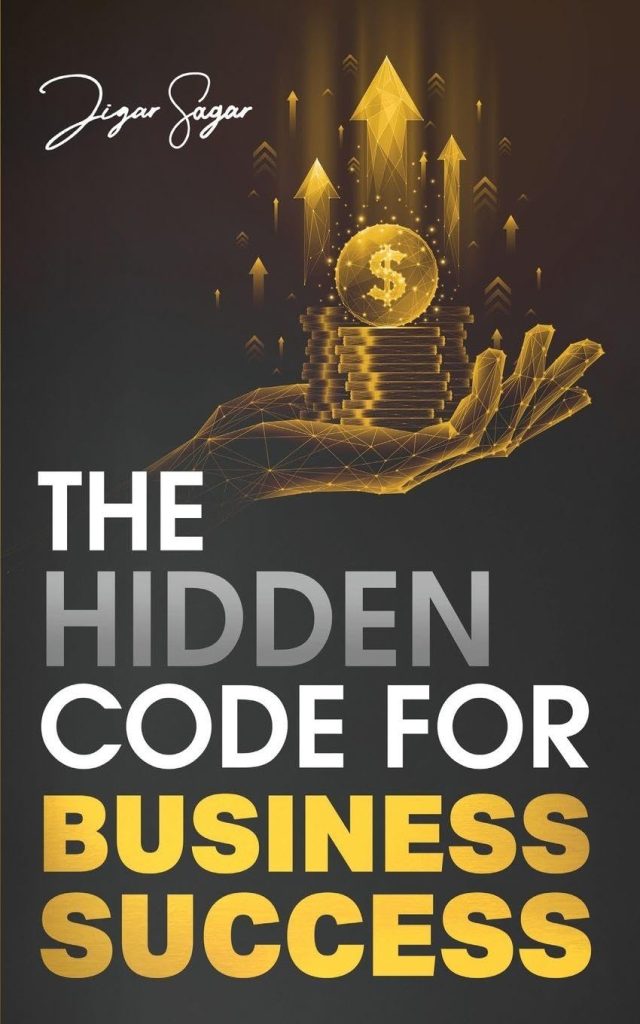
The Hidden Code for Business Success by Jigar Sagar is out now.
Interview by Carl Marsh


LATEST INTERVIEWS

David Morrissey

Alicia Coppola

Sorabh Pant

Simon Reeve

James Norton

Heida Reed
INTERVIEW DIRECTORY