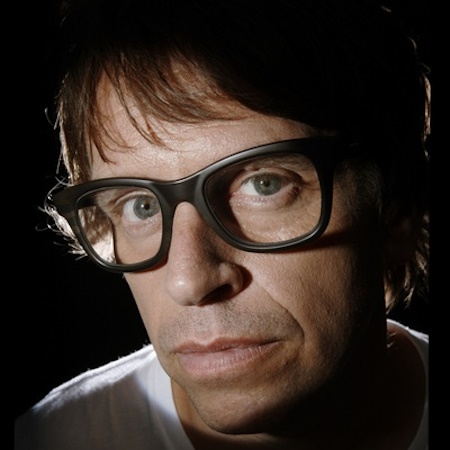

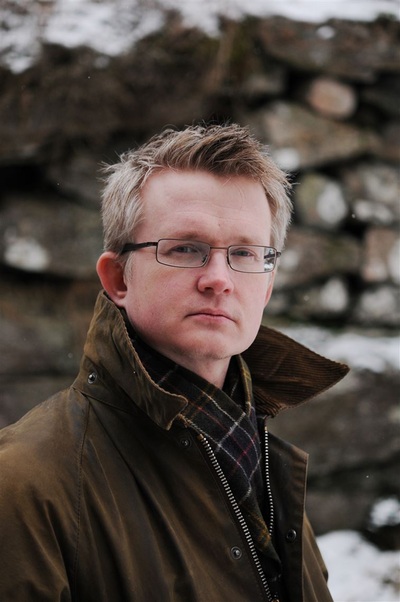
Lars Wilderäng
When Systems Fail
Swedish author Lars Wilderäng discusses his novel Starry Skies, survival, and the fragile systems that quietly hold modern society together when everything begins to fracture.
You’re a popular and respected writer in Sweden. Can you tell me about your novels and the work you’ve done so far?
My first two novels, Midwinter Darkness (Midvintermörker) and Midsummer’s Dawn (Midsommargryning), are high adrenaline military techno-thrillers, think Clancy/Bond’s Red Storm Rising or maybe Coyle’s Team Yankee, about a Swedish-Russian conflict over the island Gotland in the Baltic Sea. The books are based on heavy research. I’ve had the help of military fact-checkers and have visited quite a few regiments. I even tested equipment and weapons myself. Some of the elements in the books have unfortunately taken place in Crimea since.
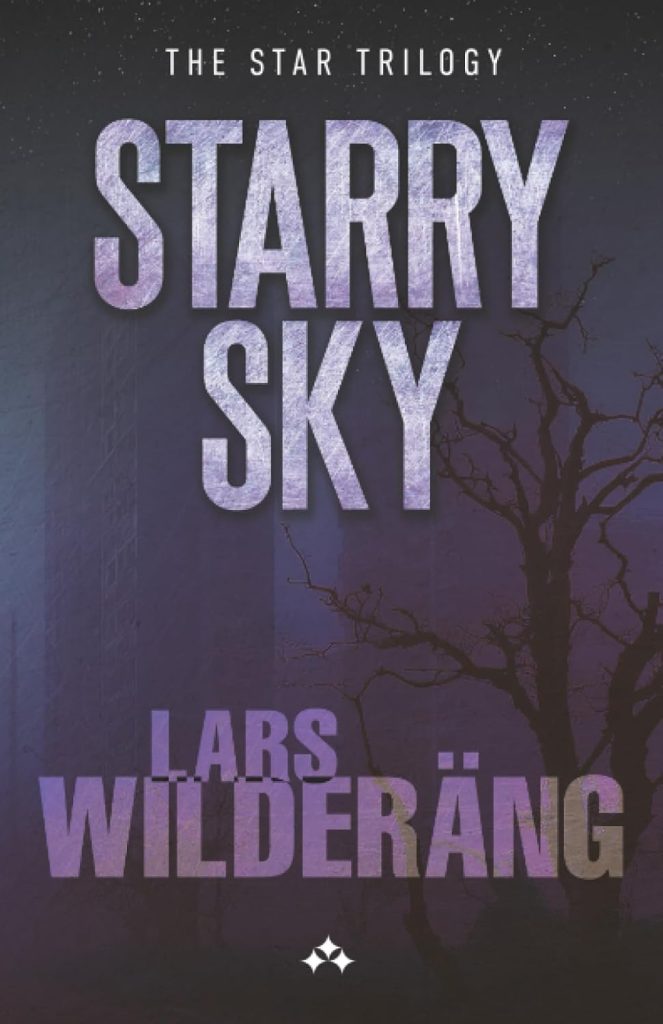
My third novel, Starry Skies (Stjärnklart), is the first in a new series, where something is destroying electronics, bringing civilization to its knees. I’m running Sweden’s most visited independent blog in serious subjects like finance and politics, where I also dabble in some military and survivalism issues.
“Something is destroying electronics, bringing civilisation to its knees.”
What message would you give to readers about why reading still matters?
The day you stop reading, you stop enlarging your mind. Reading is such an intimate experience and you develop in a more profound way than doing almost anything else. In today’s society and mass culture, reading is a long-term endeavour worth holding on to.
What is the best book you’ve ever read, and why?
Ian M Banks’s science fiction masterpiece The Player of Games. As all of Banks’s books it is masterful, imaginative, somewhat grotesque, unpredictable and exciting. And on top of that – a twist at the end, more like you would expect from a short story.
“The day you stop reading, you stop enlarging your mind.”
Are you reading anything at the moment?
I’m always reading something, and my backlog of books is huge. The books currently residing on my bedside are Stockholm Downfall (Stockholms undergång), a collection of short stories from the horror writer’s collective Fear (Fruktan), Mattias Leivinger’s fantasy psychologist battle Freudland, Harry Turtledove’s Supervolcano: All Fall Down, Paul McEuen’s Spiral and Kahneman’s Thinking Fast and Slow. But I might finish del Toro’s and Hogan’s The Night Eternal first, but that one’s residing in my library. There is only so much room on my bedside table.
What made you become a writer — was it always the plan?
I wrote a blog post about a conflict over Gotland and got a great response, so I thought, “there’s a story there — let’s do this properly.” And I did. And here I am, 50,000 books later. However my school teacher in ninth grade said that I was going to be a writer and did read one of my early short stories for the entire faculty, and my mother insisted that I would become a writer one day. It bugs me a bit that I proved them right.
“There’s a story there — let’s do this properly.”
Your novel Starry Skies explores a world where modern systems collapse. What drew you to that idea?
Starry Skies (Stjärnklart) follows several main characters as society descends into chaos as electronics, vehicles and electricity stop working. You follow an ordinary suburban family, a survivalist, a systems developer, a bad cop, a Special Forces operator and some more people and their intertwined fates. The novel takes place mostly in Sweden, although Afghanistan and Stansted Airport passes by.
Inspiration is from Niven/Pournelle classics like Lucifer´s Hammer or Justin Cronin’s recent novels, but without the vampires. The book has been very well received so far, and based on reader feedback I’ve scared the shit out of a lot of people, who now all have gone and bought water filters and are hoarding canned food. The book has topped the charts at most Swedish online retailers for days or weeks in some cases so far, and also been the #1 selling Swedish E-book at Apple iBooks.
“I’ve scared the shit out of a lot of people.”
What has been your most memorable experience as a writer so far?
Starry Skies is by far my biggest achievement, but unboxing my first book was an experience I will never forget. However, every book is an achievement in its own way. Meeting fans for the first time, or really any time, is a memorable experience. One amazing experience was part of the research for Midsummer’s Dawn, when I got an exclusive visit to a Swedish SWAT-unit and tested their equipment, watched their own movies from training and real operations and such.
Looking back, is there anything you would change?
I could have done my debut novel less technical. Some people are bugged by the correct use of military terminology down to accurate radio military signal discipline, which might get a bit repetititve. But on the other hand, if you look at a map of Gotland, you can follow it strike by strike. Hopefully the military parts of Starry Skies are more comprehensible for the less military interested readers.
Lars Wilderäng is a Swedish author and blogger, best known for his Starry Skies novels, exploring conflict, survival, and the fragility of modern systems.
Interview by Carl Marsh
Further Reading: Starry Skies
More Interviews

Whoopi Goldberg


LATEST INTERVIEWS
David Morrissey
Alicia Coppola
Sorabh Pant
Simon Reeve
James Norton

Heida Reed
INTERVIEW DIRECTORY