
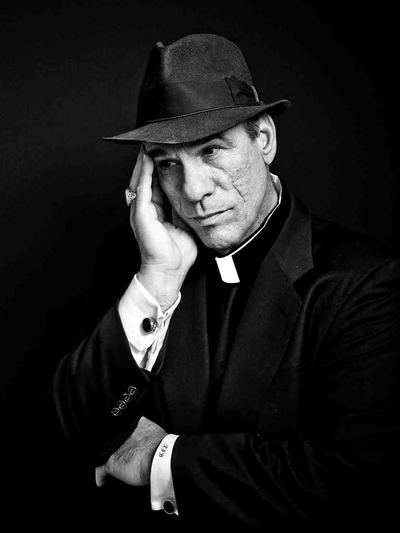
Robert Davi
The Total Performance
Robert Davi—actor, director and jazz vocalist known for roles in The Goonies, Die Hard and the James Bond film Licence to Kill—reflects on performance, longevity, and why music remains his most complete form of expression.
You’ve worked across acting, directing, producing and music. Where do you feel most complete as a performer?
Well, the music… the singing is where I can use all of myself. I love all of the art forms, but for me, the music where you are singing in front of an audience with a band, and you are communicating and using the totality of who you are, and not just a section of who you are in terms of a character if you are playing a character. The immediacy of that experience, the communication and the communion that you have with an audience, it’s just so satisfying to have 5,000 people in Estonia, Latvia, Sweden, Hungary, Australia, China, Italy, the USA, and to see the response from around the world. There is a transformative power of music that is generated from person to person, so I would say that is why I say: the music.
“There is a transformative power of music that just generates from person to person.”
From the beginning, did music and acting always feel connected in the way they developed?
It was concurrent with me singing and acting at the same time. I was winning awards for both, and I think that whatever it is that gives you the ability to act or to sing or to perform and play music, there is another layer of our friendship that is transmutable beyond the physical, if you know what I mean, it’s another common ground, it’s that artistic sensibility.
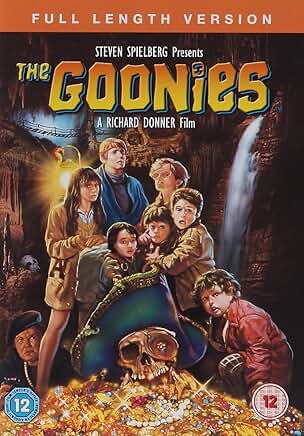
The operatic singing in The Goonies is one of the film’s most memorable moments—was that always in the script?
No! That wasn’t anywhere near part of the script! It was an improv I did with Richard Donner and Steven Spielberg. I said I’d like to make this character a frustrated opera singer, and the only person who listens to him is his brother in the basement, called Sloth, when he feeds him. The way that scene was originally written was very sadistic: when I brought him food, I taunted him by keeping it out of reach and then taking it away. I said that it was kind of heartless, but what if I bring him the food, and I sing, and he listens to me, and if he listens to me well, he gets the food, but he doesn’t listen, just like Mama and Francis. It was all improvised, and that was the theme we kept throughout the film.
“That wasn’t anywhere near part of the script! It was an improv I did with Richard Donner and Steven Spielberg.”
What still draws you to a role now after so many years in the industry?
Good work always gets good work. You will always find some great pieces in films, but because my focus has been on expressing through music, I’ve been in most of the genres, and you say to yourself, “I’ve been there, and I’ve done that in some form or another.” So you’re looking for something unique and different for a character I can play? Yes, I am looking for that, and even if it is not a huge part, there is just something in there that I can respond to. I’ve done the TV series thing where all the shows are basically the same beat over and over, but they mix it up a little bit.
You’ve been part of the evolution of television—how do you see it now compared to when you started?
Well, if it’s a good show and there is the right exposure, but I’ve noticed, though, and this is my own personal taste, some of it has gotten exquisite, whilst some of it has become mundane and very pedestrian. I did a show called Profiler from 1996 to 2000, which was a hit for NBC. We created what crime dramas are today, if you know what I mean; we were the forerunners of these shows. I don’t want to mention any of the shows on the air today, but we were the first to use a certain style and the way they were approached. I watched a show the other day that was just so formulaic, with substandard acting, but some of these shows are very good, groundbreaking, and very interesting.
“You’re looking for something unique and different.”
What does directing allow you to express that acting doesn’t?
I have a book I have optioned, and I’m planning to work on the script and maybe direct it, but when I directed The Dukes, it took me a while to get up and running due to the nature of it and the other things you have going on. Directing is another aspect of being able to ‘open the book’ so to speak, of who you are and express more fully than just being a part of a film where you are playing a certain character. I like the auteur aspect of filmmaking, where you can make a personal statement and point of view. I enjoy that process.
You’ve played a wide range of characters—how much freedom do you still have to take risks with roles?
I think you can take risks anywhere, depending on who is directing and the people involved, whether that be an independent, smaller production or a mainstream, larger one. That’s inherent to the project as a whole and to the philosophy of those involved. Marlon Brando was a friend of mine, and he was brilliant at it. Richard Donner tells a brilliant story about Superman, where Brando wanted to have this thing around his character, Jor-El, like a ring you get around Saturn. This green glowing thing. It was funny because Brando was perhaps half-joking with them, but he was this guy who always had at the forefront of his imagination thoughts about the way it had never been done before, that’s how he would approach parts and roles, the way it’s never been done before.
“He was this guy who always had at the forefront of his imagination thoughts about the way it had never been done before.”
You mentioned taking risks earlier—looking back at The Expendables 3 and The Goonies, how much of your career has come down to timing and trust?
Well, first off, my part and what they used of it was cut down. My son is a huge fan of Sly Stallone and the Expendables films, and Sly and I have been friends for many, many years. He actually wanted me to do Rambo 2. I was signed up to do Rambo 2, and The Goonies came along, and I had told my agent that Spielberg and Donner wanted to meet me about The Goonies. My agent just said that I could do both of them in that I could fly back and forth, as they do this all the time, so I took the meeting, and after the meeting, they wanted me to appear in The Goonies, and I just needed to now work out the dates with the Rambo people. As I was trying to work out the dates with the Rambo people, nobody was getting back to us, and then one day my agent calls up and says, “Hey, you were released from Rambo 2”. I told him this was not what I wanted, but he said he had done a 6-month deal with The Goonies film, and the Rambo 2 deal was only for a month, yet I would still have had time to do both. I could have worked something out, but in the interim, I tried to reach Sly to tell him that my first responsibility was to Rambo 2, since that was what I was hired for first, but I was never able to reach him. Then, I got released from Rambo. So then, for a couple of years, there was a bit of a misunderstanding from that point of view, because he had never received the messages I sent him saying this is what I wanted to do.
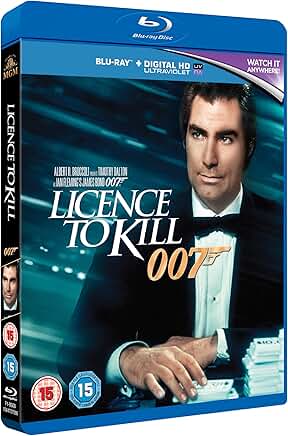
We finally buried the hatchet on his 40th birthday, and he asked me to do Rambo 3 with me playing an Afghan rebel leader. So I started learning Pashto, got the accent and got into shape, but it didn’t work out for whatever reason. But because I had prepared for something of that nature, I ended up getting this other film called Terrorist on Trial: The United States vs Salim Ajami. By doing that piece, Cubby Broccoli was asked to watch it by one of his friends, who told him that this guy was his next James Bond villain, referring to me. They called me in the next day and said, “You’re going to be the next Bond villain in Licence to Kill”. So I am kind of lucky to have been in one of the most iconic and successful film series of all time, as James Bond, playing a Bond villain.
“They called me in the next day and said, ‘You’re going to be the next Bond villain in Licence to Kill.’”
By being part of both Licence to Kill and Die Hard—two of the defining action films of their time, what did you take from those experiences?
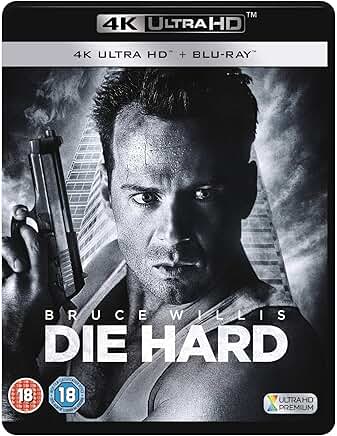
Yeah, everyone looks at Die Hard as one of the top action genres that everyone tries to recreate. The thing is, though, as is Bond, over the years, I can’t testify enough, as I would be on set and producers would be watching the Bond sequences of all the Bond films, so as to reference them on set. It was very interesting; these are the big producers and directors who closely watched them. I was with them. As a matter of fact, Arnold Schwarzenegger’s dear old mother, when I was in Licence to Kill, she said to Arnold, “Why don’t you do films like Robert Davi?” referring to the Bond films, and this was at a time when he was doing Predator and Terminator. He told me this one day, and I thought it was funny.
What stayed with you from the Bond experience itself?
Even after filming, I got to spend four and a half months travelling around the world promoting the film; it was a real family experience with Cubby Broccoli and the rest of the cast and crew. Timothy Dalton was wonderful. He is not ego-bound; he is just a great person and was and is a great friend.
“She said to Arnold, ‘Why don’t you do films like Robert Davi?’”
After everything you’ve done, what still drives you?
Well, if you see the documentary Davi’s Way, you will see that I am very dissatisfied. I don’t feel I have accomplished anything.
Seriously?
Seriously. And people say to me, ‘Are you crazy?’ but that’s just how I feel. Carl, I feel unfulfilled, and still, maybe that’s a good thing. There is a burning furnace of, let’s say, as the Bard says, “a vaulting ambition”.
Robert Davi is an American actor, director and singer, known for roles in The Goonies, Die Hard and Licence to Kill, as well as his work as a jazz vocalist performing worldwide.
Interview by Carl Marsh
More Interviews

Whoopi Goldberg


LATEST INTERVIEWS
David Morrissey
Alicia Coppola
Sorabh Pant
Simon Reeve
James Norton
Heida Reed
INTERVIEW DIRECTORY