

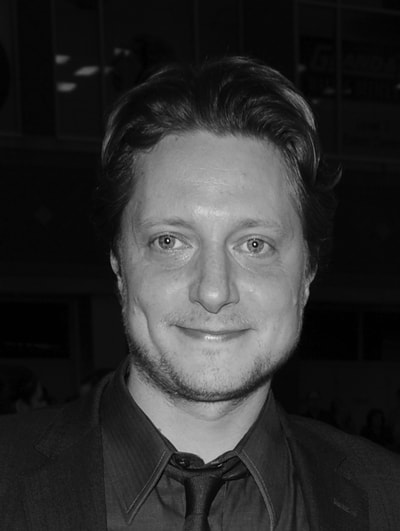
Rowan Joffé
The Dual Nature
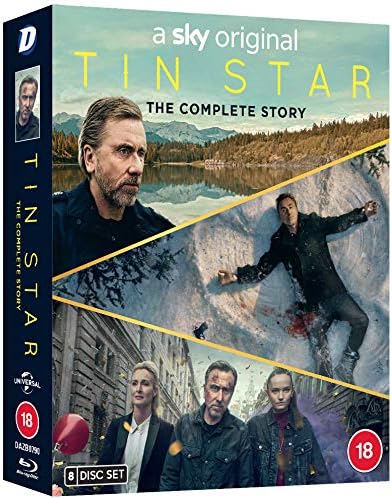
Rowan Joffé—screenwriter and director behind Tin Star, as well as films including The Informer and Before I Go To Sleep—on character, control, and the tension at the heart of human nature.
When you were writing Tin Star, did you have Tim Roth in mind from the start?
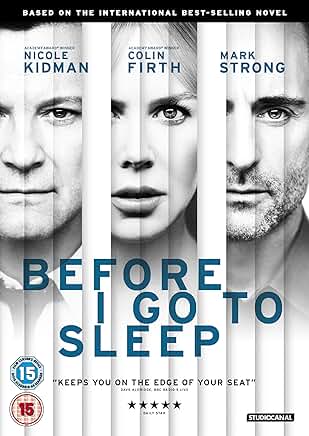
Interestingly, I had the same thing happen to me with Tim Roth that happened to me in Before I Go To Sleep with Colin Firth. In both cases, they were the first actors that came to mind when I was writing the role, and, for various technical reasons, they weren’t necessarily the first actors we discussed approaching. Fortunately, both were available and liked the script. In the case of Tim and Tin Star, I honestly don’t know what I would have done if we hadn’t got Tim. Still, I was able to modify the dialogue and the character’s tone much more intensively once I knew we had him on board, and indeed once the collaborative creative process was underway. I met him and then talked through the first full script with him.
“In both cases, they were the first actors that came to mind when I was writing the role.”
So, the character evolved once you knew he [Tim Roth] was involved?
Yes, although I didn’t go out and write the entire season specifically for Tim’s manner, then send it to him and hope we got him. It was a slightly more organic process.
Tim Roth and Colin Firth—very different actors. Did you notice any similarities in how they work?
One similarity is that neither of them watches themselves. When you make the movie or the show, they don’t watch it. I really respect that. I can’t bear the sound of my own voice if I hear it on a recording, so I can relate to an actor hating the sight of themselves on the screen, although I don’t know that that’s their motive, and I wouldn’t want to speak for them. They’re similar in the sense that they’re both extremely talented and very dedicated, hard-working actors who only do things that they believe in and who want the very best from themselves and from everyone working around them. Both of them force you, as a writer and a director, to be the best you can. Otherwise, they’re very different—different backgrounds, different careers—but both, for me, are iconic.
“One similarity is that neither of them watches themselves.”
You’ve said you don’t set out to deliver a specific message—so where does your writing actually begin?
Oh, no. That’s the point. I really, genuinely don’t set out to say anything. You know Robert Louis Stevenson—and I’m not comparing myself to him at all—he came up with Jekyll and Hyde after having had a dream, and really that’s much more the kind of writer that I am. I become obsessed with a certain character, a place, or the kind of stories that might unfold there, or with an idea, but it’s not coherent. I don’t set out to say anything specifically. Everything grows organically, unconsciously, and intuitively. It all coalesces in this slightly, hopefully unpredictable and visceral way, and I never quite know where I’m going or what I’m going to get. For me, that is what makes it exciting to write and to watch, because some of the positive feedback I’m getting is that it keeps twisting and turning and changing. That’s because it’s alive in a way. Once the beast is alive, I try to feed it. I don’t try to bully it into doing exactly what I think it ought to.
With Jim and Jack Devlin, were you exploring that idea of duality in human nature?
Yes. I was interested in the Jekyll-and-Hyde aspect of human nature. The idea that we have a higher being that has reason, and love, and conscience, for example, and then we seem to have a lower, more animalistic being that you might call the instincts that are there to ensure our survival, and often the two conflict with one another. In other words, I might get a better result from a colleague at work if I approach them from a place of love, my higher being, but because I’m frightened of not getting the result I want, my fear, which is an instinct, makes me come at them from my lower nature and perhaps bully them or intimidate them or threaten them. I believe that dichotomy happens to every single human being, many hundreds of times each day, every time we face a challenge, and what interested me about alcoholism was that I could find a way of heightening that duality. The whiskey would stand in for the magic potion in Jekyll and Hyde.
“Everything grows organically, unconsciously, and intuitively.”
You directed the first episode—how much control did you want over the series’ overall tone?
Well, I didn’t give them free rein, no. The reason I directed the first episode was to set the show’s aesthetics precisely. I was trying to achieve a contemporary Western look because many of the story’s themes were Western-like: the idea of a family uprooting itself from the old country and trying to forge a bright new future on the frontier. Therefore, the piece’s look and the story’s scenes are inexplicably interlinked. I would no more give free rein to someone on one level than I would on the other because they are the same thing—the show looks the way it does because it’s trying to tell the story that it’s trying to tell.
I did ask all the directors to make their acts look like mine. What was brilliant was that the really good directors, for example, Alice Troughton, were able not just to honour the aesthetics of the show, but do so with relish, resourcefulness, and inventiveness, and stay true to it while also making their acts even better than mine. Then there were others who, to be honest, were a bit disappointing, that perhaps lacked flair, and some who didn’t stick to the script in the cutting room. My scripts are written so the story doesn’t work if you change the order of the scenes, so I had to recut some of it myself. But the reason for multiple directors was practical—we shot one episode at a time to protect the story and performances, which meant directors were effectively leapfrogging between prep and shoot. It worked out okay in the end.
“I was interested in the Jekyll-and-Hyde aspect of human nature.”
Do you think about what audiences should take from something like Tin Star?
Well, I don’t really send a specific message because I think that really good drama is a bit like a fairy tale or a dream. I think that quite poor dramas give you a precise message. The point about drama, fairy tales and dreams is that they wrestle with problems to which there’s no rational solution. At the heart of Tin Star is a sort of irresolvable dilemma because Jim needs to become Jack to have the ferocity to meet a hostile enemy and protect his family. Still, that same ferocity will destroy everything he cares about.
Just look at the world—it’s wracked with hostility and fear, and an obsessive quest for security. I’m not a political pundit or political scientist; I’m a writer. I just want to embody some of these irresolvable ideas at a level that feels like a dream or a fairy tale. Tin Star is not a dream, and it’s not a fairy tale; it’s not Twin Peaks, it’s not Fargo. It’s grounded in reality, and we always try to make the story as truthful and honest as possible. What I mean by dreamlike or fairytale-like is that I think it deals with big archetypal, universal, timeless and irresolvable themes like vengeance. I suppose the conflict in Tin Star is between vengeance and love. I hope that comes across.
“The show looks the way it does because it’s trying to tell the story that it’s trying to tell.”
Was that ending always in your mind, or did it evolve as the story developed?
Yes, that’s a good question. Actually, weirdly enough, yes, I had that ending in mind from fairly early on. I can’t tell you why, it just popped into my head—the idea that the daughter would turn on her father and conceivably kill him. One of the things I like about that is that if you go back and read the Greeks, the ones who started all this drama business, they’re all about families turning on one another. Obviously, that’s a very heightened version of a normal family, but if I look at my own family life, it’s full of tensions and conflicts. None of them is at that scale, obviously. Still, there’s something both really dramatic and archetypal about one family member wreaking vengeance on another, and at the same time something really relatable and everyday about it.
With something like Tin Star, how deeply do you need to immerse yourself in its world?
I focused everything on Tin Star because I decided that if I was going to write the best part of ten episodes for television, it would take everything I had and more. I dedicated everything to it, and I’ve even been living in the place where it is set, so I can soak up every detail of what this part of the world is like and who the people who live there are. That’s been part of the preparation—to give as much love and attention to something as you can, because you get a better result.
“If I look at my own family life, it’s full of tensions and conflicts.”
How long does it typically take you to write something on that scale?
I think a season takes about a year to write, more or less. In the case of season one, because I was setting the world up, there was a lot more trial and error—“Is this character like this or is it like that?” “Is this world like this or is it like that?” So it took longer. Season one was probably a year and a half, two years of actual writing, but the idea had been gestating for four or five years before that.
Do you feel like you’ve reached your peak, or are you still pushing yourself?
I hope I’m not at the top of my craft.
And do you feel like you’ve found your lane as a writer, or are you still exploring?
To be absolutely honest, all I want to do is be able to tell the stories I want to tell in the way I want to tell them, with a significant enough audience watching them to feel like I’m alive as a writer. Whether that’s in film or television doesn’t matter to me. I’m fascinated by the idea of writing a stage play, intrigued by the idea of writing a novel—although I suspect I’m talentless when it comes to prose. I feel really privileged. One of the most exciting things is writing a script that you know is going to be on screen in a few months, with words spoken by actors who excite you.
“All I want to do is be able to tell the stories I want to tell in the way I want to tell them.”
Has there ever been a time where you’ve thought about the responsibility of storytelling and its influence?
No, I don’t. It’s not that I don’t think I have a responsibility; it’s just that I generally don’t think about that. All I tend to think about is: how can I make what I’m writing simply surprising, but completely true? That’s all I ever really think about.
When you’re working to a deadline, how do you approach that pressure?
Well, we’ve been green-lit for production, so I do have a deadline. But I’m just approaching it in the same way—giving it everything I have and not taking anything else on. There’s some quote by Stanley Kubrick—I can’t remember it exactly—but about directors living like monks. I really get that. If you’ve got a vocation and you want to excel in it, I think you have to gear your whole life around it. Living out here in Canada and just making this the thing I do every day, hour after hour, dealing with each obstacle as it comes—it becomes almost like a kind of spiritual exercise. It’s the biggest challenge you could take on. I’m not worrying about the deadline. I’m just showing up day by day, moving between episodes, and doing the work.
From one project to the next, is improvement something you actively track?
That’s a really excellent question. My producing partner, Alison Jackson—she’s been on board this project from day one—and I both kept track throughout the process. I had a note on my iPhone called “Lessons Learned”. Every time something didn’t go to plan, I would note down what I thought had happened. At the end, we found the time to sit down and go through everything. I can’t really disclose any of those because it’s indiscreet, but what I can say is that the most terrifying thing about what I do is whether people are going to like it or not. There’s that old Woody Allen thing of just making the movie you want to see, but the addiction to approval and praise—especially amongst artists—can be crippling. What I kept telling myself over and over again is that even if people don’t like it, at least I’ve written something I believed in. The measure of success for me is getting the chance to make it better and learn from my mistakes, not whether it gets good reviews. I believe the show was well received, but I’m not 100% sure because I don’t read reviews or look at that kind of thing. If it’s good, my ego gets inflated. If it’s bad, I get so demoralised I want to give up. Either way, it’s not helpful.
How do you handle criticism, given how exposed writing can be?
I find it hard to take criticism. The truth is, I’m quite insecure. Probably my self-esteem’s not that high. If you sat me down long enough on a psychiatrist’s couch, you’d probably say that’s why I do what I do—trying to find an audience that loves what I write. But criticism is part of the job. You write a script, hand it in, and get notes back on what doesn’t work. I don’t always agree, and sometimes there’s a fight about it, but as long as the goal is to make the best possible script, it generally gets better. Your career can only be as good as the people you work with.
Actually, this wouldn’t be complete without saying that Alison Jackson is my creative partner. I trust her. Sometimes it feels like us against the world, and that’s okay as long as you’ve got the right people around you. We also had enormous creative freedom, which allowed me to write the show I wanted to write. That matters.
Away from the work, what helps you switch off from that intensity?
I have a daughter whom I love, and she’s not interested in the show. She wants me to take her to dance class or talk about school—or not talk about school, which is more common. Having a family means you have a few hours a day where you’re not thinking about work.
The other thing I do is stay as physically fit as I can. I do about an hour and a half of exercise a day because it relieves stress and keeps my thinking clear. I don’t drink, smoke, take drugs, go to parties, or spend time at industry events. I don’t read reviews. I don’t watch other TV shows because I’m either going to think I’m better or worse. All I really do is read novels—mostly 19th-century novels. They’re actually the best inspiration for long-format storytelling because they’re structurally similar. I stay out of all that.
“Even if people don’t like it, at least I’ve written something I believed in.”
Lastly, how did you first find your way into writing?
Oh, that’s a good one. At university, there were bursaries for new playwrights. Each college had a small fund for productions, and there were only a handful of us writing plays, so we always found the money to get our work staged. You always found willing actors, and there was no real pressure because the only people reviewing them were student papers. It was a very creative environment where you could experiment and see what worked and what didn’t.
I wrote four plays at university; a couple were taken to the Edinburgh Festival. I came down to London, realised I needed to earn some money, and worked as a journalist for a while because it felt like a similar world. Then I sent my plays out to literary agents—I was rejected by six of them, but one took me on and told me to go away and write a film about something I knew. I wrote a story about two kids with a single mum trying to fix her up with someone because she was lonely. That came from my own life. It was sold to BBC Films—they paid me £2,000. They never made the movie, but it led to other work, and from that point on, I’ve never really been out of work.
Rowan Joffé is a British screenwriter and director, best known for creating Tin Star and directing films including The Informer and Before I Go To Sleep, with work spanning television and film across the past decade.
Interview by Carl Marsh
More Interviews

Whoopi Goldberg


