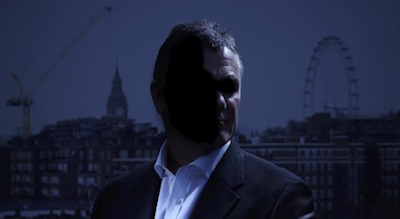

Vincent Doumeizel
The Invisible World That Keeps Us Alive
Vincent Doumeizel reveals the extraordinary hidden world of plankton — from oxygen and climate to food, medicine, AI and why its future could shape our own.
You describe plankton as a foundation of life on Earth, yet most of us barely think about it. Why have we overlooked something so fundamental?
I think it’s because it’s invisible. Basically, we don’t pay attention to what we cannot see. I keep telling people: stop bothering kids with dinosaurs because they’re totally useless! They disappeared 65 million years ago. They might be big, so obviously size matters somehow, but besides this, they’re useless. Let’s stop talking about dinosaurs to our kids and talk about coccolithophores and diatoms, which are so much more important to us.
I think nature overlooks everything in the ocean. We don’t really pay attention to it, except for the beautiful dolphins and turtles sometimes. We don’t know much about what’s in the ocean because it’s far away; it’s another frontier, especially when it’s microscopic. So, yeah, it’s true.
“We need solutions and hope for the next generation.”
Even when you go scuba diving — I scuba dive as well — you don’t really go down there to see the plankton. You go to see the fish, the reefs and everything else.
Exactly. But if we want to protect the fish, dolphins and whales, we need to pay attention to what’s feeding them, and what’s feeding them is plankton. So to save the whales, the best thing is to save the plankton.
Maybe it’ll come full circle at some point. One of the extraordinary ideas in the book is that we are, in a sense, descendants of plankton. What does that actually mean?
Life started four billion years ago on this planet with organisms that were in the ocean. We don’t really know their nature, whether they were benthic or planktonic — whether they were on the seabed or drifting. What is certain is that drifting enabled evolution because, when you are on the seabed, you cannot really cooperate and meet other organisms in the same way. When you’re drifting, you can mix, meet, share capacities, and create symbioses. That’s the very basis of evolution. Evolution was shaped by organisms’ ability to drift in the ocean.
We don’t really know what LUCA was. LUCA is the last universal common ancestor, which is the ancestor that every living organism on the planet shares. We don’t know exactly where it was. It was in the water; that’s quite certain. Maybe it came from space, but we don’t know if it was drifting or not. What is certain is that the first organisms that started evolution were drifting. So we all come from there.
And what is important to remember is that over the four billion years of life on this planet, around 3.5 billion years were purely planktonic. So about 90 per cent of our history of life on the planet is plankton. Multicellular life, and even more life on land, is a very recent phenomenon in the story of life. Maybe that will not last very long; I don’t know! But historically, life has been in the ocean for far longer than it has been on land.
“These new technologies should be part of the solution.”
You write in the book that plankton helped create oxygen, rain, rocks and even the conditions for life itself. Which of those still astonishes you the most?
Well, it’s a bit astonishing for all of them. People don’t realise that clouds can be influenced by gases that plankton emit. Oxygen, of course, is fundamental. There’s always a big debate around oxygen. We tend to say that every other breath is due to the ocean, which isn’t really true at the moment because much of the oxygen created by plankton now is consumed by life below the water. Historically, enormous oxygen reserves accumulated because less ocean life consumed it, so oxygen entered the atmosphere. Those oxygen reserves ultimately came from photosynthetic organisms, including plankton.
Oil also comes largely from ancient marine organisms, including plankton. That may be the best one to me because petroleum is, let’s say, a trendy topic at the moment! Much of the energy we extract from oil ultimately comes from organic matter that sedimented over millions of years. Every year we burn through an extraordinary amount of that accumulated geological history.
And everything we do with oil, we could potentially do with microalgae, algae, or plankton — packaging, fertilisers, and so forth. The potential is amazing.
Then you have the rocks, of course. The White Cliffs of Dover are made from the remains of plankton. And for the boomers in your audience, the chalk you used at school was made from the dead bodies of plankton. You know, that’s quite something.
Was there one discovery among all of this that completely changed how you saw the planet?
I think the creation of oxygen is interesting because it completely changed the planet during the Great Oxidation Event, more than two billion years ago, after photosynthesis had evolved. Photosynthesis is life’s stroke of genius. Nothing better has ever been invented. No invention has been greater: creating biomass from carbon dioxide and releasing oxygen.
At the time, though, it was actually a very bad idea for much of the life already here because oxygen was toxic to many organisms. It completely transformed life on Earth. Eventually, some organisms evolved ways to use oxygen through respiration, and they are among our ancestors.
But what’s really important to me is that it shows us that it isn’t simply that we adapt to the environment. The environment is also defined by living organisms. That’s exactly what we are doing right now. It’s happening very quickly — far too quickly — but we are changing our environment and warming the planet.
There’s nothing fundamentally new about life influencing its environment. It has always happened. We are part of the living world, and we influence our environment. So it works both ways: life adapts to the environment, but life also changes it.
I know you mentioned teaching kids about dinosaurs, which is still valid, but I wish I’d known all this about plankton and seaweed in school. If we’d understood this 50 years ago, perhaps we’d look at the planet differently now. Is getting this into education important to you?
Education for kids is so important. In France, I’m preparing a children’s book. I did one on seaweed, and I’m doing one on plankton. I think that’s important because we need to raise awareness, and because it’s a great source of hope for me.
There’s still so much we have to understand about the biology of the planet because plankton is really the great connector between living organisms and ecosystems. It connects all the ecosystems together. It’s like the blood of our planet. If you understand the biology of your planet, then you can start to heal and repair the planet, and that’s a great source of hope for the next generation.
I think right now we’re surrounded by a lot of doom and gloom. But there’s so much still to be done in a natural way. It’s not only AI; there are so many natural things that we still have to understand. Actually, I think AI will help us understand plankton because it’s so complex that it’s extremely difficult to understand without it.
If we start to understand plankton biology, once again, we are better able to understand and potentially heal the planet. It’s a strong message to kids: let’s start studying something fundamental to life on the planet, something that helped transform everything, and understand how we can help it. I think that’s a very positive message. We need solutions and hope for the next generation.
In the book, the Alain Bombard story is extraordinary, isn’t it? Sixty-five days crossing the Atlantic with little more than a plankton net and his optimism. Why did you make hope such an important theme?
Because I think we’re missing hope at the moment, and you don’t do anything without hope. Once again, the doom-and-gloom narrative right now is very full of—
Fear, isn’t it?
Yeah. Fear. I’m in the US right now, and I can see what this kind of self-fulfilling prophecy can do. You plan for the worst, and then the worst happens. It’s like saying all the banks are going to go bankrupt, then everybody takes their money out, and the banks go bankrupt.
We should stop telling everybody that the world is doomed because that’s not true. There have always been problems. Nuclear weapons were a global problem. Disease was a huge problem at different points in our history, and we overcame enormous challenges. So I think we have to be positive. We’ll find new solutions, and I think plankton is one of those solutions.
And that’s exactly what Bombard demonstrated. He realised that people stranded at sea were dying from fear, not only from cold, thirst or starvation. He said, okay, I need to give them hope and show that we can stay at sea for many days without help and still survive. His work went on to save thousands of lives.
Once again, hope and innovation through plankton — that’s really my book. What he demonstrated reflects what I’m trying to say: with a bit of hope and by learning how to use plankton, you can save many people and maybe help save our planet.
“We should learn from them. There are so many things we have to learn from plankton.”
It’s like you say: plankton could potentially help with carbon, food, biodiversity, pollution and even medicine. So where does genuine scientific potential end and hype begin?
It’s very hard to say because we’re in the very, very early days of our understanding of plankton. Around ten years ago, we started an expedition to study marine viruses. We knew about roughly 40 viruses in the ocean. Now we know about half a million.
Over the last 15 years, we’ve discovered around 150 million new planktonic genes in the ocean. Our own body has around 20,000 protein-coding genes, so you can imagine what 150 million means. That’s a lot, and many of them still need to be characterised and understood.
That’s also why this isn’t moving faster. There’s still a science gap to be bridged. We don’t know much about plankton, and there’s still so much to discover. Then there are the interactions. It’s one thing to know what is there in the ocean; the next thing is understanding how everything interacts. What triggers what? What eats what? How do all these organisms work together?
The level of complexity is hard to imagine. Life on land represents roughly half a billion years of evolution and complexity. In the ocean, we’re talking about billions of years. So it’s very, very complex.
Is there any application that’s genuinely close to becoming useful now, rather than something we might see decades from now?
In terms of nutrition, we already know about spirulina and its benefits. It has been known for ages in Africa and Central America. Spirulina is incredibly nutritious — it’s like a nutritional bomb for your body — and athletes use it to support their performance. We’re seeing other microalgae with nutritional benefits too.
Then there’s water. Microalgae are already being used in wastewater treatment, so that is happening now.
But with the more sophisticated innovations, the best is yet to come. I like telling the story of diatoms, among the most abundant organisms on the planet. A diatom is a single-celled organism that can build a shell of glass around its body, and it does that at very low temperatures. We need something like 1,500°C to manufacture glass with our big brains and all our technology.
We should learn from them. There are so many things we have to learn from plankton and so much innovation potential. It’s an almost unlimited horizon.
As you know, new technology is finally making this invisible world visible. How much could AI, satellites and DNA sequencing change our understanding of plankton over the next decade?
That will be absolutely fundamental. It’s critical. We couldn’t see plankton properly, characterise it, or understand all these interactions. The convergence of the innovations you mentioned is making that possible, and that’s a big game changer.
Plankton has been discovered relatively recently in the story of humanity and science, but the last ten years have shown huge, rapid evolution. There still aren’t that many scientists working on plankton, and that’s why we also have to be patient. The kids we’re telling these stories to today might decide in five or ten years to study plankton and marine biology. In 15 years, they’ll graduate, and in 25 years, they could be making major discoveries about plankton. So it’s a generation we have to raise and educate. It won’t happen overnight, but at least they’ll have the tools to understand it.
It’s the same with AI. We’re all very full of fears about AI, as we have been with nuclear technology. Maybe AI will help us understand one of the planet’s greatest complexities—these invisible planktonic organisms—and ultimately help us heal the planet, cool it down, restore biodiversity, and save endangered species. I think that’s a great source of hope.
These new technologies should be part of the solution. They open a new era of discovery. In the 19th century, with Darwin, Haeckel and others, it was a great period for discoveries of the visible world on land. Now we’re moving into the invisible world in the ocean, which is perhaps the greatest complexity we have on the planet.
The world really needs to make understanding plankton a priority for biodiversity and climate change. Why hasn’t that urgency translated into greater political attention?
It’s the same problem. I’m in New York right now for the UN General Assembly and Climate Week, and there isn’t much discussion about plankton. I’ll be at the biodiversity COP talking about plankton there, even though plankton drives so much biodiversity on the planet. The same goes for the climate COP. I’ll go there to talk about plankton because plankton triggers the biological carbon pump in the ocean, and the ocean absorbs a significant proportion of the carbon dioxide we emit. Yet, hardly anyone talks about plankton in the climate conversation. It’s crazy.
I think part of the problem is the ocean itself. The ocean is overlooked because it doesn’t really belong to anyone. It’s an open area, and we don’t know enough about what’s going on there. There’s a science gap, and any decision we make could have an impact in five, ten or 15 years, which is way beyond the next election. So there’s no immediate political payback from investing in the ocean. That’s why we need to keep pushing, because we are all drivers of change.
It’s also still very new for many people. It took a long time for the ocean itself to become part of the international climate conversation. That’s scary if you think about it. We have to raise awareness, which is why I produced the Plankton Manifesto two years ago. I released it here in New York during the UN General Assembly. We brought together around 40 leading specialists from around the world to create a 15-page document summarising the potential of plankton and the hurdles around it. The book continues that document.
“To save the whales, the best thing is to save the plankton.”
When you brought all those scientists together two years ago, has anything actually changed since then?
I think there’s an ongoing discussion about geoengineering, which is a very hot topic in the scientific community. First of all, they now have a document they can use. It’s a consensus document bringing the community together, so they can say, okay, this is something broadly agreed upon. It isn’t Chinese, Japanese or American; it brings different specialists together.
Many topics remain highly controversial. Iron fertilisation, for instance, is heavily debated at the moment: whether we should add iron to parts of the ocean to stimulate plankton growth and potentially sequester more carbon, when we still have limited understanding of all the consequences. That’s a very strong debate. The manifesto helps build rationale and identify where there is consensus and what still needs debate.
But we’re probably ten years ahead of what could really start happening when it comes to plankton. There’s a science gap to be bridged, and there’s still so much to understand from a scientific perspective.
That leads into my next question. Plankton could potentially help feed humanity while human activity damages the ecosystems it depends on. Are we destroying something before we’ve even understood its value?
Yeah. We’re having a strong impact on plankton at the moment, clearly, and we can see plankton communities changing. Plankton itself isn’t endangered. It has been here for billions of years. Ocean life will continue, but it might continue in a very different way, and that’s what is scary for us.
We’ve lived alongside particular plankton communities for millions of years. Some help move carbon into the deep ocean, and our ecosystems have developed alongside them. Now we’re seeing different plankton proliferating because of pollution, global warming and other pressures. Some can be toxic to us, and some don’t have the same ability to move carbon into the deep ocean.
So there are potentially two very bad pieces of news for us. Harmful plankton blooms can affect marine ecosystems, the food chain and ultimately human health. At the same time, if changes in plankton communities reduce the ocean’s ability to absorb and store carbon — or fundamentally alter that carbon cycle — that becomes an enormous problem.
“There’s still a science gap to be bridged, and there’s still so much to understand.”
If we’re having this conversation again in ten years — which hopefully we will — what discovery about plankton would you most like to be able to tell me had happened?
That’s very hard to say. There are so many possibilities. Medicine, energy — some plankton can produce hydrogen. Some have shown potential to break down or interact with plastics. There are so many things we don’t know that it’s quite hard even to imagine what the next discovery will be.
I think imagination is our limit here. We have to imagine the best, and then perhaps the best will happen. Surprises will happen, and I like surprises. We all like surprises.
I keep telling people: I’ve been to the future, and I can tell you that in the end we won. I’m back from the future, and we won! There’ll be a lot of surprises in the meantime, and that’s for the best. So let’s get surprised. There’s so much we can do.
So perhaps the surprise itself is the best thing that can happen?
Plankton will be full of surprises.
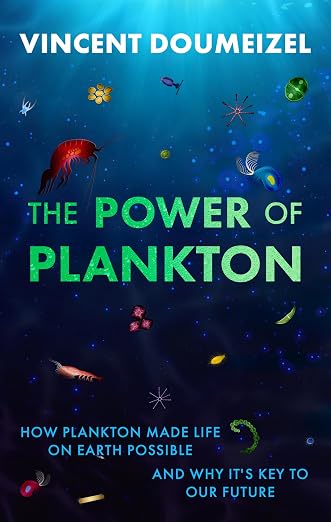
The Power of Plankton by Vincent Doumeizel is out now.
Interview by Carl Marsh


LATEST INTERVIEWS

David Morrissey

Alicia Coppola

Sorabh Pant
Simon Reeve
James Norton

Heida Reed
INTERVIEW DIRECTORY