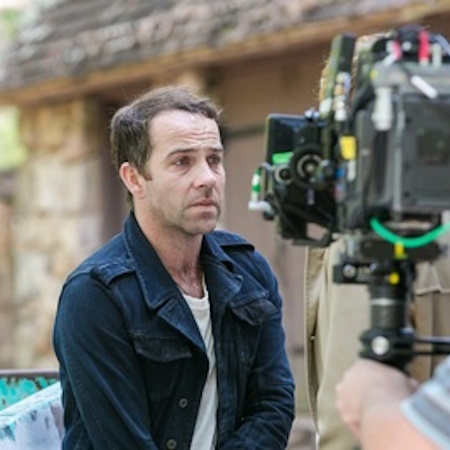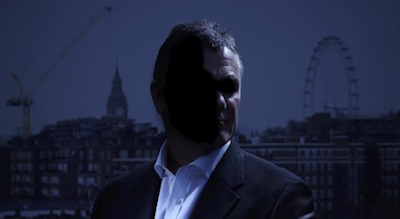

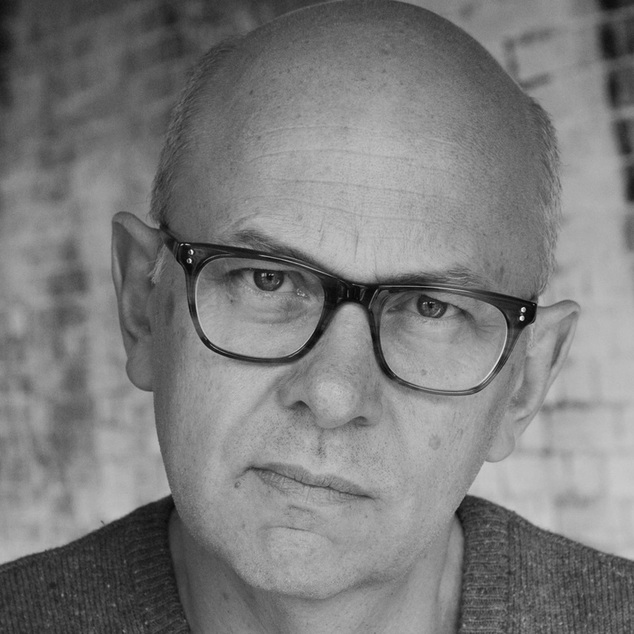
Vincent Franklin
Playing It Straight
Best known for roles in The Office, Happy Valley, Cucumber, TwentyTwelve and Jonathan Strange & Mr Norrell, Vincent Franklin reflects on flawed characters, career uncertainty and why not having a plan might be the point.
Cucumber clearly struck a chord with people — what did you feel it was saying that audiences connected with?
I’m delighted by the way people responded to Cucumber. I’m especially chuffed when people I don’t know quietly tell me how important it was to them; how it helped them or celebrated them. TV is supposed to open up worlds to people and I think a lot of people, straight, gay and uncertain, found they could really relate to Henry’s world and the way he felt about his place in it. We’re all a bit more Henry than we might like to admit. Too much telly is about people in their twenties, when the audience is in their forties and fifties. I think Cucumber is one of the shows that’s fighting back for unrepresented groups in society — the greying and balding.
“We’re all a bit more Henry than we might like to admit.”
The show never really softened its edges — was that always the intention?
I’m surprised by how little ‘crap’ I got on social media. I hope everyone else involved had a similarly calm crossing. I don’t think we ever set out to stick fingers up at people. We just tried to tell the story with honesty and a bit of hutzpah — like Henry would. We certainly didn’t compromise to make things easier for an audience, or to make it cosy and comfortable for them. Some people wanted Henry to be nicer, but Henry isn’t nice, that’s just the truth of it. He’s funny and clever and self-destructive and brutally honest and constantly confused. And he’s great company. But he’s a flawed individual, just like the rest of us — and there’s enough niceness on the CBeebies channel anyway.
After playing characters like Henry, how much of yourself ever finds its way into the roles you take on?
I was the youngest man on my course at drama school, but I played everybody’s dad. I’m not complaining. As every actor in every interview always says, the great thing about acting is pretending to be someone else, and the further from you the character is, the more interesting it gets. You get to think, feel and say things that you couldn’t, wouldn’t, or daren’t the rest of the time. But I suppose you always bring bits of yourself to everything you do. Moments or thoughts the character has resonate with you, tap into your memories, fire up your imagination.
I’m sorry if that sounds pretentious. I hate actors talking about acting. We have a plumber who is really good, but he doesn’t insist on telling me about how he welds joints. So Henry is a bit like me, but so was Nic Jowett in TwentyTwelve — I’m a middle-aged northerner confused by the world around me.
“We certainly didn’t compromise to make things easier for an audience.”
You’ve had a long career across very different roles — was acting always the plan?
I’ve wanted to be an actor since I was about ten. My parents were keen I should go to university rather than drama school. I don’t really know why — no one in my family had ever been to university, and it certainly didn’t give me ‘something to fall back on’. I was lucky because I looked old and fairly ugly from my mid teens. So when I was at university and drama school, I got to play all those great roles that I was really too young for. They needed a bald northerner — good looking public school boys were two a penny. I’m just starting to be offered all the roles I played at university thirty years ago.
How do you approach a career that can feel so unpredictable?
It’s a great way to make a living, but don’t let it be the only thing in your life that makes you happy. That way, madness lies.
Do you think it’s possible to plan ahead in a job like this — or do you have to just take it as it comes?
I’ve never really had goals. I’ve never thought beyond the next job. I think this job is too chaotic to think ahead much more than that. It can drive you mad. When I was directing at Harrogate Theatre, I met actors in their early twenties who saw working there as a stepping stone. But as a result, they didn’t make the most of being there — they were always thinking about the next job instead of the one they were doing there and then. In August, I received my Equity diary for next year — what’s the point of that? I don’t know what I’m doing next Tuesday, let alone next March.
“I’ve never really had goals. I’ve never thought beyond the next job.”
Beyond acting, you’ve also worked with language in a different way — what drew you to that?
Mark Scantlebury and I set up Quietroom 15 years ago. We’re all about words. We help organisations talk and write in a way that’s clear and vivid and real. We work mainly in finance and government, where the things they need to talk about are often invisible, unloved and complicated.
Vincent Franklin is an actor known for The Office, Happy Valley, Cucumber, TwentyTwelve and Jonathan Strange & Mr Norrell, with a long career across television, theatre and film.
Interview by Carl Marsh
More Interviews

Whoopi Goldberg


LATEST INTERVIEWS

David Morrissey
Alicia Coppola

Sorabh Pant

Simon Reeve

James Norton

Heida Reed
INTERVIEW DIRECTORY